
Boral Roof Repair in Mesquite: A Homeowner’s Guide
Boral roof repair in Mesquite is different from the shingle work most homeowners are used to, and getting it wrong is expensive. A concrete tile that’s cracked can be swapped in under an hour, but if the mortar mix is wrong or nobody lifts the surrounding tiles to check the underlayment, moisture gets trapped and the next few tiles fail within a couple of seasons. This guide covers what Boral actually makes, how to identify your product, and how a proper repair protects both the roof and the warranty.
If you’d rather not work through this on your own, call (855) 916-4744 and we’ll take a look.
What Is a Boral Roof, and How Do You Identify Which One You Have?
Boral makes two roofing lines that matter to Mesquite homeowners: concrete tile and stone-coated steel. They look completely different on a roof and fail in different ways, so the first step in any repair is confirming exactly what’s up there. That’s not guesswork. Boral stamps the underside of every tile with a product mark, and that mark tells you the profile, the line, and a lot about which replacement pieces will actually match.
To read the stamp, carefully lift the edge of a broken or spalled tile (or look at an exposed tile on a simple gable end) and check the underside. You’re looking for a mold or product name. The common Boral concrete lines in residential use include:
- Saxony – a flat, low-profile concrete tile with a relatively tight interlock
- Madera – a thicker, more textured profile with a heavier hand-formed look
- TileSeal – Boral’s under-tile membrane system, which is what actually keeps water out; the tile is the rain screen, the membrane is the waterproof layer
Why the stamp matters: profiles aren’t interchangeable. Sourcing a “close enough” tile from a different line means color mismatch, interlock gaps, and visible errors half a roof away. The stamp gives you the exact specification a supplier needs.
The Two-Step Boral Concrete Tile Repair Process
A correct Boral concrete tile repair has two distinct parts, and skipping the second one is the most common mistake we see. Step one is the surface fix. Step two is the inspection underneath.
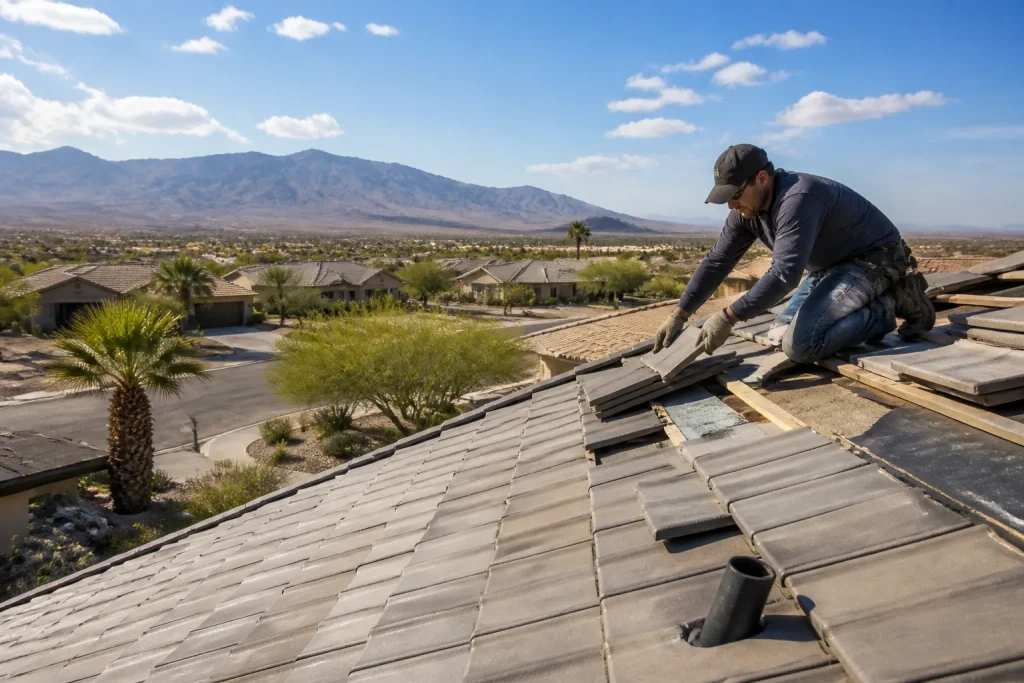
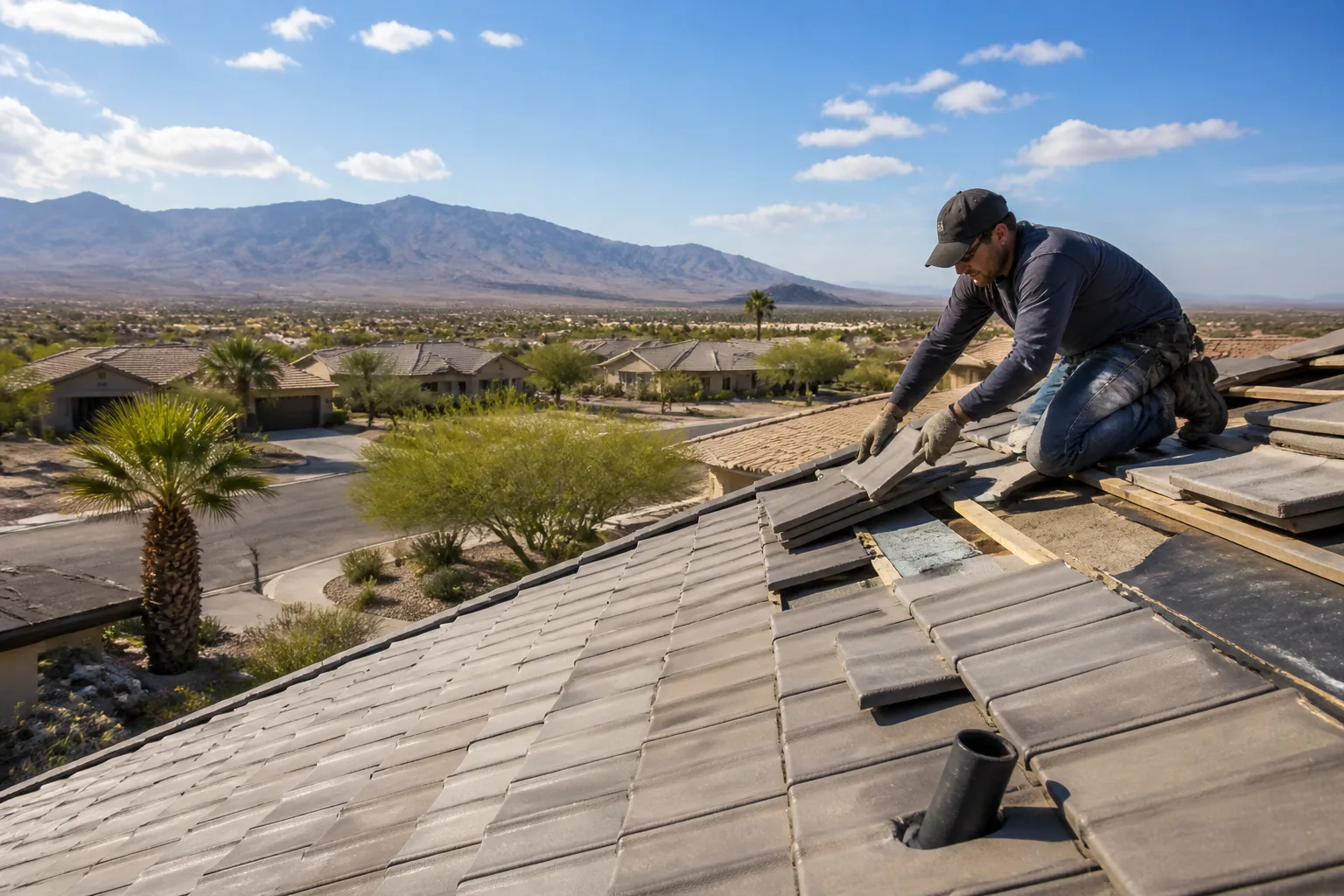
Step 1: Surface replacement. The broken or spalled tile is lifted, the surrounding tiles are gently worked loose as needed, and the replacement is set into a mortar bed and interlocked with its neighbors. The mortar mix has to match the application – a stiff mix on the wrong profile can crack fresh tiles as it cures. On a properly built roof, tiles break for a reason: foot traffic, a foreign object, or settling. Which brings us to the part that actually matters.
Step 2: Under-tile membrane and flashing inspection. Once the tile is up, the underlayment and flashing at that spot need to be checked. Tile roofs shed the bulk of the water, but the membrane is the real barrier. If the membrane has torn, dried, or been punctured, water gets in and damages the decking and framing, and you won’t see evidence for years. The same goes for flashings at valleys, penetrations, and wall junctions.
If the repair is only surface-level, say a displaced tile from wind, and everything underneath is sound, great – that’s a quick fix. If the underlying membrane or flashing is compromised, the repair grows. That’s why we’ll tell you plainly whether a repair is all you need, and we mean it.
Boral Warranty Transfer: What Paperwork Protects You
Boral’s concrete tile and steel warranties are tied to the product and the installation, and many of these warranties can transfer to a subsequent owner when you sell your Mesquite home. That transfer isn’t automatic. It requires documentation, and missing documentation is a common reason warranty coverage quietly evaporates at closing.
The paperwork that protects you includes:
- The original product specification and the Boral line name (the underside stamp again)
- Installation records if you have them, including date and any contractor documentation
- Complete records of every repair, with a description of what was done and what materials were used
- Any inspection reports, especially after-wind-event assessments
When you list the home, a buyer’s inspector will look at the roof. If a repair used non-matching tile from a different line, or if the repair wasn’t documented, that becomes a negotiating point. Keep receipts. Photograph the underside stamp before a repair happens. If you’ve had a repair done and you don’t have records, an inspection can help reconstruct the picture. Our standalone Roof Inspection is exactly that: an honest assessment, no purchase required.
Where to Source Matching Boral Tiles in the Mesquite Area
Ordering a single replacement tile direct from Boral is usually impractical for a small repair. Boral products in the Southern Nevada region – including the St. George distribution area – reach homeowners through roofing supply yards and through contractors who hold supplier relationships. That means the fast path to a matching tile is often through the contractor who can pull the right spec and get the right piece.
A few practical notes for Mesquite homeowners:
- Look for a local stockpile first. Tile roofs are often installed with attic stock – leftover boxes stored for future repairs. Check the attic, garage, or wherever the prior owner kept materials.
- Call suppliers with the stamp details. Give them the mold name and profile, not just “brown tile.” Matching is a specification problem, not a color problem.
- Expect lead times on non-stock profiles. Some Boral lines have to be ordered in, and the roof can’t sit open while you wait. Temporary protection matters.
- Ask about color variation. Concrete tile weathers and fades. A new tile next to older ones may read differently for a season or two. That’s normal and expected.
If sourcing stalls, that’s a good time to call. Call (855) 916-4744 and we’ll help you match the product.
Boral Stone-Coated Steel: Why Fasteners Matter in the Desert
Boral’s stone-coated steel is a very different product from concrete tile, and repairing it in the high-UV desert environment of Mesquite takes different fastener specifications than it would in a coastal or damp climate. Heat and ultraviolet exposure cause fasteners, seals, and the roof’s metal to behave differently. A fastener spec that works fine somewhere cooler may not hold up here.
That’s not a detail a homeowner has to memorize. It’s a detail your roofer needs to respect. The practical takeaways:
- Use the fastener type and length that suit the specific panel profile and Boral stone-coated steel system.
- Replace damaged fasteners with the correct spec, not whatever’s in the toolbox.
- Check the rubber washer seals on any exposed fasteners; UV degrades them over time, and failed washers are a common source of leaks.
- Look at the metal coating and stone granule finish for UV fatigue, especially on south- and west-facing slopes.
Steel roofs can be repaired, not just replaced. If you’re not sure what’s on your roof, an inspection settles it in an hour or so. In our experience on Mesquite roofs, the most useful question is whether a single fastener or seal failed, or whether the whole system is at the end of its life.
When to Call a Pro
Some Boral repair work is genuinely high-risk. Roofing work involves heights and steep pitches, and lifting tiles or working on steel panels without proper fall protection isn’t a place to learn on the job. And if a tile is up and you’re not sure whether the underlayment is intact, don’t guess.
Call a professional when:
- The damage is more than a single displaced tile
- You suspect a leak – water stains, decking movement, or visible membrane damage
- The roof is steep or it’s a multi-level home
- You need to match a specific Boral profile and you’re not certain which one you have
- You’re preparing to sell and want the repair documented properly
We work with seven roofing brands, including Boral and others like Owens Corning, IKO, and Atlas, so we can diagnose whatever system is up there. Choose from seven trusted roofing brands to match your budget and your roof. Inspection, repair, or full replacement – one company, one call.
Related services in Mesquite: roof repair and roof replacement.
The Bottom Line
Boral roof repair rewards precision. Identify the product line from the underside stamp, do the surface fix and the under-tile membrane and flashing inspection together, keep the paperwork for warranty transfer, and know that stone-coated steel in the desert has different fastener needs than in cooler coastal climates. Get any of those wrong, and you’re back on the roof in a season or two. Get them right, and a single repair stays a single repair.
From the first inspection to the final nail, we own the whole job. Your roof on your terms: the right material, the right solution, no oversell. If you’re in Mesquite and need help, Roofer Mesquite offers free estimates – call (855) 916-4744. Written estimates set the final price, so you know exactly what you’re getting before any work starts. Roofer Mesquite covers roof repair, roof replacement, and standalone inspections.
Call (855) 916-4744. We answer 24/7. Fast dispatch from 7am to 7pm, Sunday through Friday. Our technicians have up to 8 years of experience.
Frequently Asked Questions
A single tile replacement is typically a small, fixed-price job, while a repair that uncovers membrane or flashing damage runs higher because the waterproofing has to be addressed. The only reliable way to price it is a written line-item estimate on site. Call (855) 916-4744 – estimates are free.
Yes, if it’s the same line and profile and the tile itself is sound. Leftover attic stock is the best-match material you can find. Check the underside stamp against the tile currently on the roof before installing it. If it doesn’t match, don’t use it.
Not if the repair is done with matching materials and documented. Using a non-matching tile or an unapproved mortar mix is the fast way to jeopardize coverage. Keep receipts, product information, and a written description of the work. If you’re not sure how your repair needs to be documented, call us before the work starts.
Concrete tile is one of the longest-lived roofing materials available, often measured in decades rather than years. The tile is not usually what fails first – the under-tile membrane and flashings are. That’s why every repair should include a look underneath. Call (855) 916-4744 for a free inspection.
Written by the team at Roofer Mesquite.
Need Roofing Help?
Call Roofer Mesquite - licensed & insured, with free written estimates in Mesquite.
(855) 916-4744