
Last updated November 18, 2026
 Metal roofing
 Architectural shingles
 Tile roofing
 GAF
 Owens Corning
 Flat & low-slope
Free roof inspection with deck photos before we talk money - GAF and Owens Corning certified installation
Roofing Warning Signs: A Mesquite Homeowner’s Reference Guide
Most roofing damage we see in Mesquite didn’t announce itself. It didn’t strip shingles off in a windstorm or flood an attic in an afternoon. It developed slowly, in places nobody looks, until a small fix turned into a full replacement. The dramatic signs are easy: sagging decking, missing shingles, water stains on the ceiling. The signs that actually cost homeowners money are quiet. They hide in granule deposits at the bottom of a gutter, in a hairline crack in a bead of caulk, in an attic that runs ten degrees hotter than it should. This guide is about those quiet signs, what they mean in a desert climate, and how long you realistically have to act on each one. We’ll cover how to read them, how to tell cosmetic weathering from structural trouble, and when to call a professional instead of climbing up there yourself.
Quick Answer
The roofing warning signs that matter most in Mesquite are subtle ones: heavy granule accumulation in gutters, dried or cracked flashing sealant, attic humidity and heat that never vent out, and shingle or tile surfaces that look fine from the street but are losing their protective coating. Structural trouble is usually further along than it looks, and the cheapest moment to act is when the sign is still cosmetic. When any sign appears, get an honest inspection before you authorize a repair.
Styles & brands we work with
- Architectural shingles
- Metal roofing
- Tile roofing
- GAF
- Owens Corning
- Flat & low-slope
Table of Contents
- Granule loss and what your gutters are telling you
- Flashing sealant failure in a dry climate
- Attic humidity and ventilation signals
- Cosmetic weathering vs. structural deterioration
- How long you have to act on each warning sign
- What a real roof inspection checks
- Common mistakes to avoid
- Frequently asked questions
Granule Loss and What Your Gutters Are Telling You
Granules are the mineral coating pressed into asphalt shingles. They block UV, absorb impact, and slow the breakdown of the asphalt underneath. In a high-UV desert climate like Mesquite’s, that coating does more work than in almost any other part of the country, because the sun here is relentless and the roof has no snowpack or long wet season to slow the degradation. When granules shed, they don’t vanish. They collect.
Here’s the diagnostic tool almost no homeowner uses: the gutter. Run your hand along the inside of a downspout outlet or look at what’s accumulated where the gutter meets the downspout. A few scattered granules after a windy spell is normal. A visible drift of grit, the texture of coarse sand, sitting thick in the channel is not. That’s your roof shedding its protective layer. Read the gutter the way you’d read a check-engine light.
Granule loss is gradual and cumulative. Shingles near the end of their life will drop a steady stream of grit that you may never notice from the ground because there’s no bare spot yet. The coating has thinned across the whole field, not just at one patch. By the time a bare spot becomes obvious, you’ve already missed the cheapest intervention point, which is targeted repair before the asphalt underlay is exposed to direct UV and starts to crack.
What to check and how to read it:
- Gutter grit: A heavy, consistent layer of granules at a downspout means the field is thinning. Note where it’s concentrated.
- Valley deposits: Granules collect where roof planes meet. Dark grit pooled in a valley is a reliable sign on an aging roof.
- Shingle color: A roof that’s dull or losing its original tint is losing granules, even if it looks intact from the street.
- Roof access: The best check is in the field, done safely by a professional who can walk it and test a shingle edge.
In Mesquite, sun exposure accelerates granule loss faster than a homeowner expects, and the roof can shed a meaningful portion of its coating without any visible patch from the driveway. That’s the counterintuitive part. If your gutters are heavy with grit, that’s your cue to get an inspection rather than wait for a leak.
Flashing Sealant Failure in a Dry Climate
Flashing is the metal that seals the joints around chimneys, skylights, vents, and wall intersections. Every flashing joint relies on a bead of sealant. In wet climates, that sealant is under constant assault from rain, so it fails visibly and gets repaired fast. In Mesquite’s dry heat, the failure is much quieter: the sealant doesn’t get washed away, it dries out and cracks in place. The crack is often a hairline you’d walk right past. It creates a small opening that rainwater only exploits when it does rain, which means the damage happens silently and intermittently.
Why this matters in a desert: the sun and heat cure the sealant, pull the oils out of it, and leave it brittle. Over months it shrinks and pulls back from the metal, opening a gap the width of a fingernail. The next storm pushes water into that gap, and it travels under shingles instead of over them. Homeowners in Mesquite often don’t connect a ceiling stain to a flashing joint that cracked slowly over an entire summer.
What dried or cracked flashing sealant looks like here:
The desert version is subtler than what you’d see in a wet climate. It isn’t a peeling, gummy mess. It’s a hard bead that’s pulled away from the edge of the metal, with fine cracks running through it like cracked mud in a dry streambed. The sealant shrinks and loses contact with the flashing while still appearing attached from a distance. It’s the kind of detail you can’t evaluate safely from the ground. Getting onto the roof and checking the chimney flashing, the skylight perimeter, and the vent boots is a job for someone with the right footing and the right tools.
We don’t recommend homeowners get up on a slope to inspect sealant themselves, especially on a hot roof in the middle of the afternoon. What we do recommend is knowing this failure pattern exists and having it checked annually, because a flashing reseal is one of the cheapest repairs a roofing system ever asks for, and the water damage from a failed joint is not. This is exactly the kind of thing a roof repair visit addresses before it becomes an interior problem.
Attic Humidity and Ventilation Signals
A roof is a system, and the attic underneath tells you whether that system is working. If heat and moisture can’t escape, they build up and cook the roof deck from below. Mesquite summers make this worse because the outside air already pushes toward triple digits, so an under-ventilated attic can run dramatically hotter than the outdoor temperature. Heat rising off the deck bakes shingle undersides, breaks down the asphalt faster, and shortens the life of the whole assembly.
The signs are in the attic, not on the roof:
- Moisture on the underside of the deck: Look for condensation, dark staining, or a musty smell. Even in a dry climate, an attic can trap moisture from the house below, and it needs to vent out.
- Sagging or rusted vent edges: Vent openings that have deformed or rusted indicate moisture is condensing where it shouldn’t.
- Excessive heat: If the attic feels dramatically hotter than the outside air when you open the hatch, the roof system is failing to shed heat.
- Discolored sheathing: Brown or dark sheathing on the underside is a sign of moisture cycling and early wood breakdown.
- Snow-melt patch on the roof in winter: A roof that sheds its winter snow from one patch faster than the rest is telling you heat from inside is escaping through that spot.
The last sign on that list is worth explaining, because Mesquite does get cold nights in winter and a little frost or occasional snow. An even layer of frost that melts from the whole roof at the same rate is normal. A single patch that clears early while the rest stays white is a heat leak, and in our experience it’s the clearest visual signal that ventilation and insulation are out of balance. Left alone, that patch of deck runs hotter and wetter than the rest of the roof and breaks down first.
Correcting ventilation is often an inspection finding rather than an emergency, but it’s the kind of issue that compounds. Fixing it early protects the materials you already paid for, including whichever of the seven brands you chose when the roof went on. In our experience, homes with GAF or CertainTeed systems installed on a well-ventilated deck last noticeably longer than the same materials on a poorly vented one.
Cosmetic Weathering vs. Structural Deterioration
A weathered roof and a failing roof can look almost identical from the ground. A weathered roof is fading, maybe a little chalky, with some granule loss and slight color shift. A failing roof has lost structural integrity: cracked shingles, lifting edges, cracked tile felts, damaged decking. The two are months apart in cost and years apart in decision timeline. Telling them apart is the core skill this guide is meant to give you.
Cosmetic weathering is expected and not urgent. It includes:
- Fading or dulling of shingle color from UV exposure
- Light granule loss at the downspouts
- Slight chalking on metal trim
- Minor curling at a few shingle edges if none have broken away
- Tile or shingle surfaces that still shed water and have intact fasteners
Structural deterioration is a different category. These are the signs that call for action:
- Cracked, split, or torn shingles, or shingles that have lifted past their seal line
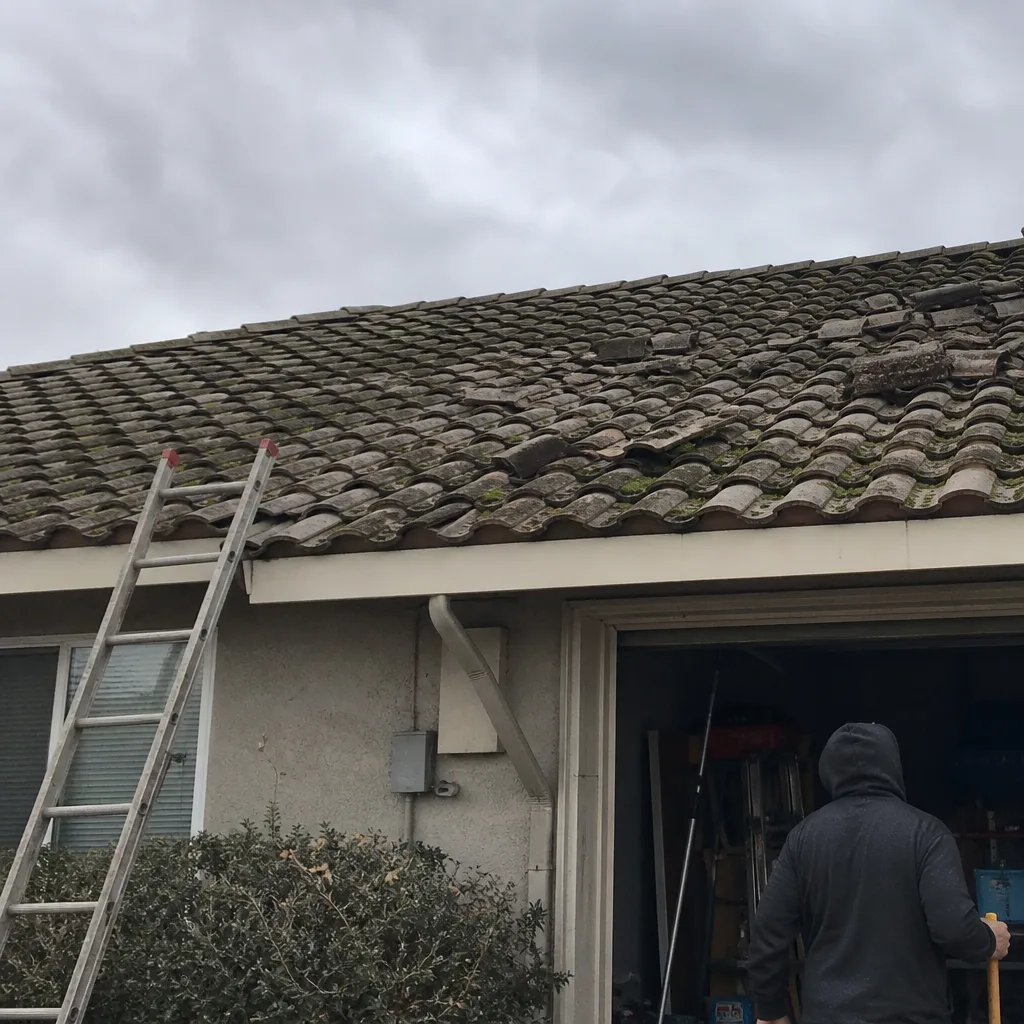
- Missing or sliding tiles on a tile roof, which expose the underlayment to direct sun
- Spongy or sagging decking visible from the attic or felt from the roof surface
- Daylight visible through the roof deck from the attic
- Multiple interior water stains or active leaks after a storm
- Rusted or loose fasteners pushing up through shingle surfaces
The distinction matters most with tile roofs. Boral tile systems can look perfect from the street for a very long time while the underlayment beneath them is deteriorating from UV and heat exposure after a crack or a slide. That underlayment is the actual waterproofing layer, and once it’s compromised, you can have a roof that looks fine and leaks. This is where a proper inspection earns its keep, and why we treat a standalone inspection as a diagnostic service rather than a sales appointment.
How Long You Have to Act on Each Warning Sign
Homeowners get two kinds of bad advice about urgency: “fix it now or your house will flood” and “it’s probably nothing, just watch it.” The truth is in between, and the window varies by issue type. Here’s a realistic decision timeline for the major warning signs covered in this guide. These are typical decision windows, not guarantees, and the written estimate from an inspection will give you the specifics for your roof.
- Granule loss in the gutters: Weeks to months. Not an emergency, but the longer you wait, the less repair options remain and the closer you get to replacement. Get an inspection while the sign is still cosmetic.
- Dried or cracked flashing sealant: Should be resealed before the next storm season, ideally in weeks. A flashing reseal is inexpensive; the water damage from a failed joint is not.
- Attic heat and humidity problems: Fix in one season. It’s slowly destroying the deck and will shorten the life of the materials you already have.
- Cracked or lifted shingles: Days to weeks. These open the door to water intrusion and wind damage and should be repaired in the next suitable weather window.
- Sagging decking or daylight through the deck: Call immediately. This is structural and can compromise the roof’s ability to hold snow, wind, or rain loading.
- Active interior leak: Call now. Water is already inside the home.
The theme: the cheapest signs are the quietest ones, and the loud signs are expensive. If you’ve been watching a subtle signal, that’s exactly the moment. We’ll tell you if a repair is all you need, and we mean it. Many of the roof inspections we do in Mesquite end with a targeted repair recommendation rather than a replacement quote, and that’s the right outcome when the materials still have life in them.
Timing also matters when it interacts with weather. The two biggest seasonal hazards in Mesquite are the desert summer heat, which accelerates material breakdown, and the occasional winter freeze, which can crack dry sealant and split brittle shingles. If a warning sign appears in late spring, it’s better to act before the hottest months accelerate the damage.
What a Real Roof Inspection Checks
An inspection done properly is not a walk around the house with binoculars. It’s a system check of the materials, the flashing, the ventilation, and the deck. Knowing what a thorough inspection covers tells you whether the one you get is doing its job, and it tells you how to use the inspection to make a good decision.
- Material condition: Shingles tested for granule loss, seal integrity, and cracking. Tiles checked for cracks, slides, and fastener condition. The underlayment assessed wherever it’s reachable.
- Flashing and sealant: Every joint at chimney, skylight, vent, and wall intersection inspected for dried sealant, lifting metal, and water pathways.
- Deck and structure: From the attic, checking for staining, sponginess, sag, and daylight. From the roof, feeling for soft spots underfoot.
- Ventilation and insulation balance: Ridge, soffit, and static vents checked for obstruction; attic heat and moisture checked against expected levels.
- Drainage: Gutters, valleys, and downspouts checked for granule buildup and water flow.
- A written report: The findings, the realistic options, and the cost of each. That report is what makes the recommendation useful rather than a scare tactic.
An inspection is also a diagnostic tool for a roof installed by someone else. Because we work across multiple shingle systems and construction profiles, we can evaluate a roof installed by any contractor, using the material that’s actually up there, rather than assuming one product line. That matters when the question is whether a roof installed with IKO or Owens Corning materials is still in repair territory or has moved past it. A roof that’s still in repair territory gets a repair recommendation from us, not a replacement pitch.
The other thing a real inspection gives you is a baseline. Save the report. When you do the same inspection the next year, you can compare and know whether a quiet sign has actually changed or just looked different in a different light.
Common Mistakes to Avoid
- Judging the roof from the driveway. The granule loss and flashing cracks that matter most are invisible from ground level. If you’re deciding based on a street view, you’re deciding on the wrong information.
- Treating cosmetic weathering as a crisis. Fading and light granule loss don’t mean a roof needs replacing. A repair or a targeted reseal is often the right answer, and a contractor who can’t tell the difference will charge you for a full replacement anyway.
- Ignoring the attic entirely. Homeowners in Mesquite check the ceiling and the shingles but never open the attic hatch. The deck, the sheathing, and the ventilation signs are all up there, and they tell you more about roof life than the top surface does.
- Waiting for a leak before you act. A leak is the last warning sign, not the first. By the time water is coming through, the cheap intervening repair window has usually passed.
- Patching over a flashing problem without diagnosing the source. A smeared layer of sealant over a failing joint looks like a fix and doesn’t last. The source has to be addressed, not covered.
- Getting a quote without a real inspection. A replacement quote delivered from the driveway is a sales pitch, not a diagnosis. Ask for the written findings before you sign anything.
- Ignoring the granule trail in the gutters. It’s the single cheapest signal you get, and it’s free to check. Yet it’s the one most Mesquite homeowners never look at.
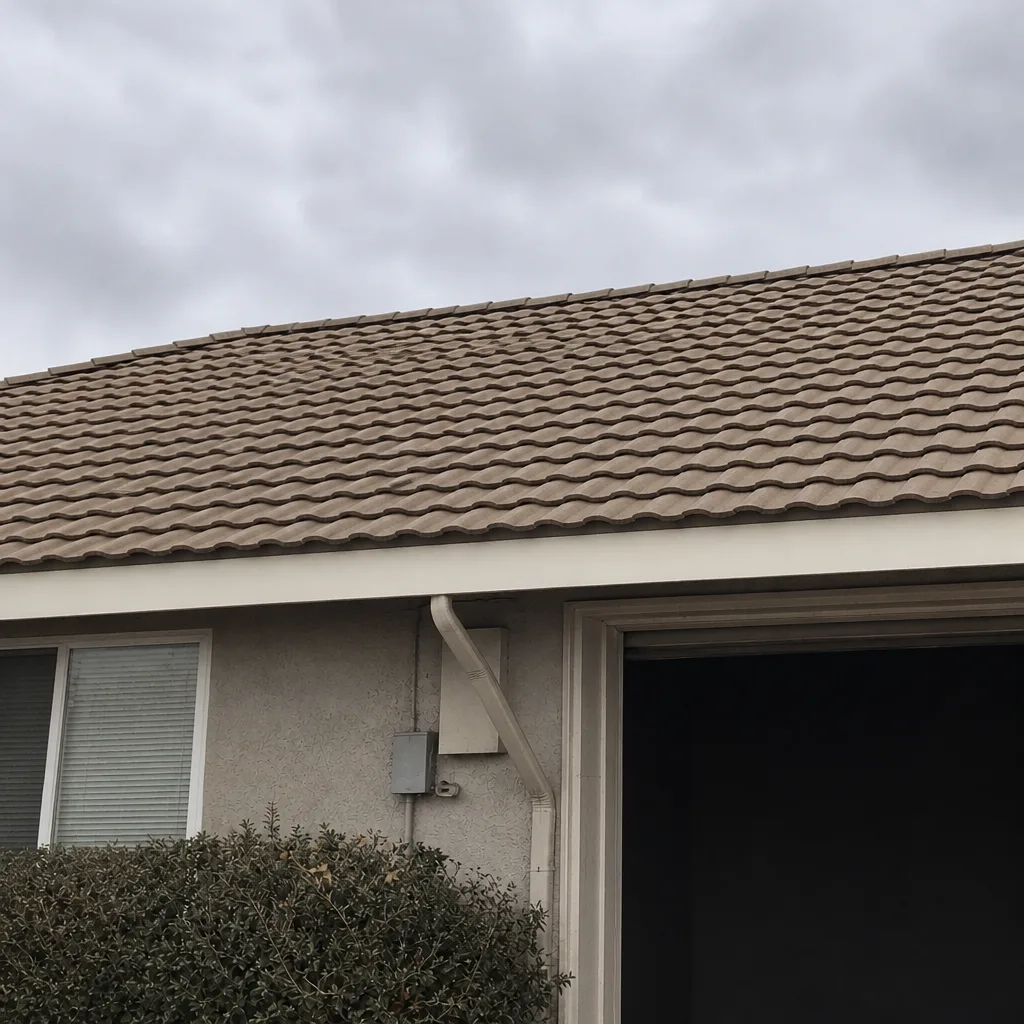
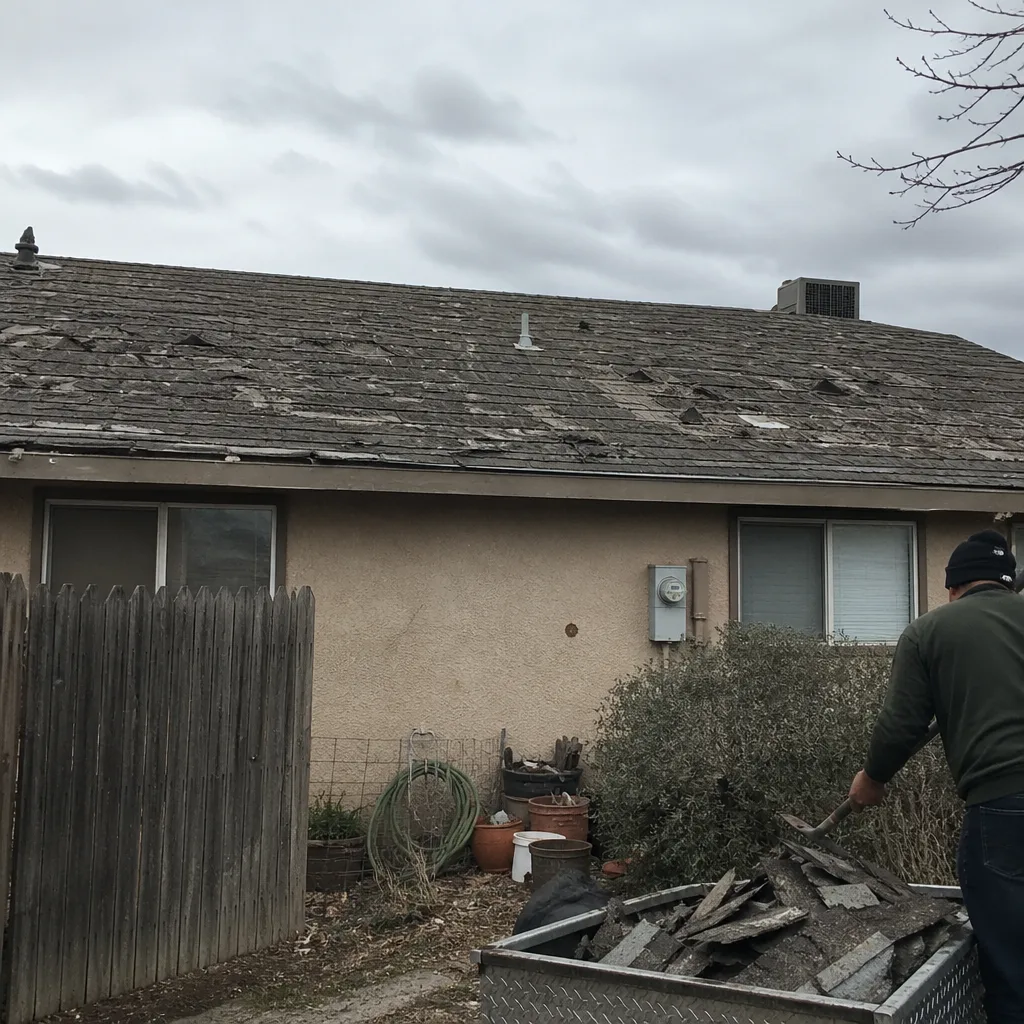
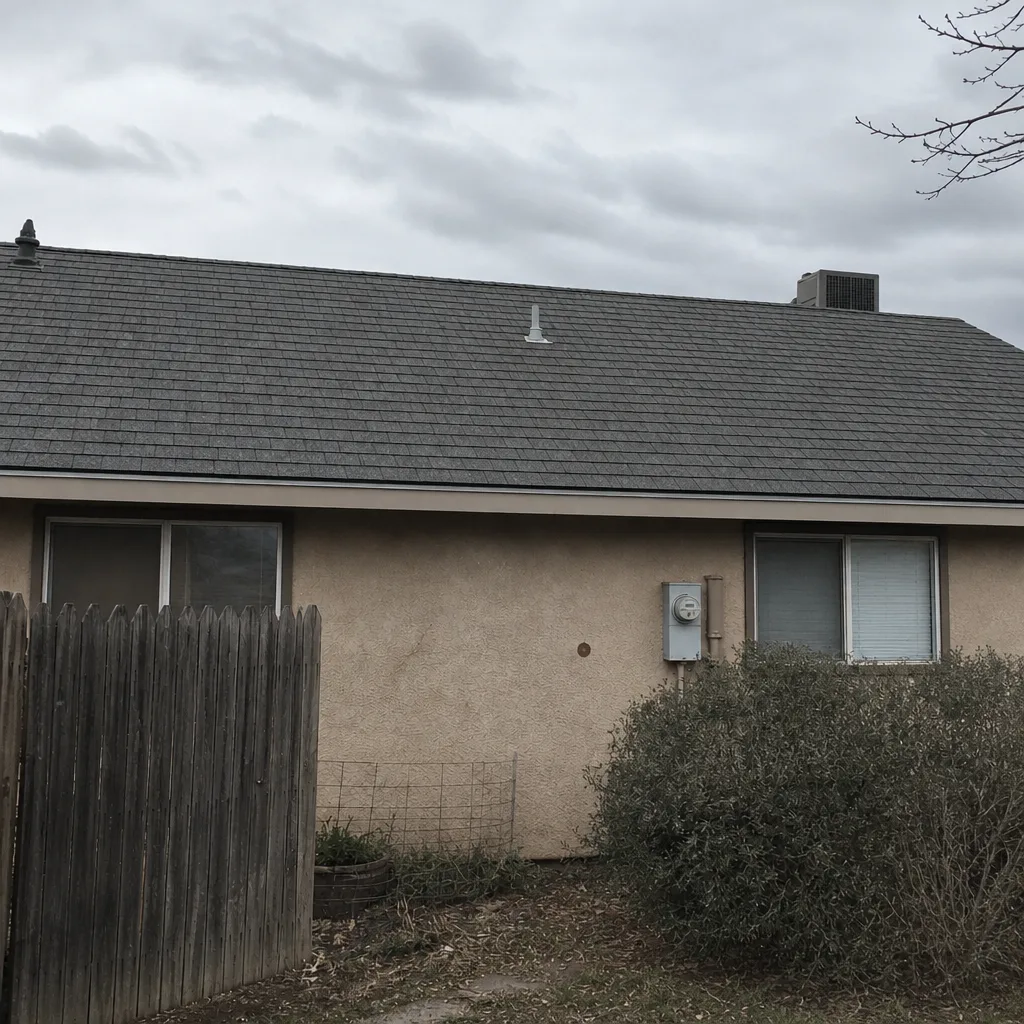
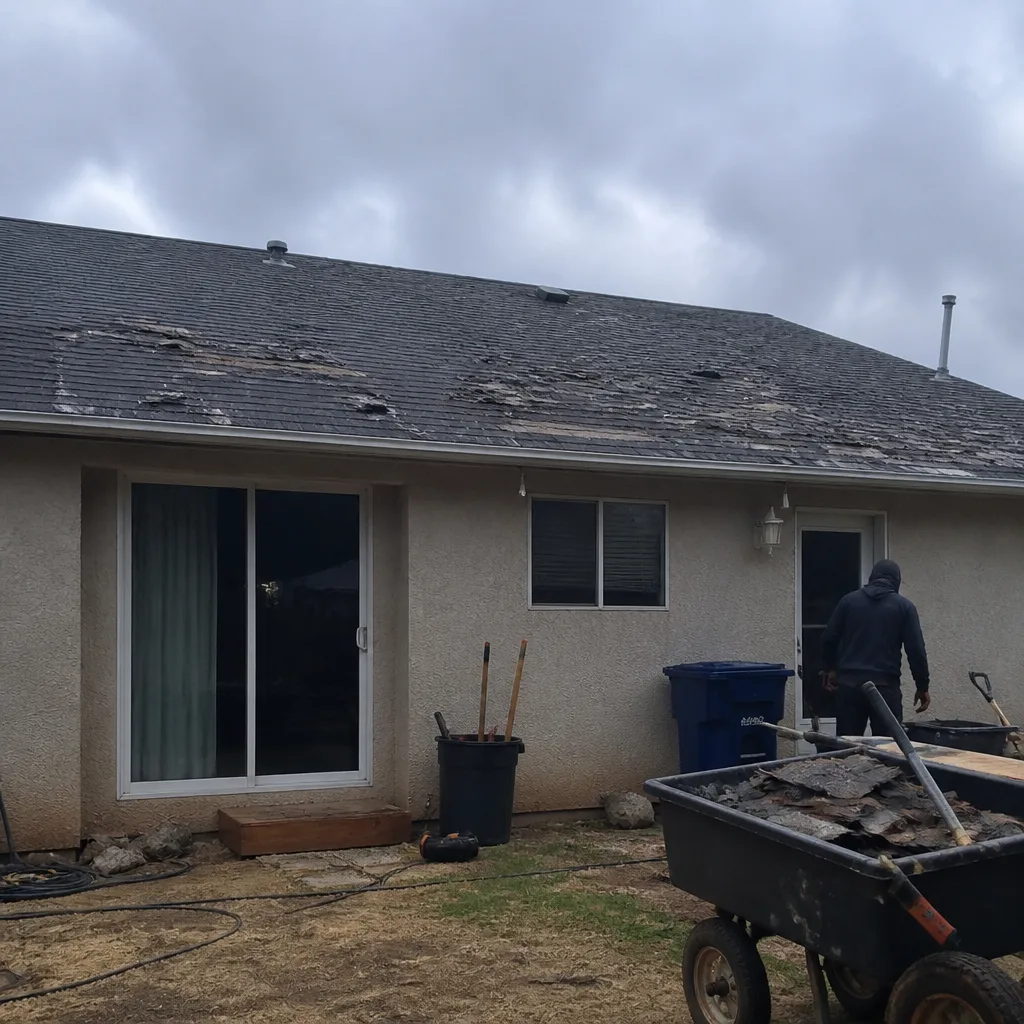
See the difference
 Before
 After
 Before
 After
 Before
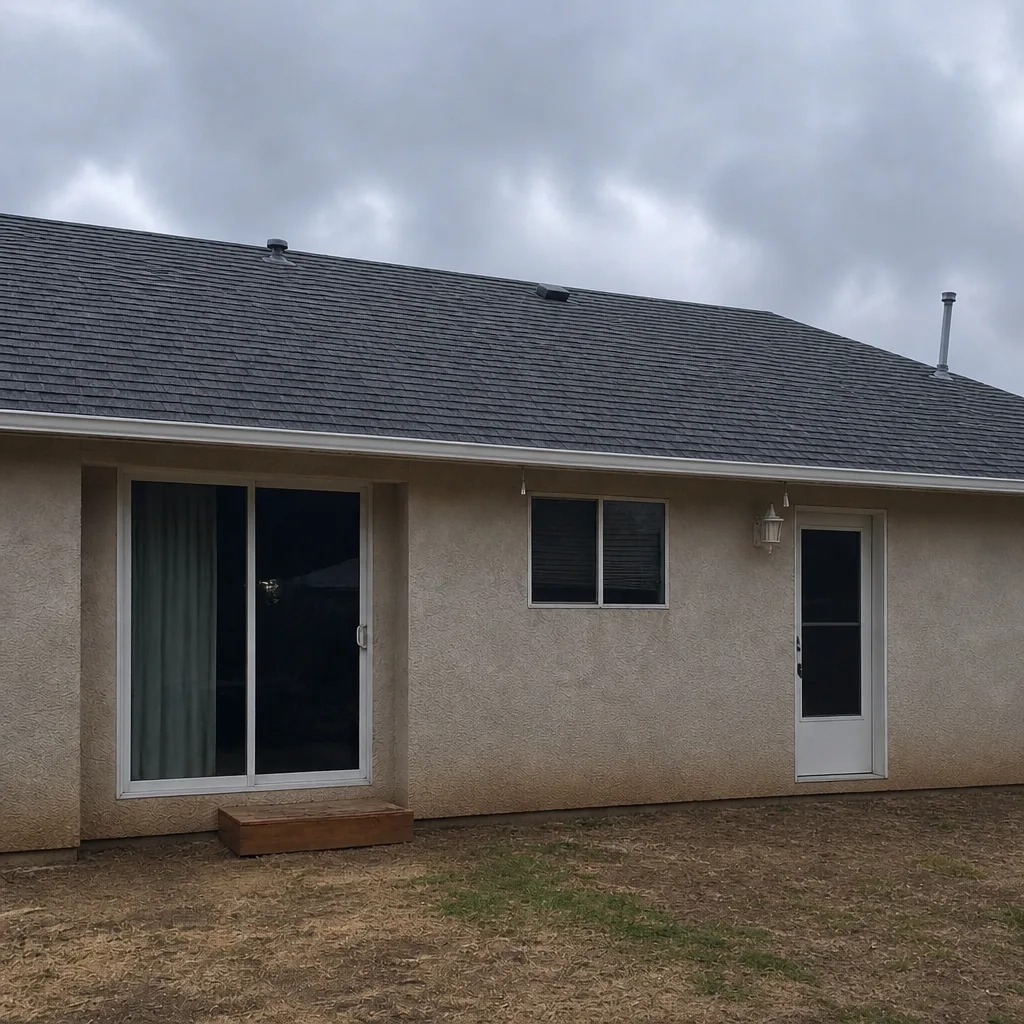 After
When to Call a Professional
Some signs are small enough to note and watch. These are the ones that need a professional now: daylight visible through the roof deck from the attic, sagging or spongy decking, active or recurring interior leaks, sagging structural members, or any sign that the flashing sealant has failed across multiple joints. Get off the roof and call. Beyond those, a professional inspection is worth it whenever you’re not sure whether a sign is cosmetic or structural, when you’ve just bought a house, or when you want an honest read before deciding between a repair and a replacement. Roofer Mesquite offers free estimates in Mesquite. Call (855) 916-4744 and we’ll schedule a time to look at it properly.
We answer 24/7. Fast dispatch from 7am to 7pm, Sunday through Friday, and closed on Saturday. A call outside dispatch hours is booked into the next opening.
Frequently Asked Questions
The earliest signs are usually granules accumulating at the downspouts, dried or cracked flashing sealant, and attic heat or humidity that doesn’t vent properly. None of these are visible from the street, which is why an honest inspection is the first step. Call (855) 916-4744 for a free estimate.
Weathered shingles are faded and shedding some granules but still shed water and keep their seal. Failing shingles are cracked, lifted past their seal line, or losing fastener integrity. The difference is best confirmed on the roof, so get an inspection before you commit to either a repair or a replacement. Call (855) 916-4744 to schedule one.
Not automatically. Granule loss tells you the roof is aging and the protective coating is thinning. Whether that means a targeted repair, a reseal, or eventual replacement depends on how much has shed and how the rest of the system is holding up. You still have repair options if you act while the sign is cosmetic. Call (855) 916-4744 to find out where yours stands.
Heat cures the sealant and pulls the oils out of it, so it dries and cracks in place rather than washing away. The crack is often hairline and easy to dismiss until a storm pushes water into it. In Mesquite we check flashing joints during every inspection because the desert version of this failure is much less obvious than it is in wet climates. Call (855) 916-4744 for a free estimate on a flashing reseal.
It depends on the sign. Cracked flashing should be resealed within weeks, a failed shingle within days to weeks, and sagging decking calls for immediate inspection. Granule loss in the gutters gives you weeks to months, which is exactly the window to use. When in doubt, an inspection removes the guessing. Call (855) 916-4744 to get one.
Yes. Our inspection is a standalone diagnostic service, not a sales funnel. If a repair is all your roof needs, we’ll tell you, and if a replacement makes more sense, you’ll have the written findings to back that up. You also get to choose the right material from seven recognized brands rather than being handed a single take-it-or-leave-it quote. Call (855) 916-4744 to schedule yours.
The Bottom Line
The roofing signs that will cost you the most in Mesquite are the ones you can’t see from the driveway. Granule grit in the gutters, cracked sealant around the flashing, and an attic that runs too hot are quiet and easy to dismiss, but they’re the earliest signals you get, and they’re all still in the repair window. Structural trouble and active leaks are the expensive, late-stage signs. The play is simple: check the signs that are free to check, get an inspection the moment something looks wrong, and use the decision timeline in this guide to act before a small fix becomes a full replacement. We’ll tell you if a repair is all you need, and we mean it.
From roof repair through roof replacement, we cover the full life of your roof, and a standalone inspection is always available whether or not you end up buying anything. Choose from seven trusted roofing brands to match your budget and your roof, including GAF, CertainTeed, and Tamko systems with manufacturer-backed warranty programs. If your roof is in Mesquite, we’re the Mesquite roofing specialist that can look at it, tell you the truth, and handle the job from the first inspection to the final nail. Need us now? Start at Roofer Mesquite and see how a single call covers the whole roof. Call (855) 916-4744 to schedule your free estimate. We answer 24/7. Fast dispatch from 7am to 7pm, Sunday through Friday.
Written by the team at Roofer Mesquite.