
Last updated November 18, 2026
 Metal roofing
 Architectural shingles
 Tile roofing
 GAF
 Owens Corning
 Flat & low-slope
Free roof inspection with deck photos before we talk money - GAF and Owens Corning certified installation
Seasonal Roofing Care for Mesquite: Year-Round Homeowner’s Guide
Most seasonal roof care advice assumes four equal seasons. Mesquite doesn’t work that way. What we actually get is a long, punishing UV season that runs from spring into fall, a short and intense monsoon window in July and August, and two mild shoulder periods in between. Each of those leaves a different fingerprint on a roof, and each calls for a different response. The monsoon itself lasts roughly six weeks, but the debris and moisture it pushes into roof valleys can sit there causing problems for the other ten months if nobody clears them. This guide walks through what each part of the Mesquite year does to asphalt, tile and metal roofing, and what to check and when. Our technicians have up to 8 years of experience reading exactly this kind of wear.
Quick Answer
Seasonal roof care in Mesquite means prepping and resealing before summer heat peaks in April and May, clearing valleys and checking flashing after every monsoon storm in July and August, documenting any damage in September while repair scheduling is still easy, and inspecting for freeze-thaw movement during the brief winter cold snaps. Asphalt shingles, tile and metal each age at a different pace under this pattern, so maintenance frequency should follow the material, not a generic calendar.
Styles & brands we work with
- Architectural shingles
- Metal roofing
- Tile roofing
- GAF
- Owens Corning
- Flat & low-slope
Table of Contents
- Why Mesquite Roofs Age Differently
- Pre-Summer Prep: What to Do Before 100°F
- Monsoon Response: The Post-Storm Checklist
- Post-Monsoon Assessment: Document Now, Repair Easy
- Winter Readiness in a Mild Desert Climate
- How Asphalt, Tile and Metal Respond to the Mesquite Year
- Your Year-at-a-Glance Maintenance Schedule
- Why a Standalone Inspection Beats a Sales Pitch
Why Mesquite Roofs Age Differently
A roof in a climate that freezes hard for months has one dominant enemy: ice. A roof in Mesquite has a different set of them, and they don’t arrive in the same order. The biggest is ultraviolet radiation. Months of intense desert sun bake asphalt shingles, breaking down the oils that keep them flexible. Granules that should stay embedded start loosening. The surface goes from a uniform color to a faded, patchy gray. That process is slow and invisible day to day, which is exactly why it’s easy to ignore until a shingle cracks.
Heat is the second force, and it works from underneath as well as above. Attic temperatures climb, and the roof deck expands and contracts with daily swings. Thermal expansion is hardest on fasteners, sealant lines and the joints where two roof planes meet. In our experience, the failures we see in Mesquite most often start at those transition points, not in the middle of a field of shingles.
The third force is water, but it arrives all at once. Desert flash rain dumps a large volume in a short time. Gutters overflow, valleys fill, and water finds any gap in flashing. Then it’s gone, and the roof dries out fast. That brief wet-then-dry cycle is easy to miss if you’re not looking right after a storm. A lot of the damage we diagnose during roof inspection appointments started as a small monsoon intrusion that nobody noticed for months.
Mesquite’s position in the Virgin Valley matters too. The surrounding desert and nearby river corridor mean wind-driven dust settles on roofs and works into seams, and the open sky means almost nothing blocks the sun. None of this is catastrophic on its own. Combined over a year, it adds up to a wear pattern you won’t see in wetter or colder parts of the country.
Pre-Summer Prep: What to Do Before 100°F
April and May are the most valuable weeks on the Mesquite roof calendar. This is your last comfortable window to fix small problems before temperatures cross 100°F and thermal expansion peaks. Sealants applied in cool weather cure properly; the same sealant applied in July heat can skin over too fast and fail early.
Here’s what a pre-summer pass should cover:
- Walk the roof and check every flashing point. Look at the base of chimneys, around vent pipes, at skylight edges and where the roof meets a wall. Seams that look fine in April can open up once the deck starts moving in the heat.
- Clear debris from valleys and behind penetrations. Winter wind blows dust and plant material into the low spots. Clear it before summer so it doesn’t trap moisture when the first rain comes.
- Re-seal lifted and failed caulk lines. Any sealant that’s cracked, pulled away or turned brittle needs replacing now, while it’s still workable.
- Check the attic for daylight and signs of heat stress. From inside, look for light coming through the decking and for staining on rafters. Poor ventilation makes everything above worse in summer.
- Confirm gutters and downspouts are clear and firmly attached. Loose hangers will only get looser once the monsoon load hits.
If your roof is covered in asphalt shingles, this is also the time to look at granule loss. Run a hand along a shingle surface and check for grit. Heavy granule loss means the shingle is aging faster than its age would suggest, and it’s worth knowing before summer stress arrives. Materials from Owens Corning and IKO both handle heat well when they’re intact, but no shingle tolerates a sealant failure left unaddressed through a desert summer.
Monsoon Response: The Post-Storm Checklist
Mesquite’s monsoon window is roughly six weeks in July and August, and it delivers hard, fast rain. The damage rarely comes from the total rainfall over the season. It comes from a single event dumping a lot of water into a system that can’t shed it fast enough. That’s why a post-storm checklist matters more than a general summer inspection here.
After any significant monsoon rain, here’s what to check:
- Look at the ground first. Before going up, walk the perimeter and check for shingle pieces, granules in gutters, or signs of water sheeting down an exterior wall. These are clues about what the roof just did.
- Clear roof valleys. Water collects in the low point where two roof planes meet. If debris washed into that valley, water backs up under the edges of the roofing material. Clear it as soon as the roof is dry enough to walk safely.
- Inspect flashing at the roof planes, walls and penetrations. Storm-driven rain gets pushed sideways and finds flashing gaps that ordinary rain misses.
- Check the attic and ceiling for new staining. Interior staining after a storm is a strong signal that water got past the roof surface. Note where it is, because it helps trace the entry point from above.
- Look at the ground around the foundation. Water pooling near the house, or soil washed away from a downspout outlet, means the drainage system needs attention.
Do not climb onto a wet roof. Water, dust and heat combine to make the surface slick, and a fall is far worse than a delayed inspection. If a storm has caused real damage, call a professional. If you see anything that concerns you but aren’t sure whether it’s serious, a no-purchase roof inspection is the honest way to find out rather than guessing from the ground.
Post-Monsoon Assessment: Document Now, Repair Easy
September is the calm after the storm, and it’s the best month of the year in Mesquite to assess what the season did to your roof. The heat is easing, the rain is done, and there’s still plenty of time before the cooler months to schedule any repair work on your own terms. Leave it until winter and you’ll be dealing with it under pressure.
Documentation is the piece most homeowners skip, and it’s the piece that matters for warranty claims. If a manufacturer warranty ever comes into play, you’ll want a clear record of what happened and when. Here’s how a good post-monsoon assessment is done:
- Photograph the whole roof from the ground and the accessible planes. Catching a problem in a photo the day you find it is worth more than a description months later.
- Write down interior clues. Note any new ceiling stains, bubbles, or discoloration, with the date you first noticed them.
- Have the roof inspected by someone who diagnoses rather than sells. A standalone roof inspection gives you an assessment you can act on without a purchase attached.
- Get repairs scheduled while the calendar is open. Fall and early winter are easier windows for repair work in a mild desert climate than the summer crunch.
- File any paperwork with your records. Keep the inspection findings with anything related to your roof’s manufacturer warranty, so a claim later isn’t a scramble.
If the inspection shows the roof is sound, that’s your answer and you’re done for the season. If it shows wear that a targeted repair can fix, fix it now. And if it shows a roof that’s genuinely at the end of its life, you’ll know that too, with the evidence to support the decision. That’s the inspection we offer: an honest read, not an automatic upsell toward roof replacement.
Winter Readiness in a Mild Desert Climate
Mesquite winters are mild, but “mild” doesn’t mean “harmless.” The occasional freeze after a warm stretch is harder on a roof per event than steady cold in a place that freezes all winter. A roof that never freezes stays mostly stable. A roof that warms up, then freezes hard, then warms again goes through a full expansion-contraction cycle every time the temperature swings back and forth. That movement stresses the same seams, fasteners and flashing points that summer heat already worked on.
Here’s why the freeze-thaw pattern catches people out: water finds a small gap on a warm afternoon, sits there, then freezes at night and expands. That expansion widens the gap slightly. It thaws, then repeats. Over a handful of cycles a small crack becomes a real opening, and by the time it’s obvious inside, the damage has been going on for a while.
Winter prep in Mesquite should cover:
- Check for hairline cracks in sealant and flashing. These are the entry points freeze-thaw exploits.
- Look at attic insulation and ventilation. A well-vented attic keeps the roof deck temperature closer to the outdoor temperature and reduces the condensation that a mild, occasional-freeze climate can cause.
- Confirm downspouts are in good shape. Any rain that does fall in winter needs to move away from the foundation.
- Clear any remaining debris. Damp material sitting against the roof surface through winter is a slow problem.
Winter is also the natural time to look ahead. If your roof is on its last few years and summer made that clear, planning roof replacement over the cooler months gives you time to choose the material you want rather than taking whatever is available in a hurry.
How Asphalt, Tile and Metal Respond to the Mesquite Year
Not every roof wears the same way under the same conditions. The material determines which part of the Mesquite year beats on it hardest, and that in turn sets how often it needs care. If you’re not sure what’s on your roof, a roof inspection will tell you, along with what shape it’s in.
Asphalt shingles take the brunt of the UV season. The sun breaks down the oils in the shingle over time, and the granules loosen. In Mesquite, asphalt is most sensitive to the long, hot stretch from spring into fall, and granule loss tells the story. An asphalt roof here benefits from a pre-summer inspection every year and a post-monsoon check every season. Owens Corning and IKO both make shingle systems that hold up well in desert sun, and they behave better when small issues are caught early.
Tiles are the most UV-resistant of the three, so the heat itself is less of a problem. The frame underneath is where the attention goes. Tile is heavier, and it holds heat, so the deck and underlayment matter more than the tile surface. Freeze-thaw in winter is the bigger stress for tile because a crack or displaced tile lets water under the field where it can sit. Tiles from Boral are designed for this climate, but they still need the underlayment and the surrounding flashing checked regularly.
Metal roofing handles UV and heat well, and it sheds flash rain efficiently. Its weak points are fasteners, sealant lines and the panels’ thermal movement. Metal expands and contracts more noticeably than other materials, so winter freeze-thaw and summer heat both work on the same seams. Metal needs fastener checks at the shoulder seasons and flashing checks after monsoon storms. Atlas and Tamko both make metal components that work in this climate, and proper installation is what makes the difference.
The takeaway: the maintenance calendar for a Mesquite roof depends on material. Asphalt wants annual and post-storm attention. Tile wants the underlayment and flashing watched closely. Metal wants fasteners and seams checked at each season change.
Your Year-at-a-Glance Maintenance Schedule
Here’s the whole Mesquite year on one page, so you can pin it to a fridge or a note. These are typical windows, not hard dates; if something looks wrong off-schedule, don’t wait.
- April – May: Pre-summer inspection. Check flashing, sealant, valleys and attic. Re-seal anything failing while it’s cool enough to work.
- June: Last chance to fix anything the April – May pass flagged before peak heat. Confirm gutters and drainage are clear.
- July – August (monsoon): Post-storm checks after any significant rain. Clear valleys, inspect flashing, check the attic for new staining. Don’t walk a wet roof.
- September: Post-monsoon assessment. Inspect, photograph, and document. Schedule any repair work now while the calendar is open.
- October – November: Winter readiness. Check seals, flashing, insulation and drainage before the first freeze-thaw cycles.
- December – February: Watch for interior clues after cold snaps. Good time to plan ahead if replacement is on the horizon.
- March: Shoulder-season review. Note anything winter did, and get ahead of the summer prep window.
Two things to remember about this schedule in Mesquite. First, the monsoon is short but intense, so post-storm checks matter more than the calendar suggests. Second, the shoulder periods are your best windows to get professional eyes on the roof, because it’s comfortable to work and easy to book. Our technicians have up to 8 years of experience working in this exact pattern, and we’ve learned that a little attention at the right moment prevents a lot of work later.
Why a Standalone Inspection Beats a Sales Pitch
Most homeowners only think about their roof when something goes wrong. That’s backwards. A roof that gets regular, honest inspection tends to last longer and fail less expensively, because small issues get caught before they become big ones. The problem is that most inspections come attached to a sale. You call about one thing, and the visit turns into a pitch for a full replacement.
We do inspection differently. A standalone inspection is a diagnostic service, not a lead-generation step. You get an honest read on your roof’s condition, whether that means “this is fine, see you next year,” “this needs a targeted repair,” or “this roof is genuinely at the end of its life.” If a repair is all you need, we’ll tell you that, and we mean it. If replacement is the real answer, we’ll show you the evidence so you can make that call yourself rather than take our word for it.
If your roof is covered in one of the systems from GAF, CertainTeed, Owens Corning or any of the seven brands we work with, we can diagnose it whether we installed it or not. Knowing multiple shingle systems means we can read problems on virtually any residential roof, so the answer isn’t “you need a new roof” when the real answer is “this one seam needs attention.”
When you’re ready for a straight answer on your roof, call (855) 916-4744. We answer 24/7. Fast dispatch from 7am to 7pm, Sunday through Friday. Every estimate is free and written as a line-item quote, so you know exactly what the price covers before any work begins.
Common Mistakes to Avoid
- Following a generic four-season calendar. Mesquite isn’t a four-season climate. Treating your roof like it’s in a wet or cold climate means you’ll miss the UV season and the monsoon window, which are the two that actually drive damage here.
- Skipping the post-monsoon documentation. September is the easiest month of the year to get your roof assessed and repaired. Putting it off until winter means doing it under pressure, and losing the record that helps a warranty claim later.
- Going up on a wet roof. A roof that just took a desert flash rain is slick, dusty and hot. A fall is not worth the risk of a quick look. Wait for it to dry, or have it inspected professionally.
- Letting debris sit in the valleys. The monsoon leaves material behind. Left in place, it holds moisture against the roof surface and blocks the drainage the valley was designed to handle.
- Sealing in the heat. Sealant applied in July heat can skin over and fail early. Do sealant work in the April – May window whenever possible. This is also a job that’s safer for a trained professional when it’s on a steep roof or high up.
- Believing the first “you need a new roof” you hear. Not every worn shingle means replacement. A targeted repair on a sound roof is often the right answer. A standalone inspection gives you a second read.
- Ignoring freeze-thaw. A mild winter isn’t a free pass. A roof that warms, freezes and thaws repeatedly can open small gaps that grow into leaks. Check the seals and flashing before the first cold snap.
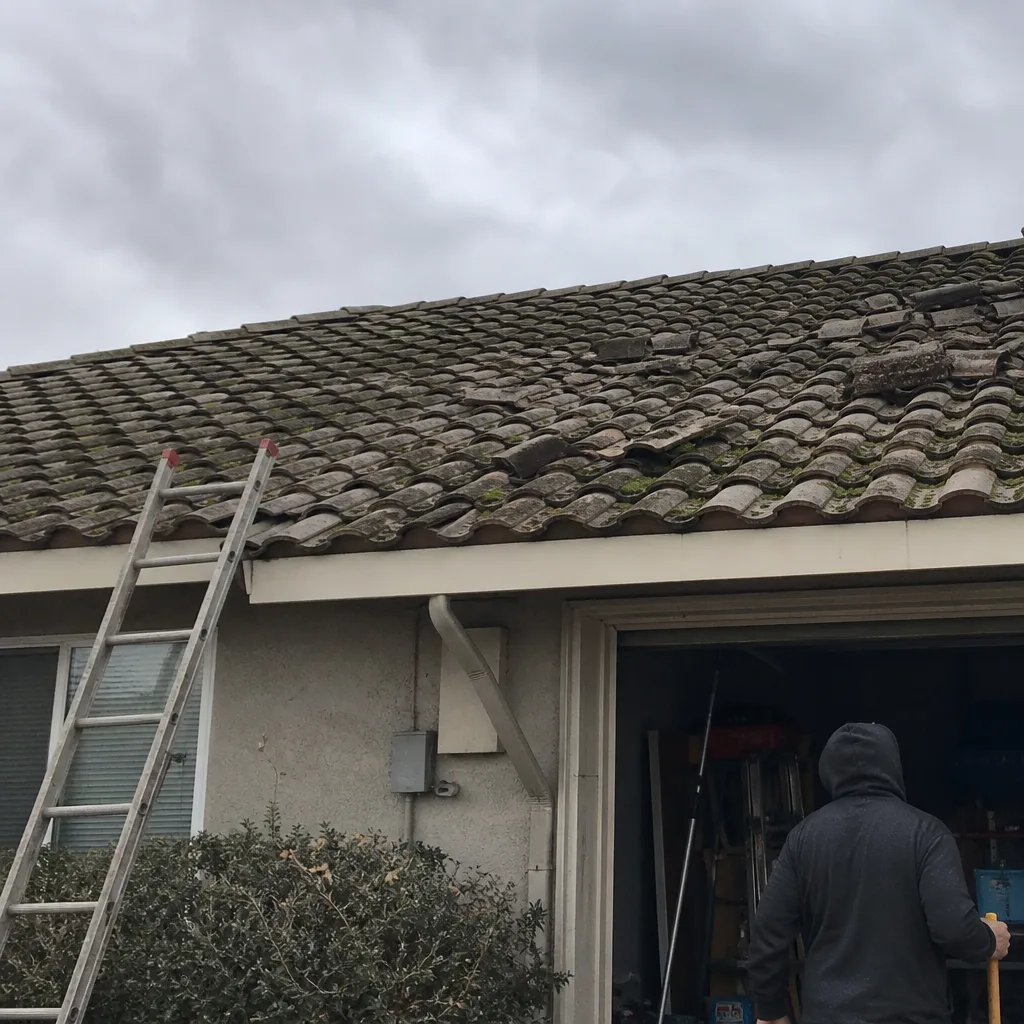
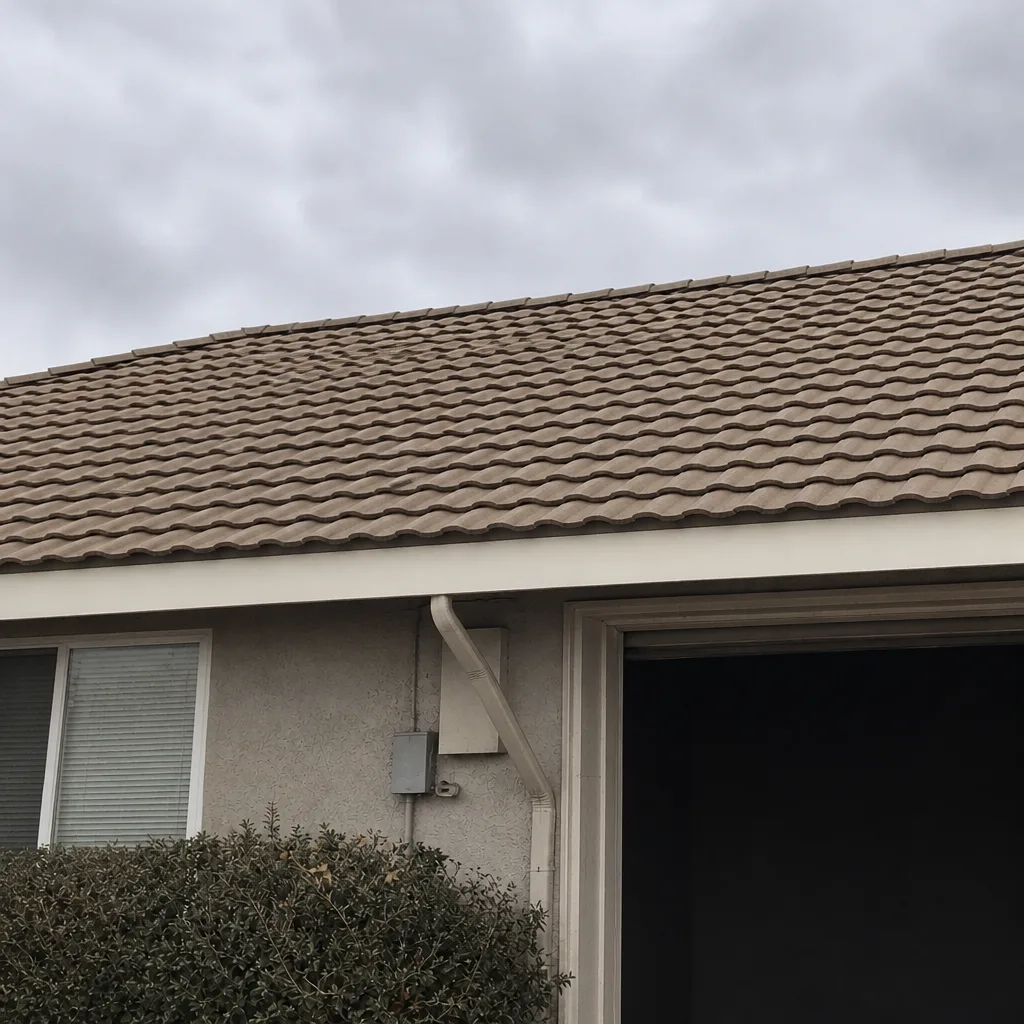
See the difference
 Before
 After
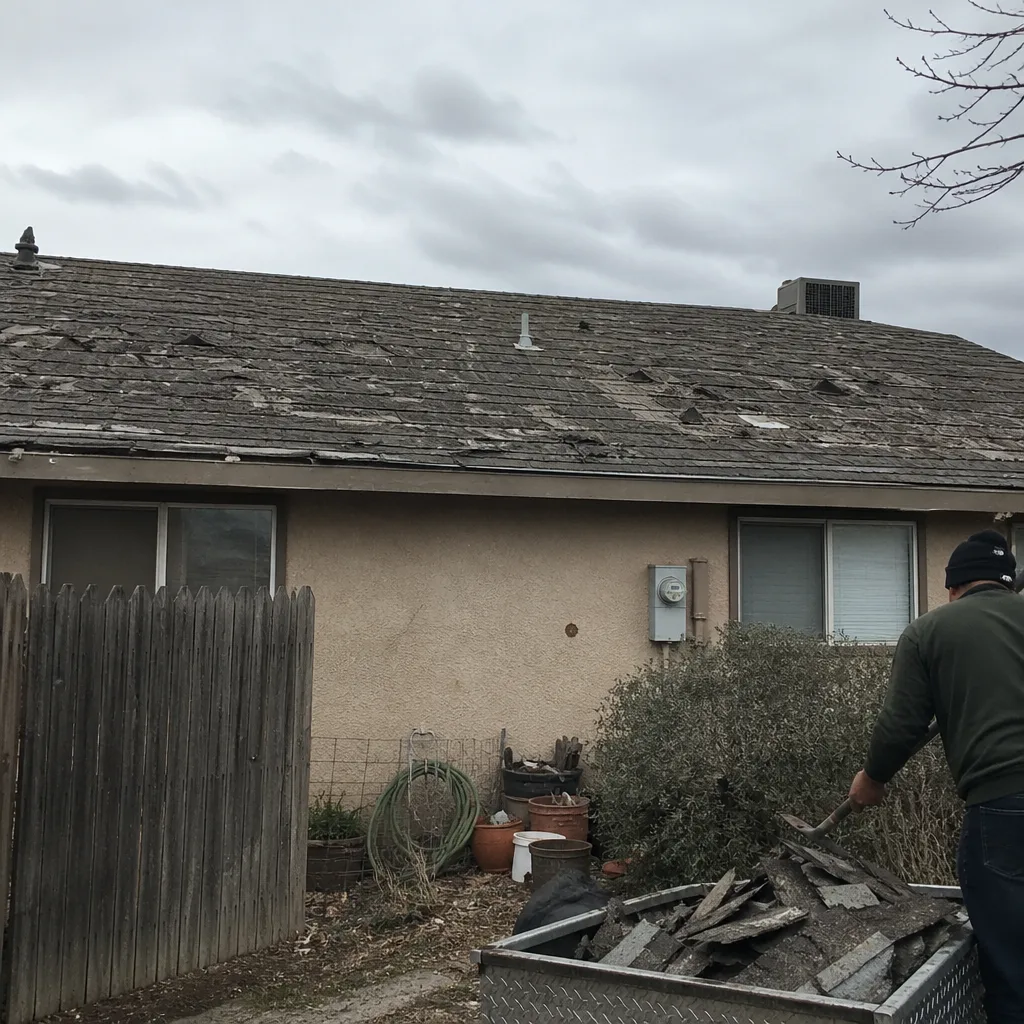 Before
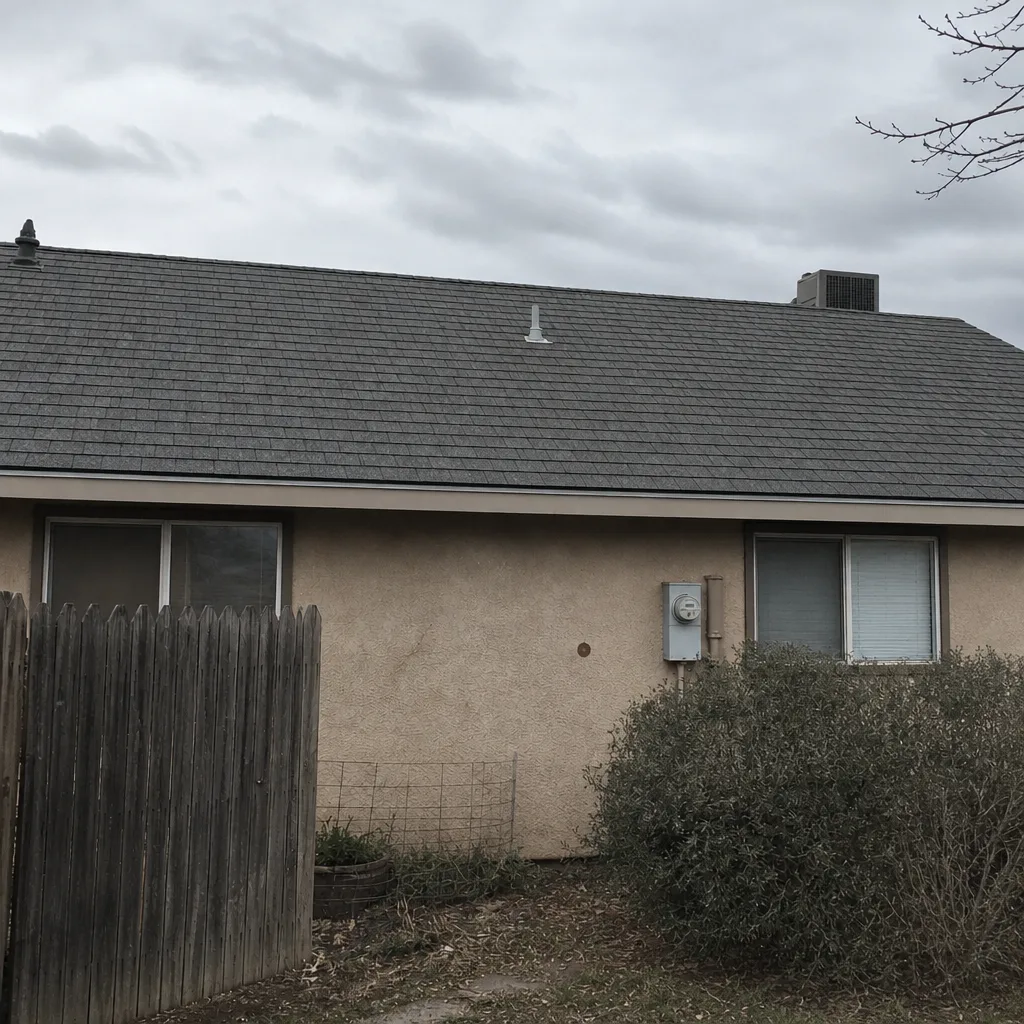 After
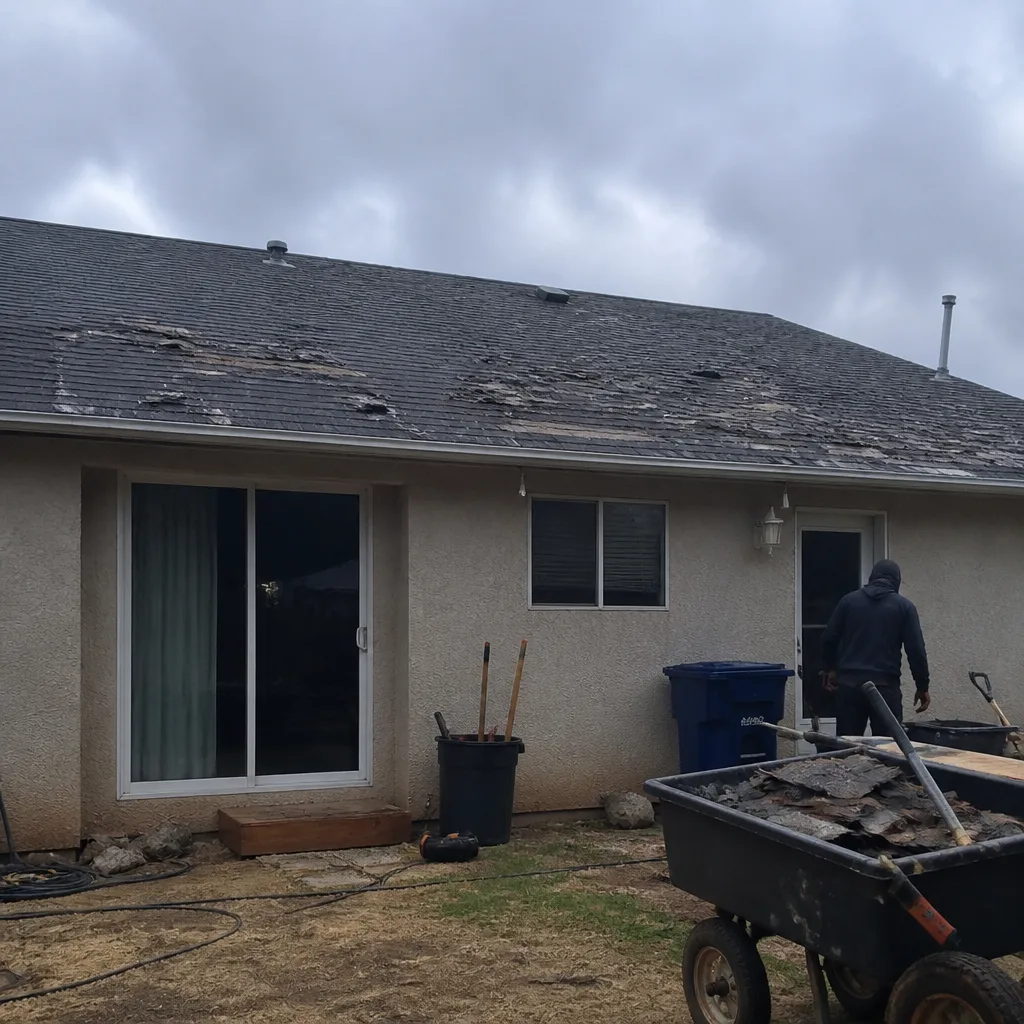 Before
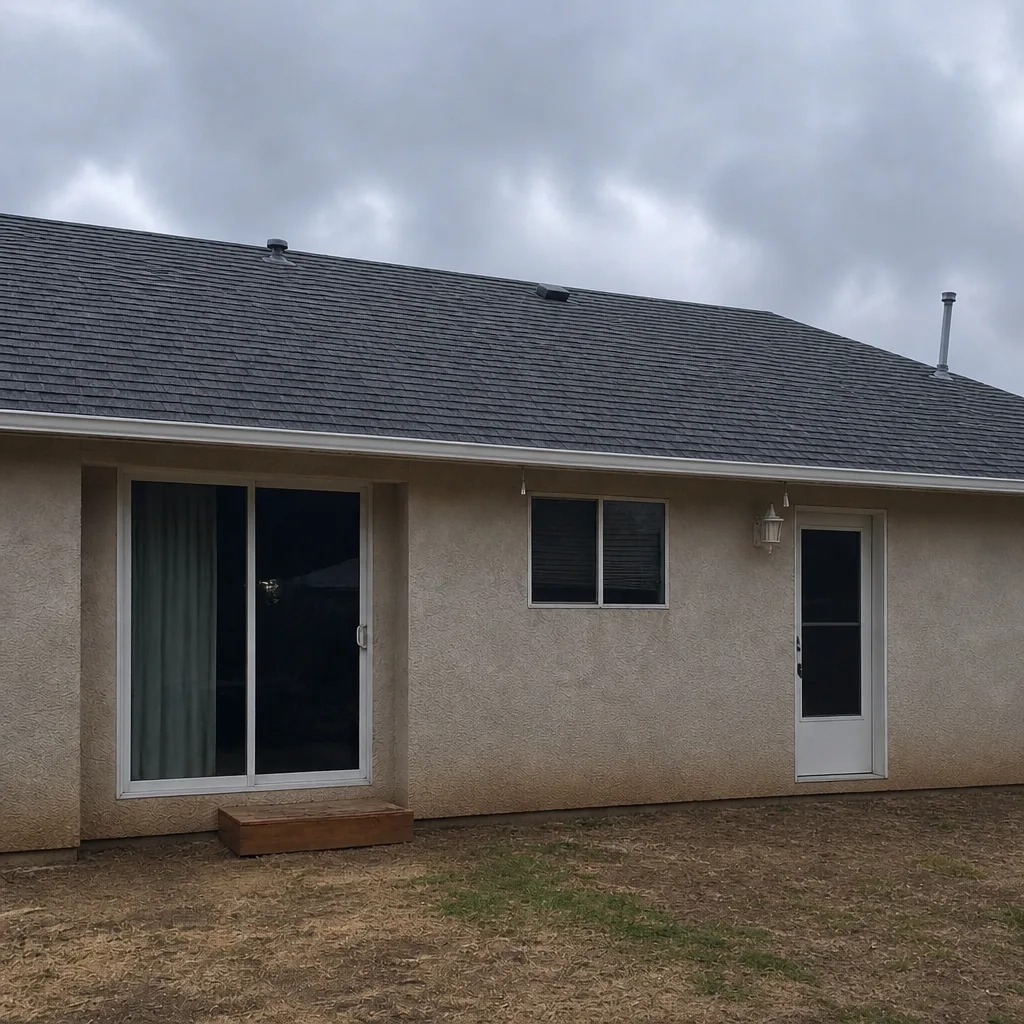 After
When to Call a Professional
Many seasonal tasks, like clearing debris and taking photos, are fine for a homeowner to handle carefully from the ground. But some situations call for a trained eye. Call a professional if any of these apply: you see interior staining or bubbling after a storm; flashing is loose or pulled away at a chimney or wall; you notice shingles cracking, curling or losing granules in patches; tiles are cracked or displaced; metal fasteners are backing out; or you’re simply not sure whether what you’re seeing is serious. A steep roof plus heat plus dust is a bad combination for a homeowner. High-tension components, electrical and gas penetrations, and anything at height are jobs for a trained professional.
Roofer Mesquite offers free estimates in Mesquite, and a standalone inspection when you just want a straight answer. Call (855) 916-4744. We answer 24/7. Fast dispatch from 7am to 7pm, Sunday through Friday.
Frequently Asked Questions
One good inspection close to the start of the season is a strong base, but a single look a year misses the monsoon. Mesquite’s damage pattern comes from the UV season and the short, intense rain window, so the safest approach is a pre-summer inspection plus a post-storm check in July and August, and a documentation pass in September. Call (855) 916-4744 for an exact quote on an inspection – estimates are free.
A standalone roof inspection in Mesquite is typically scheduled as a free assessment, and any repair or replacement work is priced per job by a written estimate. That estimate sets the final price, so you’re not working from a ballpark. Call (855) 916-4744 to schedule yours – estimates are free.
After a storm, check the ground for shingle pieces or granules, clear the roof valleys, inspect flashing at walls and penetrations, look in the attic for new staining, and check drainage at the foundation. Don’t walk on a wet roof. If anything looks off, have it inspected. Call (855) 916-4744 – we answer 24/7, with fast dispatch from 7am to 7pm, Sunday through Friday.
Roof repair in Mesquite is priced per job based on the scope of the work, with a written line-item quote before anything starts. There’s no flat fee table, because the right price depends on what’s actually wrong and how much material the repair needs. Call (855) 916-4744 for an exact quote – estimates are free.
No, the price is set by the written estimate, and that estimate is what the final price follows. We document the scope and the line items up front so you know what you’re paying for. If something unexpected turns up on the roof, we show you before doing any additional work. Call (855) 916-4744 to get your estimate started.
Yes, a light freeze is a real problem for a roof in a mild climate because a warm-then-cold cycle expands and contracts the roof deck and opens small gaps in seals and flashing. Steady cold is actually gentler than an occasional freeze-thaw swing. Check the seals and flashing before the first cold snap and you’ll catch it early. Call (855) 916-4744 for an inspection before winter.
The Bottom Line
Mesquite roof care isn’t about following a generic seasonal calendar. It’s about knowing what each part of the year actually does to the roof: the long UV season stressing shingles and expanding the deck, the short and intense monsoon pushing water into valleys and flashing, and the mild-but-swinging winter working seams through freeze-thaw. Asphalt, tile and metal each respond to that pattern differently, which is why maintenance frequency should follow the material. The single most useful habit is a pre-summer inspection and a post-monsoon assessment, so small problems get caught before they become expensive ones. If you’re not sure where your roof stands, get a straight answer.
Whether you need inspection, repair or a full replacement, one company handles it from the first look to the final nail. We work with seven recognized roofing brands, including GAF, CertainTeed, Owens Corning, IKO, Atlas, Tamko and Boral, so you can match the right material to your budget and your roof. Call (855) 916-4744 for a free estimate. We answer 24/7. Fast dispatch from 7am to 7pm, Sunday through Friday. Read more about how we work at Roofer Mesquite and what roof care looks like across Mesquite.
Written by the team at Roofer Mesquite.