
Last updated November 18, 2026
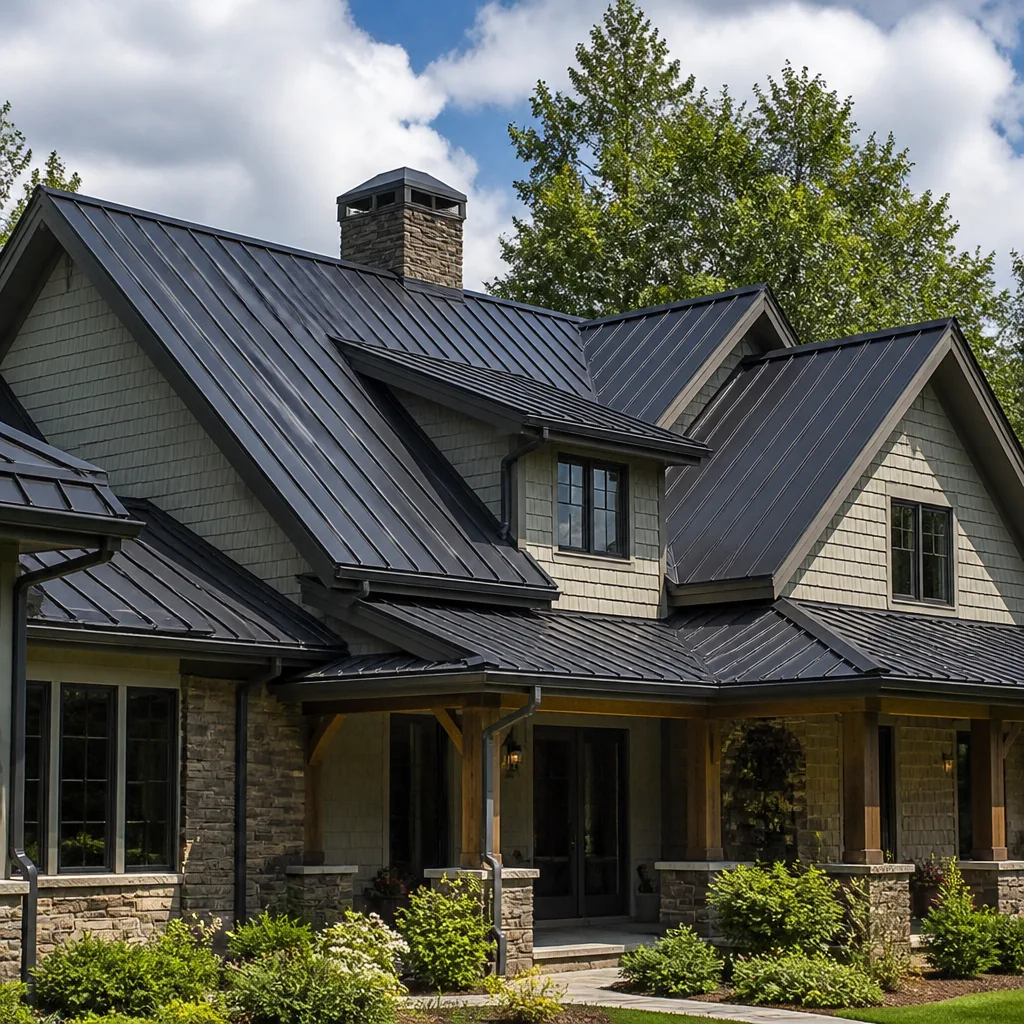 Metal roofing
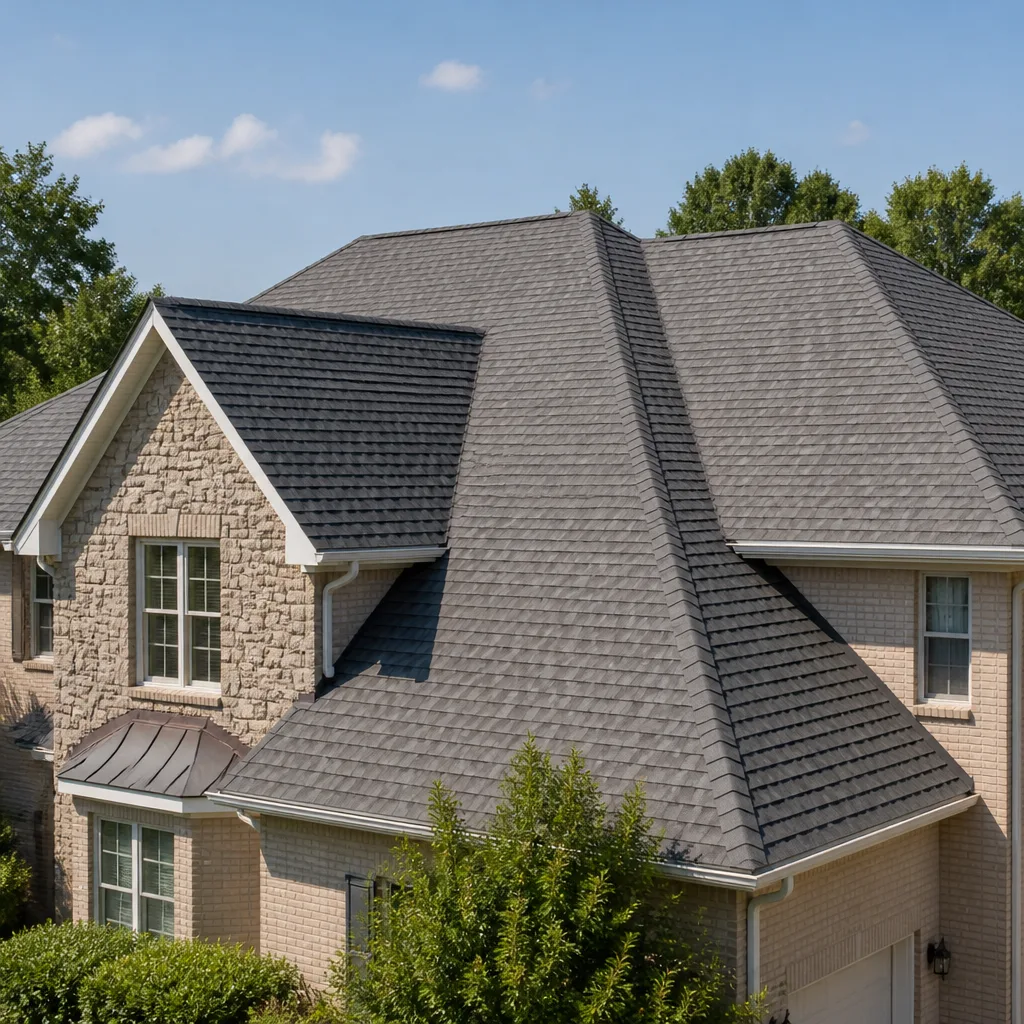 Architectural shingles
 Tile roofing
 GAF
 Owens Corning
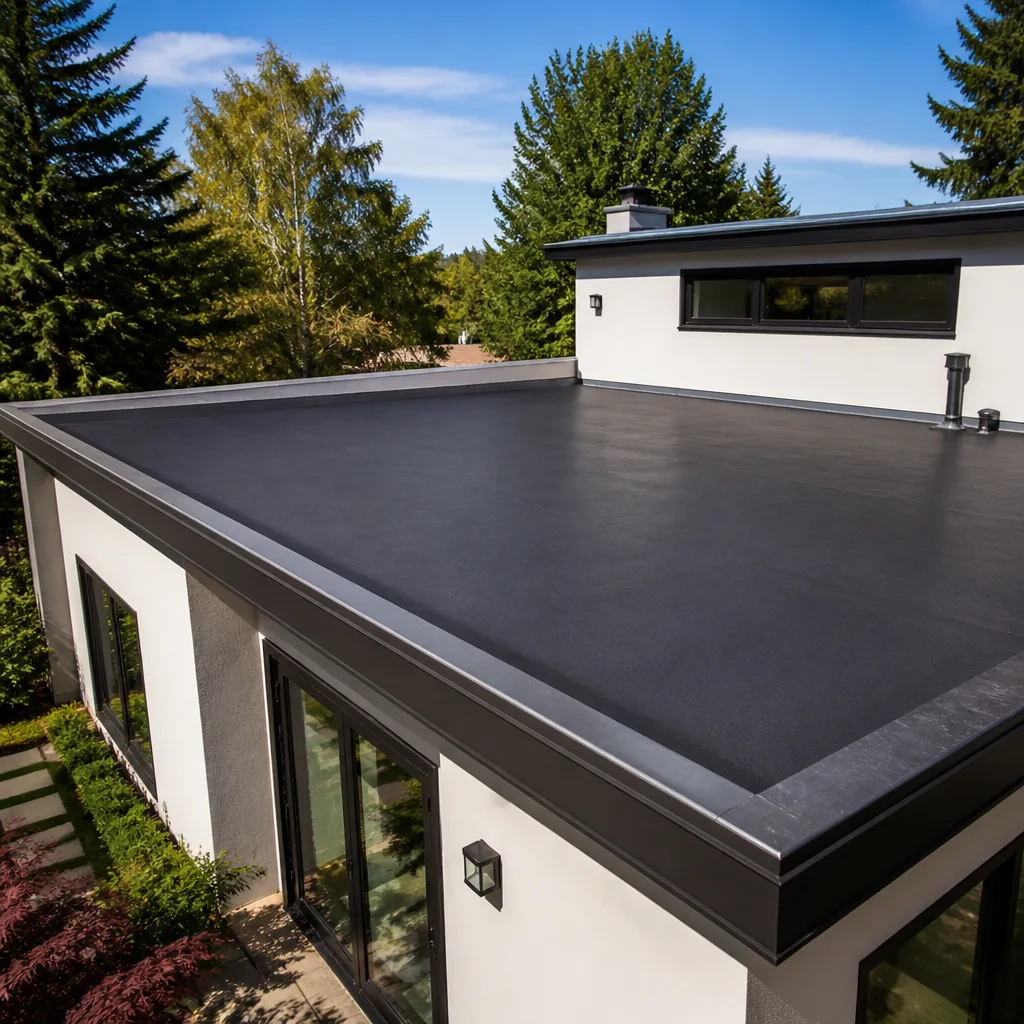 Flat & low-slope
Free roof inspection with deck photos before we talk money - GAF and Owens Corning certified installation
Roofing Emergency Preparedness Guide for Mesquite Homes
Most roofing “emergency” advice is written for places that get hurricanes. Mesquite doesn’t. What Mesquite gets is a specific mix of desert weather that behaves in ways homeowners don’t expect: monsoon microbursts that slam one neighborhood and skip the next, and hailstorms that track up out of Arizona and arrive with little warning. Those events rarely make regional news, which is exactly why so many homes here have no plan at all. This guide is about preparing for the emergencies that actually happen in the Virgin River Valley – and knowing what to do in the first hours after one hits, before the damage gets worse or an insurer gets difficult.
Quick Answer
Roofing emergency preparedness in Mesquite means preparing for intense monsoon wind and rain, wind-driven hail cells tracking up from Arizona, and high-wind events along the Virgin River corridor – not for blizzards or coastal storms. A solid plan is three things: a pre-season checklist you can finish in about half an hour when an advisory is issued, a clear damage-documentation routine with photos taken before anything is touched, and a temporary tarping decision you’ve already thought through. That preparation is what protects both the roof and the insurance claim.
Styles & brands we work with
- Architectural shingles
- Metal roofing
- Tile roofing
- GAF
- Owens Corning
- Flat & low-slope
Table of Contents
- The Three Weather Threats That Actually Matter in Mesquite
- The 30-Minute Pre-Event Checklist for Clark County Storm Advisories
- How Wind and Rain Damage Roofs Differently
- Hail in the Virgin River Valley: Uncommon, But Not Impossible
- How to Document Roof Damage for Your Insurance Claim
- Emergency Tarping: What Works and What Makes It Worse
- Filing a Nevada Homeowner’s Insurance Claim for Roof Damage
- Building a Roof That Handles the Next Event
The Three Weather Threats That Actually Matter in Mesquite
Mesquite sits where three desert weather systems meet: the Mojave to the south and west, the Great Basin pushing down from the north, and the summer monsoon flow coming up from the Gulf of California. That overlap creates a short, sharp severe-weather season rather than a long one, and the events are local. A microburst can tear shingles off a roof on one side of the Virgin River corridor while a home a few streets away sees nothing but a stiff breeze. We’ve inspected roofs in Mesquite after these events where the damage line follows a single wind path.
It helps to think of the threats in three categories, because each one hurts a roof differently:
- Monsoon microbursts (July through September). Sudden downdrafts producing short bursts of extreme wind and a wall of rain. The wind gets under lifted shingle tabs and peels them back; the rain then drives sideways into whatever opening the wind just made.
- High-wind events off the Virgin River corridor. The valley channels wind, and it accelerates through the gaps. These are sustained or gusting events that work on ridge caps, edge metal, and any shingle that was already loose or poorly nailed.
- Hail cells tracking up from Arizona. Hail is uncommon here compared with the high plains, but when a cell comes up from the south it can carry hail that cracks shingle granules and bruises the mat underneath – damage you often can’t see from the ground.
Notice what’s not on that list: snow load, ice dams, and coastal wind-driven salt. Those drive roofing advice in other parts of the country, not here. Preparing for them wastes time and money. Preparing for monsoon wind, valley wind, and the occasional hail cell is what actually protects a Mesquite home.
The 30-Minute Pre-Event Checklist for Clark County Storm Advisories
When the National Weather Service issues a wind or severe thunderstorm advisory for Clark County, you have a window to act before the event arrives. This checklist takes about half an hour and costs nothing. Do it in this order.
- Clear the yard and patio. Bring in or tie down anything the wind can pick up: patio furniture, umbrellas, planters, trash bins, loose tools, kids’ toys. Wind-borne objects are a leading cause of broken windows and punctured roofs. Move vehicles out from under trees.
- Walk the perimeter and look up. From the ground, scan the roofline for shingles that are already lifted, curled, or missing and for ridge caps that look loose. Note anything suspicious with your phone before the storm, so you have a “before” record.
- Check the attic for existing leaks. Look at the underside of the roof deck and the rafters for water stains, daylight, or damp insulation. A roof that’s already leaking will leak badly under driving rain.
- Clear the gutters and downspouts. In desert country it’s easy to forget drainage, but monsoon rain arrives fast. Clogged gutters push water back under the edge of the roof and down the fascia.
- Check the trees. Trim back any branches that overhang the roof. In Mesquite, mature trees near the house are the most common source of wind-driven limb damage to shingles and flashing.
- Know where your shutoff and important documents are. If water does get in, you want your water shutoff and your insurance paperwork easy to find, not a scramble in the dark.
- Charge your phone and save our number. (855) 916-4744. We answer 24/7. Fast dispatch from 7am to 7pm, Sunday through Friday.
None of this is dramatic. It’s the boring work that separates a roof that comes through a microburst with a few missing shingles from one that takes on water. If any step turns up something you’re not sure about, a Roofer Mesquite inspection before the season is the cheapest insurance you can buy.
How Wind and Rain Damage Roofs Differently
Wind and rain are usually described together, but they damage a roof in two separate ways, and understanding the difference tells you what to look for after an event. Wind is the opening act; rain does the interior damage.
What wind does
Wind damage is mechanical. It works on the weakest point first: a shingle tab that was already curling, a ridge cap with a failed seal, a nail that didn’t hit solid decking. Once wind gets under a tab, it lifts and folds it, breaking the sealant strip and often the shingle itself. On a Mesquite roof, this shows up as:
- Missing or lifted shingles, often in a patch that traces the wind path
- Creased or torn shingle tabs that fold back but stay attached
- Displaced ridge caps and damaged hip and ridge shingles
- Lifted or bent edge metal and drip edge
- Granule loss on the downwind slope where wind scoured the surface
What rain does
Rain damage is the follow-on. A shingle field that has lost its seal still sheds most water under a gentle rain, but a monsoon delivers rain sideways at high volume, and that’s when water finds every gap wind created. It wicks under lifted tabs, past failed flashing, and into any penetration that isn’t properly sealed. The visible result indoors – a ceiling stain, a damp patch on a wall – is usually well below and some distance from the actual entry point, which is why tracking a leak by eye from inside is unreliable.
The practical takeaway: after any wind event in Mesquite, look at the roof surface before the next rain, not after. The damage is visible from the ground or from a safe vantage point. What you’re trying to catch is the opening before water turns it into a ceiling repair, an insulation replacement, and a mold problem.
Hail in the Virgin River Valley: Uncommon, But Not Impossible
Hail is uncommon in Mesquite compared with places like the high plains of Texas or Colorado, but it isn’t impossible. When a severe cell tracks up from Arizona, it can carry hail that arrives with little warning. The reason this matters for preparedness is that hail damage is the hardest kind to spot from the ground and the easiest to miss before it turns into a claim dispute.
Hail hurts a roof by impact rather than wind. The stones crack or dislodge the granules that protect the asphalt, and they can bruise or fracture the fiberglass mat underneath. That bruising doesn’t always show as a hole immediately. It weakens the shingle, and the failure shows up seasons later as a soft spot and a leak. On older shingles, the effect is faster.
What to look for after a hail cell passes through:
- Fresh granule loss in a pattern, not just general weathering – look at the downspouts and gutter troughs for a sudden accumulation of granules
- Dings, dimples, or fractures on metal roof panels, vents, and flashing
- Dark or soft spots on shingles, especially on the slope that faced the storm
- Bruised or dented siding, gutters, and downspouts at the same elevation as the roof damage – these are the “witness marks” that confirm hail hit
Because hail is uncommon here, a homeowner may not recognize it for what it is. That’s a reason to get an inspection after any severe storm that carries hail, not to assume the roof came through fine. The best installers use impact-resistant products and proper underlayment to soften the blow, and choosing materials with the right performance tier matters more than most people realize – a reason brands like GAF and CertainTeed offer roofing systems built to handle impact as well as heat. A roof repair inspection after a hail event is how you catch the problem while it’s still a repair rather than a replacement.
How to Document Roof Damage for Your Insurance Claim
The single biggest cause of a disputed or underpaid roofing claim isn’t the damage; it’s poor documentation. Insurers work from evidence, and the evidence you gather in the first hours after an event, before anything gets cleaned up or repaired, often determines the outcome. Here’s the sequence we recommend, in this order.
- Photograph the ground before you touch anything. Start with wide shots of the exterior of the house from each side, then move to close-ups of anything out of place: fallen shingles, displaced vents, dents in gutters, debris in the yard. Date-stamp everything.
- Photograph the “witness marks.” These are the items at the same level as the roof that took the hit – dented gutters, downspouts, siding, A/C units, patio covers. They corroborate the roof damage because they show the storm reached the roof.
- Photograph the roof from the ground with a zoom lens. Get the missing, lifted, or creased shingles from a safe vantage point using a phone or camera zoom. Don’t climb on a wet roof. A wet roof is slick and the decking may be soft, and a fall is a much worse problem than a leak.
- Photograph the interior if there’s any sign of water. Ceiling stains, damp drywall, water at the base of a wall, condensation on the underside of the deck in the attic if you can safely access it. Photograph the leak and its surroundings.
- Write down what happened while the details are fresh. Date, time, and what you observed. A written timeline strengthens a claim.
- Call your insurer and get a claim number before you authorize repairs. Most policies require prompt notice and an opportunity to inspect, so don’t let anyone start tearing off a roof before the claim is filed.
- Get a professional inspection report. This is where a roofing company can help most. A written inspection, with photos, showing the storm-related cause of the damage gives the insurer something to work with.
One more rule: don’t throw anything away. The fallen shingles, the dented gutter section, even the water-stained piece of drywall, all of it is evidence. If you’re not sure what matters, photograph it and set it aside.
Emergency Tarping: What Works and What Makes It Worse
Tarping a damaged roof is a temporary measure to stop water getting in while you wait for repair. Done right, it holds for a few weeks. Done wrong, it can cause additional damage – to the roof, to the house, and to your claim. It’s worth being clear about what this job actually involves, and doing the math on whether it’s worth doing yourself.
What a correct temporary tarp looks like:
- The tarp overlaps the damaged area by a good margin on all sides and extends over the ridge if the damage is near the top
- It is fastened through the tarp and roof edge or into the substrate, not by driving nails straight through the face of good shingles in the field of the roof
- It’s weighted or tied off so wind can’t get under the leading edge and lift it – a loose tarp becomes a sail in the next gust
- It’s on the actual damaged area, not the whole roof
What makes it worse:
- Nailing or screwing through the shingle field, which causes fresh holes and can be read by an insurer as pre-existing damage or improper repair
- Tarping with a material that doesn’t shed water (polyethylene that’s ripped, or a tarp that’s too small)
- Walking a wet or soft roof without fall protection – the greatest hazard in this whole process is the person on the roof, not the roof itself
- Leaving a tarp on indefinitely, which traps moisture in the deck and grows the problem
If the damage is small and you have safe access from a ladder and a stable, dry area to work from, a temporary tarp done carefully can hold you until a repair can be done. If the damage is large, the roof is wet or steep, the deck feels soft, or you’re not comfortable working at height, that’s the moment to stop and call. We answer 24/7. A call outside dispatch hours is booked into the next opening, Sunday through Friday, 7am to 7pm. Emergency tarping is a job for trained technicians, and getting it wrong usually costs more than calling.
Filing a Nevada Homeowner’s Insurance Claim for Roof Damage
Filing a claim is mostly a paperwork process, and the quality of your documentation drives the result far more than the size of the damage. Here’s how the process usually runs, and what your roofer can provide to support it.
Step 1: Notice your insurer promptly. Policies generally require you to report damage within a reasonable time. Call, get a claim number, and ask what they need from you. Don’t wait for a contractor to tell you what to do; the insurer sets the process.
Step 2: Prepare your documentation. The photos and timeline from the previous section are the core. Include the “witness marks,” the interior damage, and any receipts for temporary mitigation (a tarp, a water extraction). Keep a copy of everything.
Step 3: Get a professional inspection. This is the single most useful thing you can bring to a claim. A written inspection from an experienced roofer can report the storm-related cause, the extent of the damage, and what repair or replacement is appropriate. A roofing company that works with multiple manufacturers and understands how different shingle systems fail can tell the difference between storm damage and normal wear – an insurer can tell the difference too, which is why a straight, documented assessment helps.
Step 4: Be present at the adjuster’s inspection if you can. Walk the property with the adjuster, point out the documentation you gathered, and ask questions. Don’t accept a scope of work you don’t understand.
Step 5: Review the estimate and scope before authorizing work. The insurer’s estimate and the roofer’s written estimate should line up. If there’s a gap, ask about it before the job starts. A written, line-item quote from your roofer is the document you’ll use to reconcile the two.
Step 6: Keep records of everything. Photos, receipts, the scope of work, the final invoice. If a problem shows up later, you’ll want the file intact.
A word on choosing the contractor: ask for the inspection report in writing, ask for the material options and the warranty documentation that goes with them, and ask what the estimate includes. A roofer who can stand behind a documented inspection is more useful in a claim than one who waves a number at you. That’s why we offer roof replacement and repair under a written, line-item estimate, and why our inspections are a standalone service you can request without a purchase.
Building a Roof That Handles the Next Event
Preparedness isn’t only about the emergency. It’s also about what you do with the roof between events. A roof that’s built right for Mesquite’s specific conditions takes a storm far better than one that’s built for a generic climate, and a few choices make a real difference.
- Wind-rated shingles and proper nailing. The shingle’s wind rating is only as good as its installation. Correct nail placement and count, and a manufacturer-approved nailing pattern, are what hold a shingle down when a microburst hits.
- Impact-resistant materials where appropriate. For hail exposure, choosing a roofing system from a manufacturer that builds impact performance into the product gives you margin. It’s one reason we carry a roster of brands like GAF, Atlas, and Boral – not every homeowner needs the same product, and the right one depends on the roof and the risk.
- Proper underlayment and flashing. Wind and rain damage is often a failure of the parts you can’t see. Underlayment and well-detailed flashing are what stop water when a shingle is breached.
- A real inspection schedule. An inspection now, and after any serious storm, catches the loose shingle and the failed seal before they become the leak. A standalone inspection is a diagnostic service, not a sales pitch to replace the whole roof.
- Think about the whole system. A roofing system is only as strong as its weakest component. Manufacturer-backed systems, when properly installed by a qualified contractor, can carry stronger warranties than piecemeal repairs. Ask about the documentation before you commit.
Every roof is different, and the right choice for a single-story home on the valley floor is not the same as for a two-story house on an exposed lot. That’s the conversation an inspection should start – and we’ll tell you if a repair is all you need, and mean it.
Common Mistakes to Avoid
- Preparing for the wrong weather. Buying ice-dam and snow-load advice off the internet is wasted effort in Mesquite. Prepare for monsoon wind, valley wind, and hail instead.
- Climbing on a wet or damaged roof. The most serious roofing injury is a fall. If the deck is soft or the roof is wet, stay off it and call for help.
- Cleaning up before documenting. Sweeping up fallen shingles and pulling down a damp ceiling before you’ve photographed them destroys the evidence your claim depends on.
- Nailing a tarp through good shingles. Fasteners through the shingle field cause new leaks and can be mistaken for storm damage by an adjuster.
- Assuming hail didn’t happen because it’s rare here. Hail cells track up from Arizona and arrive fast. After any severe storm, check the roof and the gutters for granule loss.
- Letting a tarp sit indefinitely. A temporary tarp is a stopgap, not a repair. It traps moisture and grows the problem if left in place.
- Authorizing a tear-off before the claim is inspected. Most policies require notice and an inspection opportunity. Get the claim number first.
See the difference
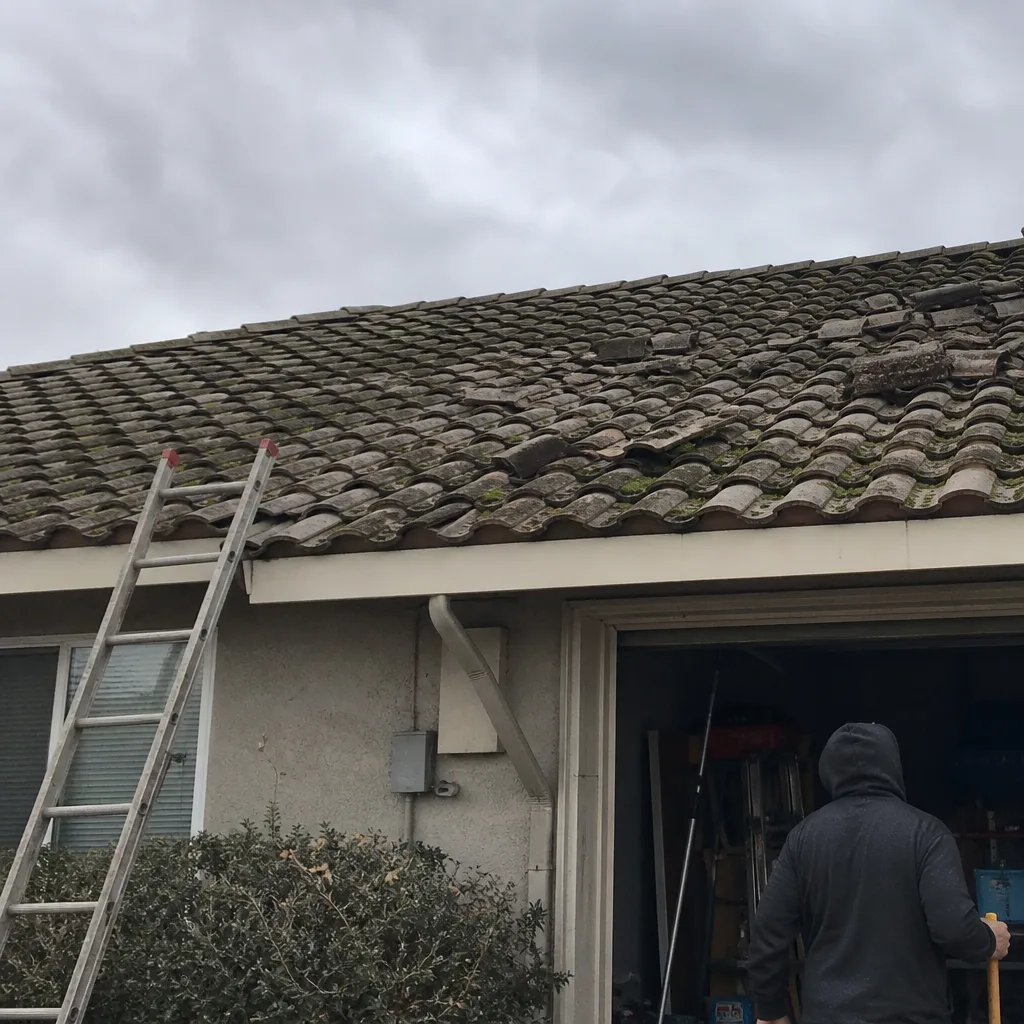 Before
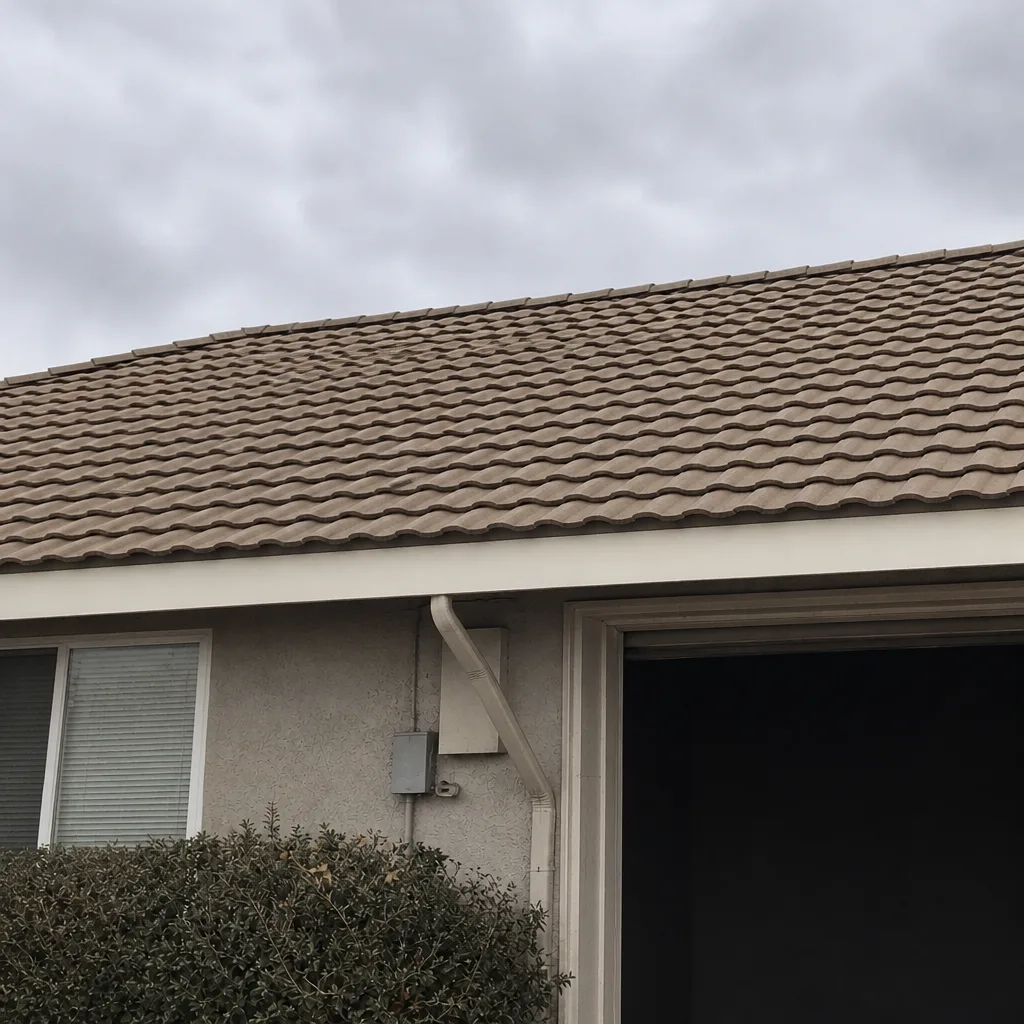 After
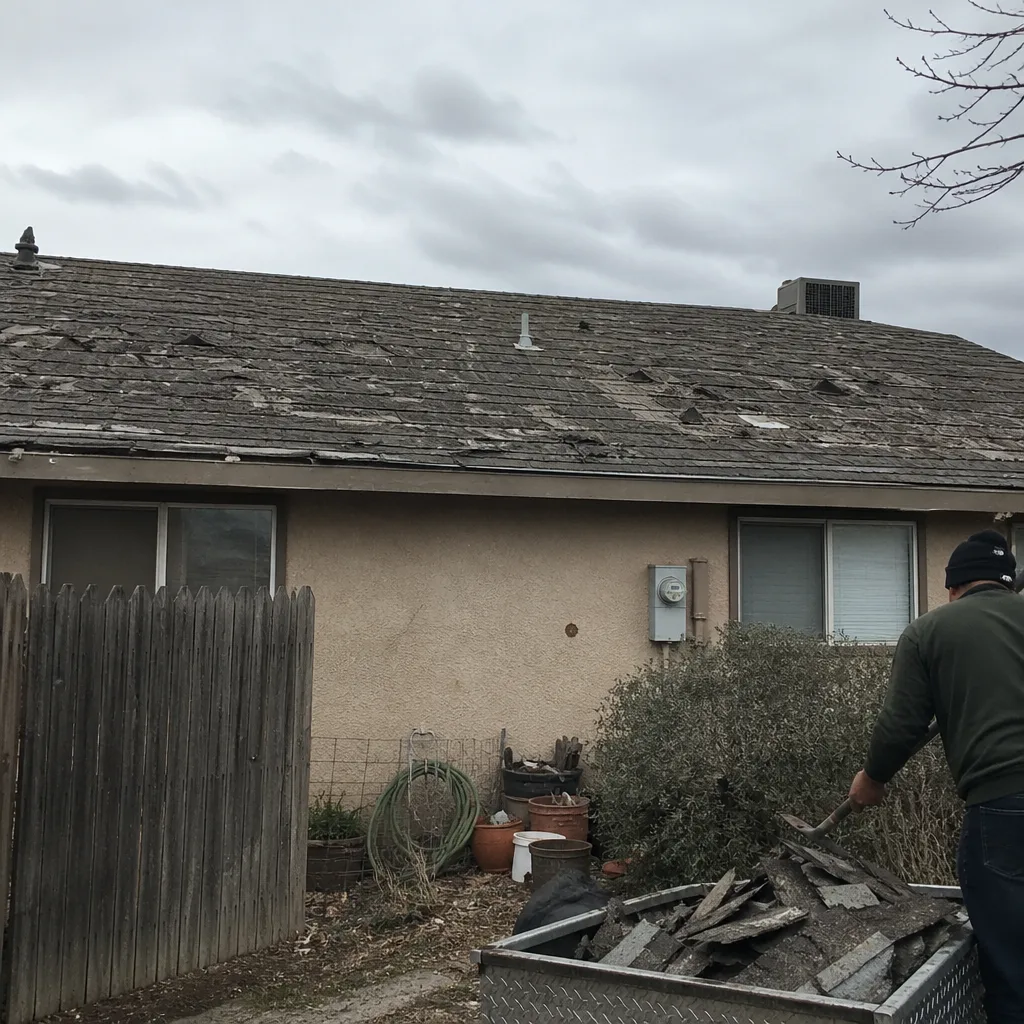 Before
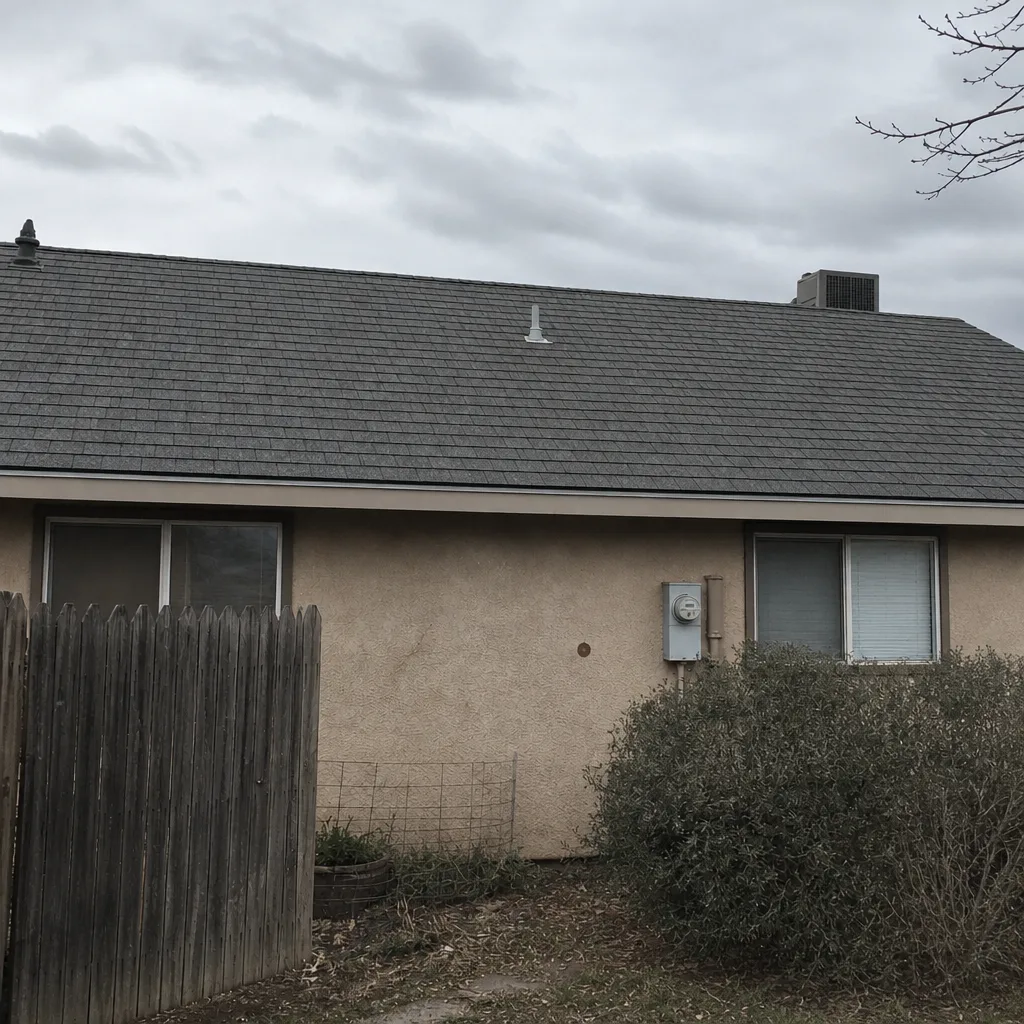 After
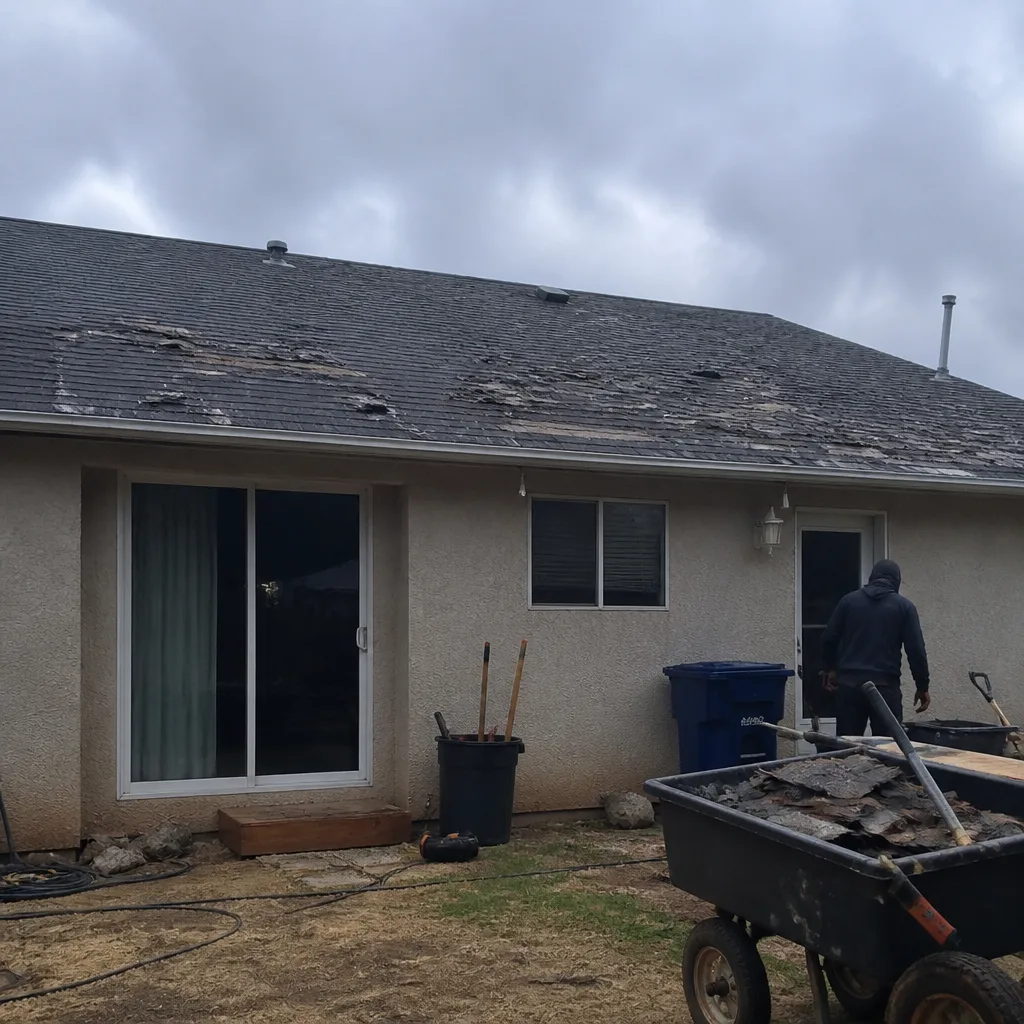 Before
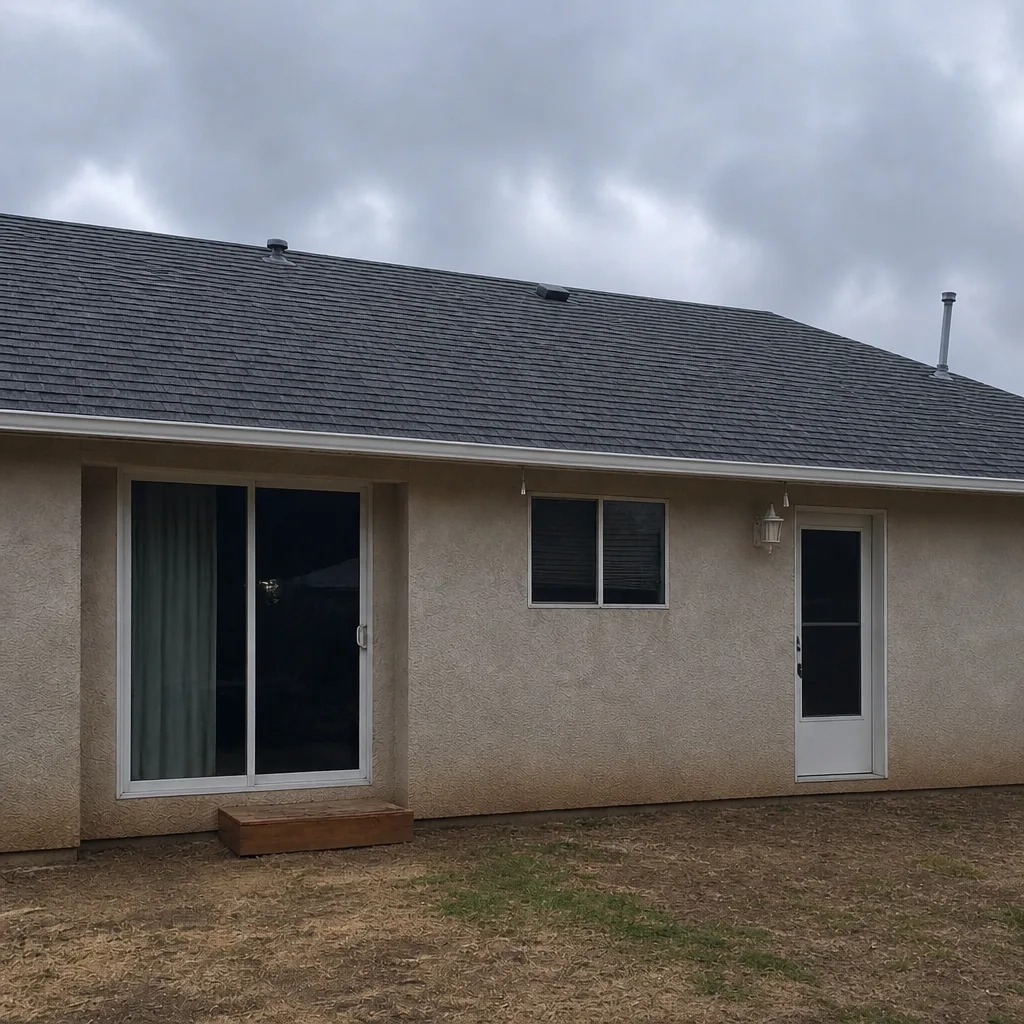 After
When to Call a Professional
Some roof problems are clearly a call for a professional, and there’s no shame in not doing them yourself. Call us when the damage is more than a single shingle, when you can’t safely see or reach the roof, when there’s water coming into the house, when the deck feels soft, or when the roof has been hit by a storm severe enough to take out gutters and siding. We can inspect, tarp temporarily, document for your claim, or make a permanent repair. Roofer Mesquite offers free estimates in Mesquite – call (855) 916-4744. We answer 24/7. Fast dispatch from 7am to 7pm, Sunday through Friday, and we’ll give you a written estimate before any work starts.
Frequently Asked Questions
Monsoon microbursts in the July-September season cause the most acute roof damage in Mesquite, followed by high-wind events along the Virgin River corridor and the occasional hail cell tracking up from Arizona. Wind-driven rain is what turns a lifted shingle into an interior leak. Call (855) 916-4744 for a free inspection after any severe storm.
Hail is uncommon in Mesquite compared with the high plains, but it isn’t impossible. Severe cells can track up from Arizona and arrive with little warning. Because hail damage is hard to spot from the ground, get an inspection after any storm that carries hail. Call (855) 916-4744 and we’ll take a look.
You can, if the damage is small and you have safe access to a dry area to work from. What you can’t do safely is climb on a wet, steep, or soggy roof – the fall injury that results is worse than the leak. If the damage is large or the roof is wet, call a professional. Call (855) 916-4744.
Immediately, before anything is cleaned up, moved, or repaired. Photograph the exterior, the witness marks like dented gutters, the roof from the ground, and any interior water damage, then call your insurer for a claim number. A professional inspection report supports the claim. Call (855) 916-4744 for a documented inspection.
It depends on the extent of the damage, the age and condition of the roof, and what the inspection shows. A localized problem can often be repaired; a damaged or aging roof may justify replacement. We’ll tell you which one is right for your roof and mean it, and the written estimate sets the final price. Call (855) 916-4744 for a free inspection.
Pricing depends on the extent of the damage and the work required, and every job is priced per job by a written, line-item estimate – the estimate is free and the written estimate sets the final price. Emergency or temporary measures are included in that quote. Call (855) 916-4744 to schedule your free estimate.
The Bottom Line
Emergency preparedness for a Mesquite roof is about the emergencies that actually happen here: monsoon microbursts, Virgin River corridor wind, and the occasional hail cell from Arizona. A half-hour pre-storm checklist protects the roof before the event. Careful, ordered documentation protects the claim after. And a professional inspection and repair get the roof back to sound – with the right material for the job from a company that carries seven brands and will tell you honestly whether a repair or a replacement is what your roof needs. From the first inspection to the final nail, we own the whole job, with a written estimate before any work starts.
Call (855) 916-4744 for a free estimate. We answer 24/7. Fast dispatch from 7am to 7pm, Sunday through Friday.
Written by the team at Roofer Mesquite.