
Last updated November 18, 2026
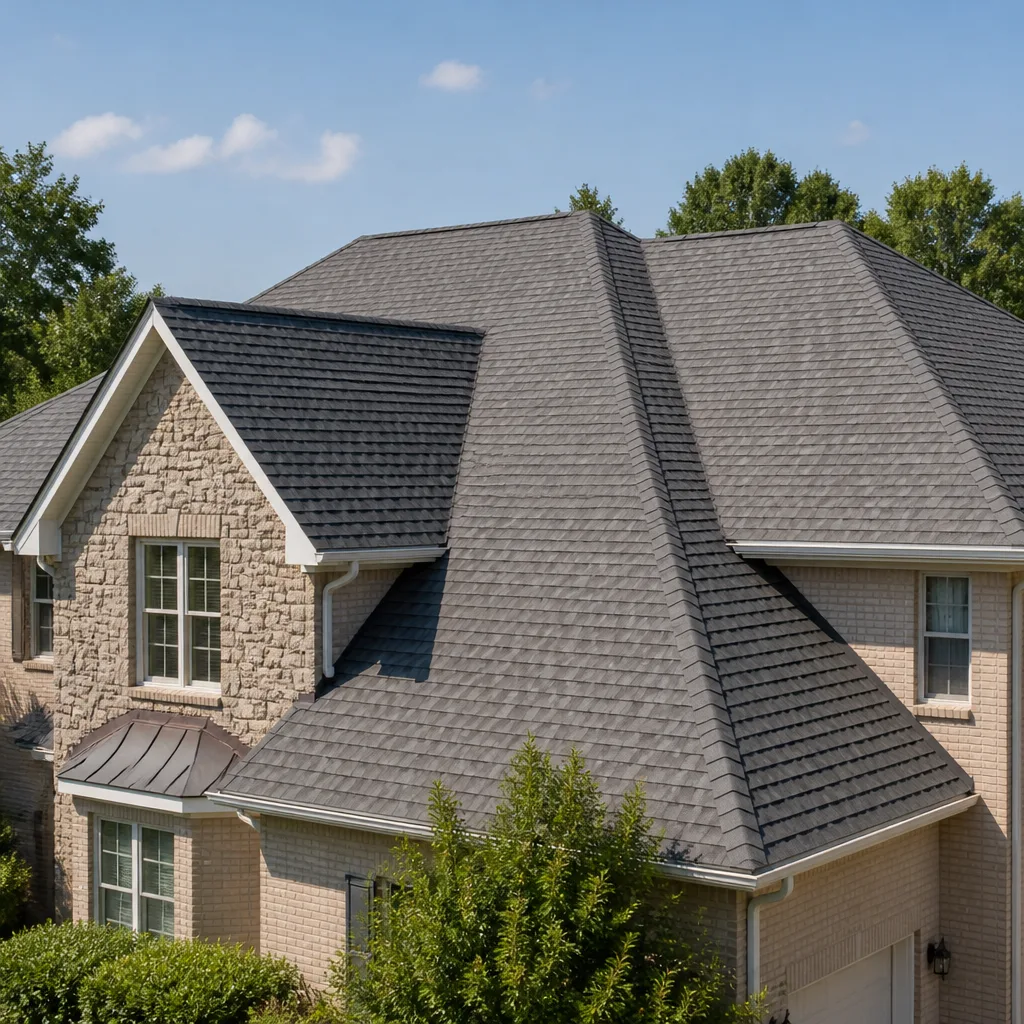 Architectural shingles
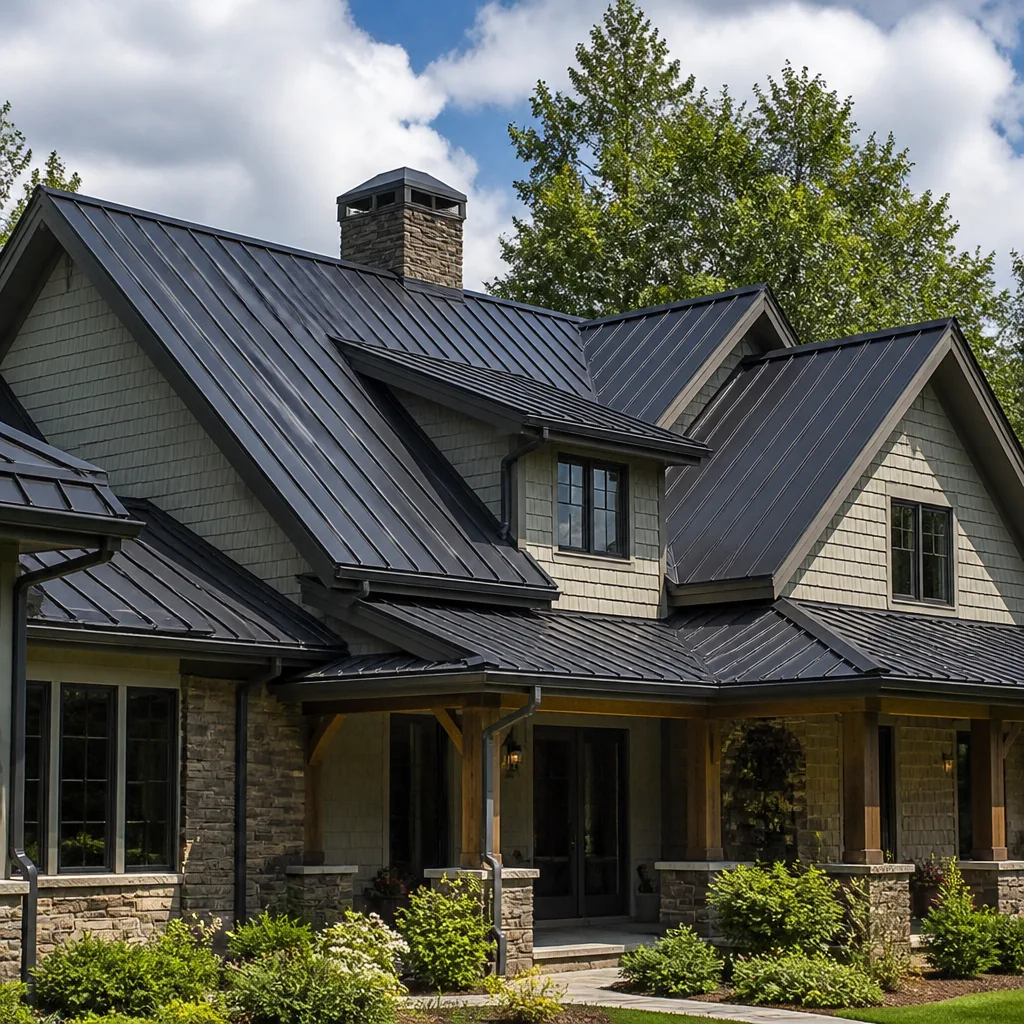 Metal roofing
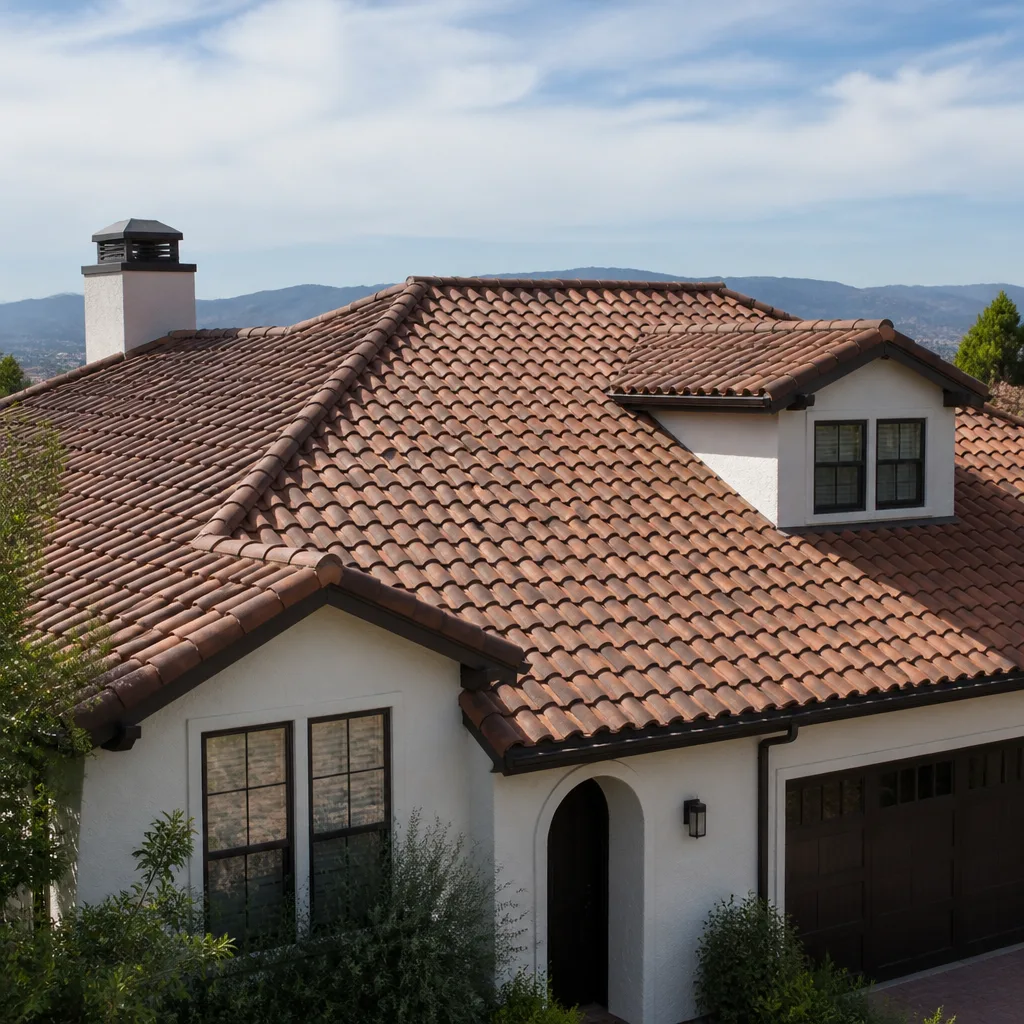 Tile roofing
 GAF
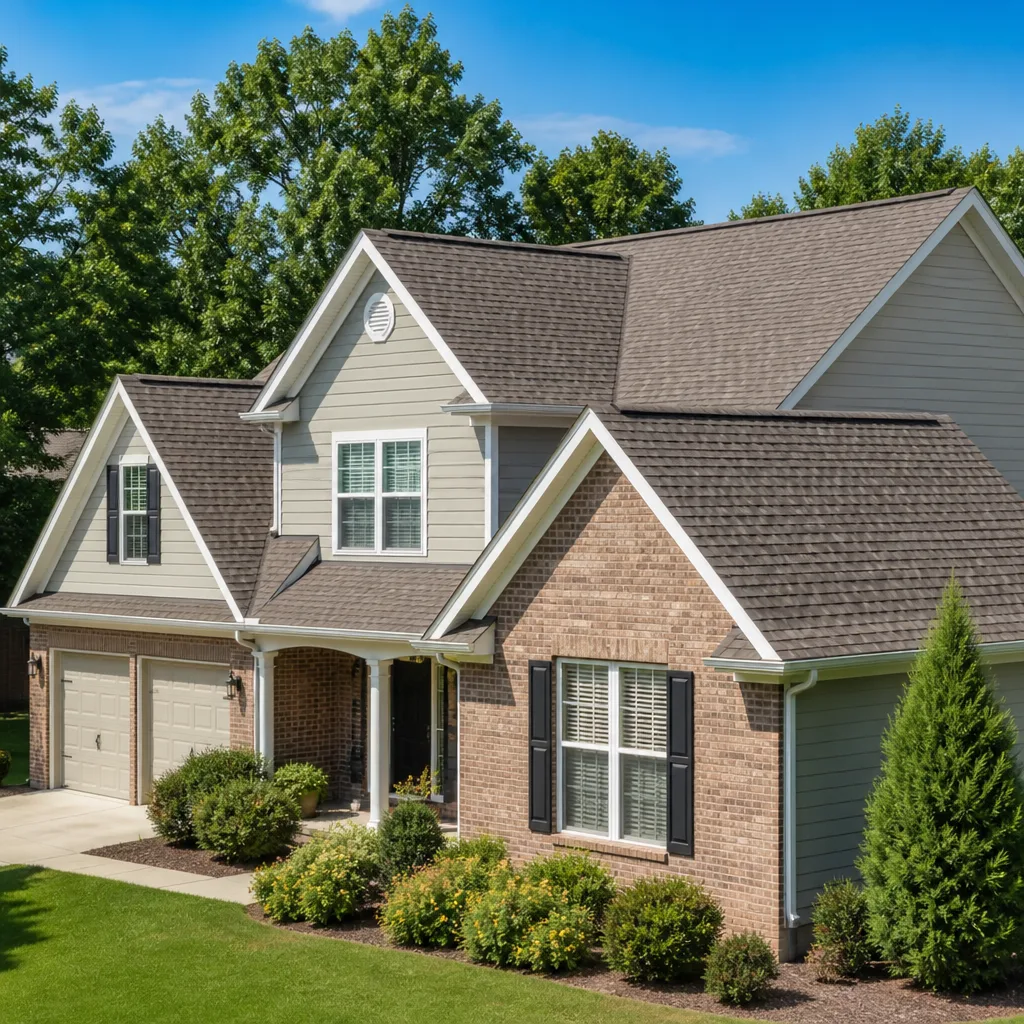 Owens Corning
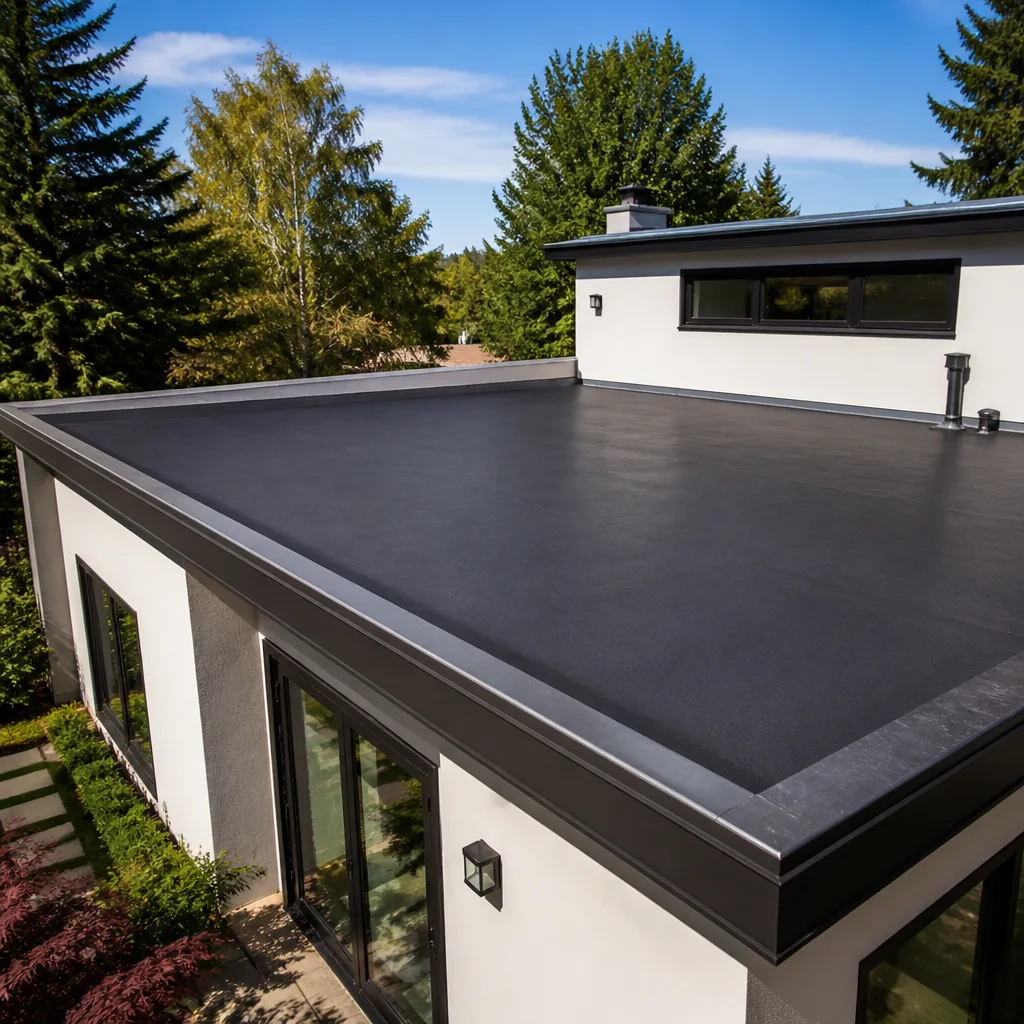 Flat & low-slope
Free roof inspection with deck photos before we talk money - GAF and Owens Corning certified installation
The Complete Roof Repair Guide for Mesquite Homeowners
Most roof repair guides you’ll find online are written for places with wet winters and mild summers. Mesquite isn’t that place. When summer highs regularly push past 110°F and desert nights drop 30 degrees or more, your roof spends its life expanding, contracting, and baking under UV that’s brutal even by Nevada standards. The damage sequence here is different: flashing pulls apart and sealants crack long before rain ever finds a way in. This guide walks you through how Mesquite roofs actually age, which repairs can wait, which can’t, how to match materials correctly, and how to document everything for resale.
Quick Answer
Roof repair in Mesquite should be prioritized around heat and thermal movement first, water intrusion second. In this climate, separated flashing, cracked ridge caps, and dried-out sealant joints fail faster than shingles themselves, so a repair that gets deferred here can open a leak path within a season. The cheapest repair is always the one caught at inspection stage, before the heat cycle turns a small gap into a water problem.
If you want the full lifecycle handled by one company, start with a roof inspection and let the findings drive the decision: repair when repair is enough, replace only when it’s necessary.
Styles & brands we work with
- Architectural shingles
- Metal roofing
- Tile roofing
- GAF
- Owens Corning
- Flat & low-slope
Table of Contents
- How Mesquite’s climate damages roofs
- Why thermal movement fails flashing and ridge caps first
- Repair urgency matrix: what can wait vs. what can’t
- Material compatibility for repairs in intense UV
- Permits: Clark County vs. the City of Mesquite
- Documenting repair history for resale
- Repair vs. replacement: how to tell the difference
- What a typical repair job involves
How Mesquite’s climate damages roofs
Mesquite sits in the Mojave Desert at low elevation, tucked against the Virgin River corridor. That geography produces a specific roof environment: very high summer heat, strong sun exposure year-round, and a wide day-to-night temperature swing. Roofing materials don’t fail from any single one of those conditions. They fail from the cycle.
Here’s what happens over a typical year. Your shingles, underlayment, flashing, and sealant joints all heat up during the day and expand slightly. Overnight, they cool and contract. That motion is tiny, measured in fractions of an inch, but it repeats hundreds of times a year. Materials that flex well when new become brittle as UV exposure breaks down their chemistry. Once they’re brittle, the same movement that used to be harmless starts to crack them.
The practical result in Mesquite is that the parts of your roof most exposed to movement and heat – flashing at penetrations and walls, ridge caps along the peak, and any sealed joint – show wear earlier than the flat fields of shingles. Water gets in through those gaps during the rare but intense monsoon-season rain events. So the damage pattern is: heat creates the opening, and then a storm finds it.
- Heat and UV exposure: degrades sealants, granule surfacing, and the flexibility of older shingles.
- Diurnal temperature swing: drives repeated expansion and contraction at every joint and fastener.
- Concentrated monsoon rain: tests every opening heat has created, in short high-volume bursts.
- Wind during storms: lifts already-loosened shingles and ridge caps, especially on exposed slopes.
Understanding this order matters because it tells you where to look first. If you’re inspecting your own roof visually, spend your time at the ridge, the flashing, and the sealed penetrations before you worry about the broad shingle fields.
Why thermal movement fails flashing and ridge caps first
Flashing is the metal (or sometimes membrane) that seals the edges of your roof: where the roof meets a wall, a chimney, a vent pipe, or a valley. It’s designed to flex and direct water away. But it’s also attached at multiple points to different materials that expand and contract at different rates. Metal moves differently than shingles. Wood framing moves differently than metal. The sealant bridging those materials takes the strain.
In a mild climate, that sealant might last years. In Mesquite, the daily heat cycle works it constantly, and UV breaks it down from above. Eventually it loses elasticity, cracks, and pulls away. The same thing happens at ridge caps, where cap shingles or tiles span the peak and rely on nails and sealant to stay seated. As the roof deck expands and contracts under the cap, the fasteners loosen and the sealant fails, and cap pieces start to lift or crack.
This is why we treat flashing and ridge cap condition as the first thing to check on any Mesquite roof. A repair that reseals and re-secures those areas early is one of the least expensive jobs on the whole roof. The same gap left for another summer can let water into the deck and insulation, and that’s when repair costs climb.
- Inspect the ridge line: look for lifted cap pieces, visible cracks, or gaps where the cap meets the field shingles.
- Check every flashing point: wall intersections, pipe boots, chimney edges, and valleys.
- Look for failed sealant: cracked, peeling, or receded caulk lines are the earliest warning sign.
- Trace any staining indoors: a ceiling stain after a storm usually points back to a flashing gap, not a shingle field.
- Photo-document what you find: it makes the repair scope clear and gives you a record for later.
Repair urgency matrix: what can wait vs. what can’t
Homeowners often want a simple answer to “how urgent is this?” The honest answer depends on what’s damaged and how exposed it is. Here’s how we think about urgency on a Mesquite roof, based on how the local heat cycle interacts with each damage type.
- Needs same-week attention: separated or cracked flashing at walls or penetrations, active water staining inside the house, lifted ridge caps, any missing shingles on an exposed slope, or a failed pipe boot. These are open water paths or about to become one.
- Schedule within a season: granule loss on aging shingles, hairline cracks in sealant that haven’t opened yet, minor surface wear on ridge caps, and localized shingle damage with no signs of intrusion. These need repair but rarely fail overnight.
- Monitor at next inspection: normal aging on a roof still within its useful life, minor cosmetic wear, and small areas of surface weathering. No action yet, but worth a photo record and a recheck.
Two things move a problem from “wait” to “now.” The first is rain in the forecast during monsoon season; an open gap and a heavy storm are a bad combination. The second is any sign of interior moisture, because once water is inside the assembly, the cost curve steepens fast.
The reason a matrix like this matters in Mesquite specifically is that repairs deferred here don’t just age; they accelerate. Heat exposure is constant. A cracked sealant that would hold for two more years in a cooler climate may open within one summer here. If you’re unsure which category your roof falls into, a standalone assessment is the fastest way to find out. We’ll tell you if a repair is all you need, and we mean it. Call (855) 916-4744 to schedule a free estimate.
Material compatibility for repairs in intense UV
One of the costliest repair mistakes in Mesquite is patching an older roof with materials that don’t match what’s already there. It seems simple: a shingle is a shingle. But granule blends, thickness, and shingle profile all affect how a patch performs, and in intense UV, mismatched materials fail faster than matched ones.
Consider an older three-tab roof. Three-tab shingles are thinner, lighter, and reflect and absorb heat differently than a modern architectural shingle. If you patch a section with an architectural shingle, the seam between old and new takes on a different expansion rate under the daily heat swing. The granule blend is different too, which changes how the patch surface wears under UV. Over a few seasons, that seam can cup, lift, or wear unevenly, and the patch becomes a new problem area.
The right way to handle a repair on any roof – regardless of who installed it – is to match the existing material or use a manufacturer-approved replacement for that system. That’s where having access to multiple shingle systems helps. Roofer Mesquite works with seven recognized brands, including CertainTeed, Owens Corning, IKO, and Atlas, and that range means we can find a compatible match for older roofs instead of forcing whatever’s on hand.
- Match by profile and thickness: a modern architectural shingle rarely belongs on a three-tab field.
- Match the granule blend: different blends wear at different rates under UV.
- Respect the existing underlayment: patch material should work with what’s underneath, not fight it.
- Use manufacturer-approved components for penetration boots and flashing: generic parts sometimes fail early.
- Check whether the patch voids a warranty: mismatched materials can affect manufacturer coverage.
If you want to talk through material options for a repair or a future replacement, that’s a conversation we’re happy to have. The goal is to match the right material to your budget and your roof, not hand you a single take-it-or-leave-it quote.
Permits: Clark County vs. the City of Mesquite
Permit requirements for roof work differ depending on where in the region the property sits. Mesquite is its own incorporated city within Clark County, which means that permit rules for a Mesquite address are set by the City of Mesquite rather than by Clark County’s building department. A roofing contractor who works mostly in Las Vegas may assume Clark County’s process applies; it doesn’t for a Mesquite property.
As a rule, most municipalities require a permit for a full roof replacement and for structural repairs, and smaller repairs often don’t require one. The threshold where a repair becomes permit-required varies. The reliable way to know what applies to your specific job is to ask the City of Mesquite’s building department directly, or to have your contractor confirm it before work begins.
Why this matters for homeowners: an unpermitted repair can create problems at resale. Nevada buyers’ inspectors look for evidence that work was done to code, and an unpermitted structural repair or replacement can become a disclosure issue or a negotiation point. A contractor who pulls the permit and passes the inspection leaves you with documentation that protects you down the road.
- Confirm jurisdiction first: a Mesquite address is governed by the City of Mesquite, not Clark County.
- Ask before you assume: the building department can tell you whether your specific repair needs a permit.
- Get it in writing: confirm in your estimate whether permits and inspections are included.
- Keep the paper trail: permit records and inspection results support resale and warranty claims.
We’ll tell you plainly whether your job needs a permit and handle that part of the process when it does. Inspection, repair, or full replacement – one company, one call.
Documenting repair history for resale
When you sell a home in Nevada, you’re required to disclose material facts about the property’s condition, and past roof repairs or known issues generally fall into that category. That means the way you document repairs matters to your resale, whether you’re selling next year or in fifteen years.
Buyers’ inspectors typically look for a few specific things on a roof: signs of active or past leaks (staining on the deck and ceiling), visible flashing defects, mismatched or amateur patch work, and whether repairs were done to code. A clean, well-documented repair history makes all of those questions easier to answer and gives a buyer confidence. A pile of mismatched patch jobs with no records does the opposite.
- Keep every estimate and invoice: they establish scope, dates, and who did the work.
- Photograph repairs from start to finish: before, during, and after photos document the actual work.
- Retain permit and inspection records: they’re your proof the work met code.
- Keep warranty documentation: manufacturer-backed warranties on roof systems are transferable in many cases, which can be a selling point.
- Note material types and brands used: a buyer’s inspector can match what’s on the roof to what’s documented.
- Record repair dates and categories: a simple log of what was repaired and when is enough.
Nevada’s disclosure requirements are specific, and the details can change, so it’s worth confirming current rules with your real estate professional before you list. The habit that pays off regardless is simple: document every repair as it happens, keep it in one place, and hand that folder to your agent when you sell.
Repair vs. replacement: how to tell the difference
The most useful question a Mesquite homeowner can ask is not “how much does a roof cost?” but “is a repair enough?” Here’s how we approach that decision, because it’s the one that protects your money.
A repair is usually the right answer when the damage is localized: a section of flashing, a few damaged shingles, a failed pipe boot, a cracked ridge cap, or an isolated leak traced to one point. If the rest of the roof is within its useful life and the underlayment and deck are sound, a targeted repair is almost always the cheaper and more sensible path.
A replacement becomes the more sensible conversation when the damage is widespread, when the roof is near or past the end of its expected life, when there are multiple leaks in different areas, when the shingles are losing granules across the whole field, or when the same repair keeps coming back. Even then, the decision should follow an honest assessment, not a sales pitch.
- Repair when: damage is isolated, the roof is within its life, and the deck and underlayment are sound.
- Replace when: damage is widespread, the roof is near end of life, or the same area keeps failing.
- Investigate when: you’re not sure – a standalone inspection answers the question without committing you to a purchase.
Roofer Mesquite offers a standalone roof inspection as its own service, not just a step toward a sale. You get an honest read on your roof’s condition, and you decide what to do with it. Your roof on your terms: the right material, the right solution, no oversell.
What a typical repair job involves
Understanding the steps of a roof repair helps you compare quotes and know what you’re paying for. A well-run repair on a Mesquite roof generally follows a predictable sequence.
- Assessment: a technician checks the reported problem and the surrounding roof areas, since a leak’s visible point and its actual origin are often different.
- Written estimate: you get a line-item quote that sets the final price for the job, so there are no surprises once work starts.
- Material match: the right replacement material is identified to match the existing roof system.
- Removal and prep: damaged material is removed and the deck is checked for water damage or rot before anything new goes on.
- Repair: the damaged area is repaired or replaced, including flashing, sealing, and any fastening needed.
- Verification: the technician checks the repair and surrounding areas to confirm the fix holds.
Our technicians have up to 8 years of experience, and they’re trained on competing shingle systems, so they can diagnose problems on virtually any residential roof, regardless of who originally installed it. From the first inspection to the final nail, we handle the whole job as a single point of contact, with no hand-offs between separate vendors. If you’re weighing repair against replacement, or just want to know what’s going on up there, a free estimate costs you nothing. Call (855) 916-4744.
Common Mistakes to Avoid
- Treating rain as the primary threat. In Mesquite, heat and thermal movement create the openings well before rain reaches them. Inspect flashing and ridge caps first, not just the shingle field.
- Patching an older three-tab roof with a modern architectural shingle. The mismatched seam and granule blend wear unevenly under intense UV and can fail within a few seasons. Match the material to the existing roof, or use a manufacturer-approved replacement for that system.
- Assuming Clark County permit rules apply to a Mesquite address. Mesquite is an incorporated city with its own building department. Confirm the requirement with the City of Mesquite before work begins.
- Skipping documentation. A repair with no photos, invoice, or permit record is harder to disclose at resale and can raise questions from a buyer’s inspector. Keep a folder.
- Deferring a small flashing repair through another summer. What’s a small reseal now can open a water path into the deck within a season or two in this climate. Catch it at the cheap stage.
- Letting a contractor decide between repair and replacement for you. Ask for the reasoning, ask what’s actually damaged, and ask whether a standalone inspection would answer the question. You should be the one making the call.
- Ignoring a ceiling stain because “it’s just a little spot.” An interior stain after a monsoon storm usually points back to a flashing gap that’s been open for a while. Get it traced.
See the difference
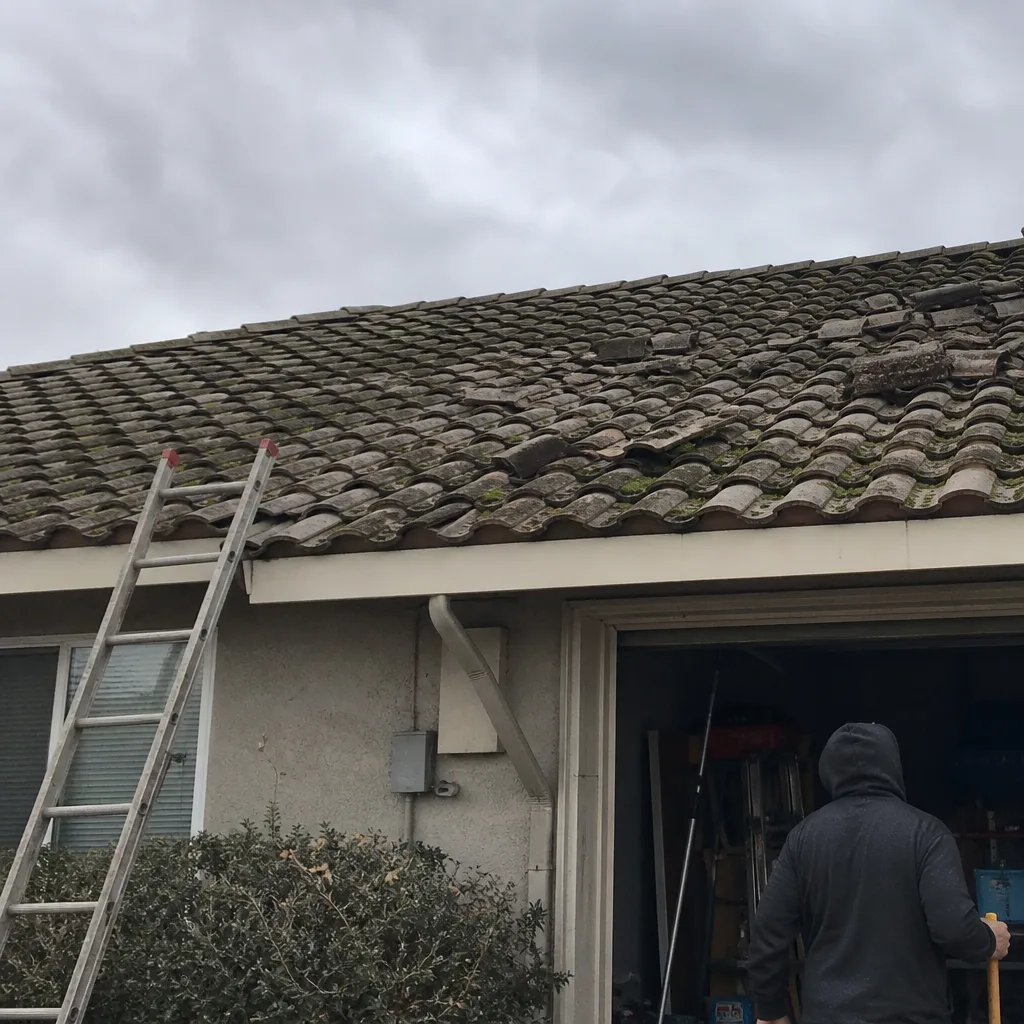 Before
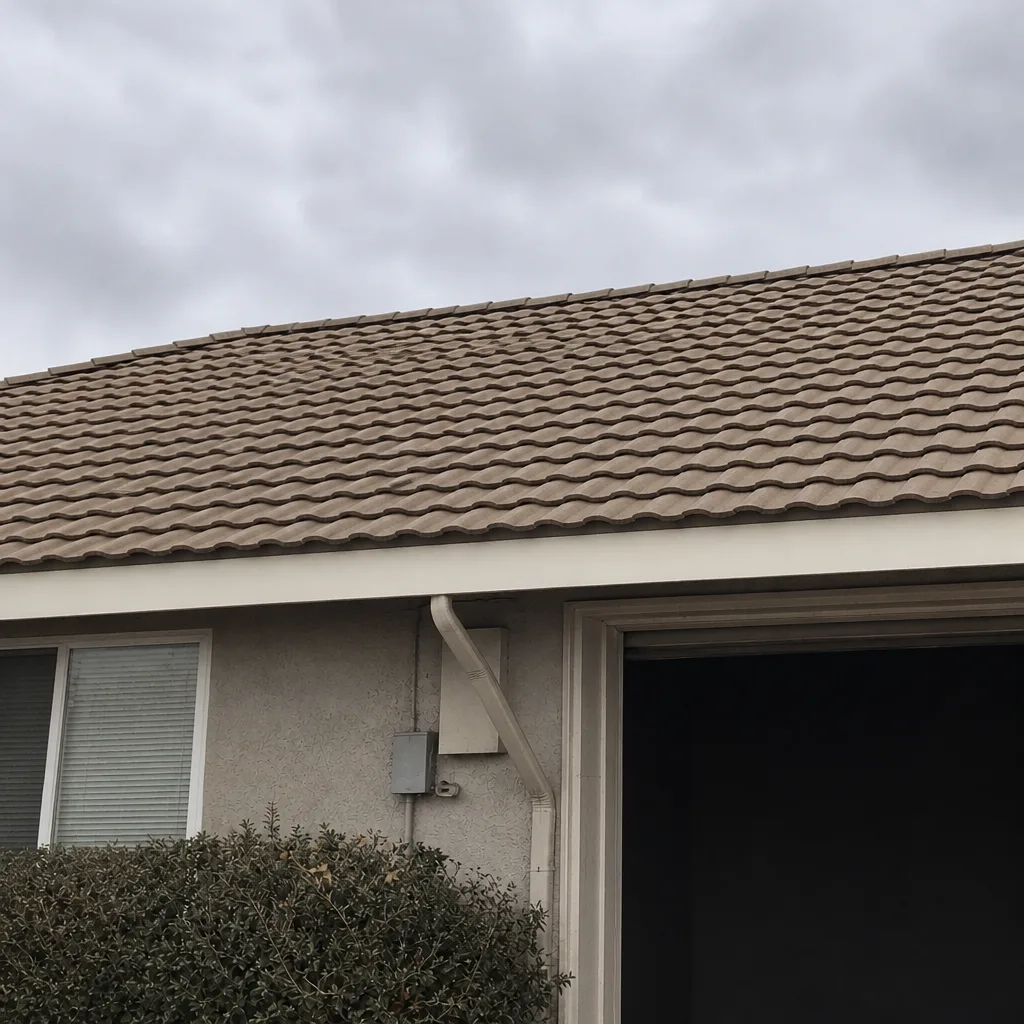 After
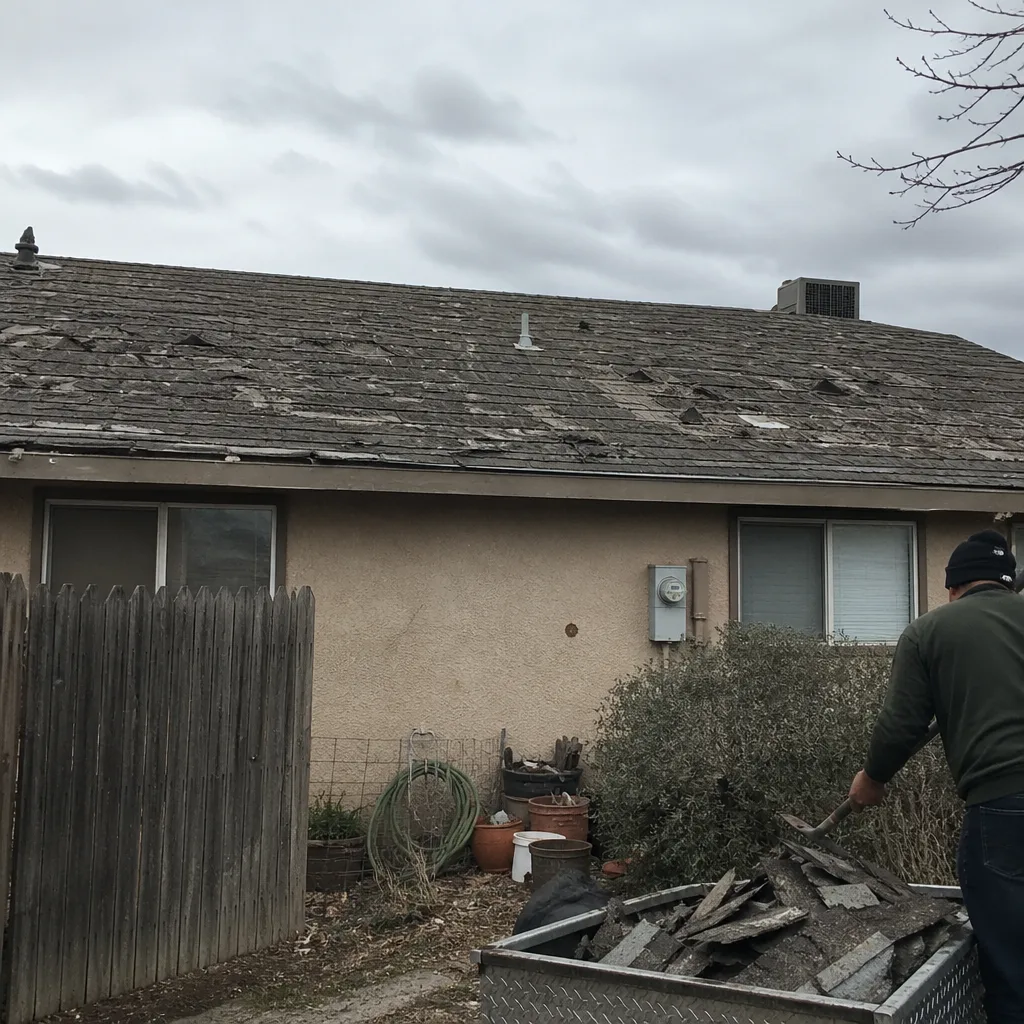 Before
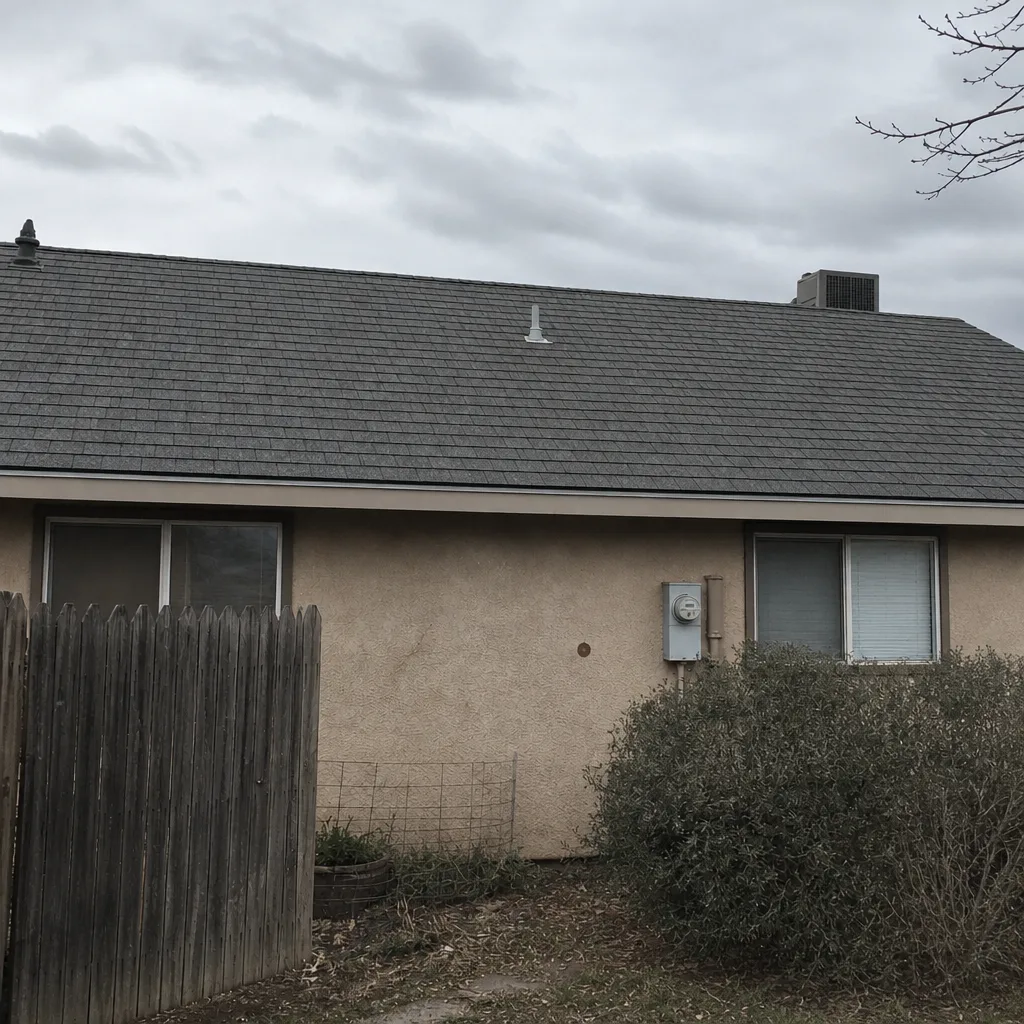 After
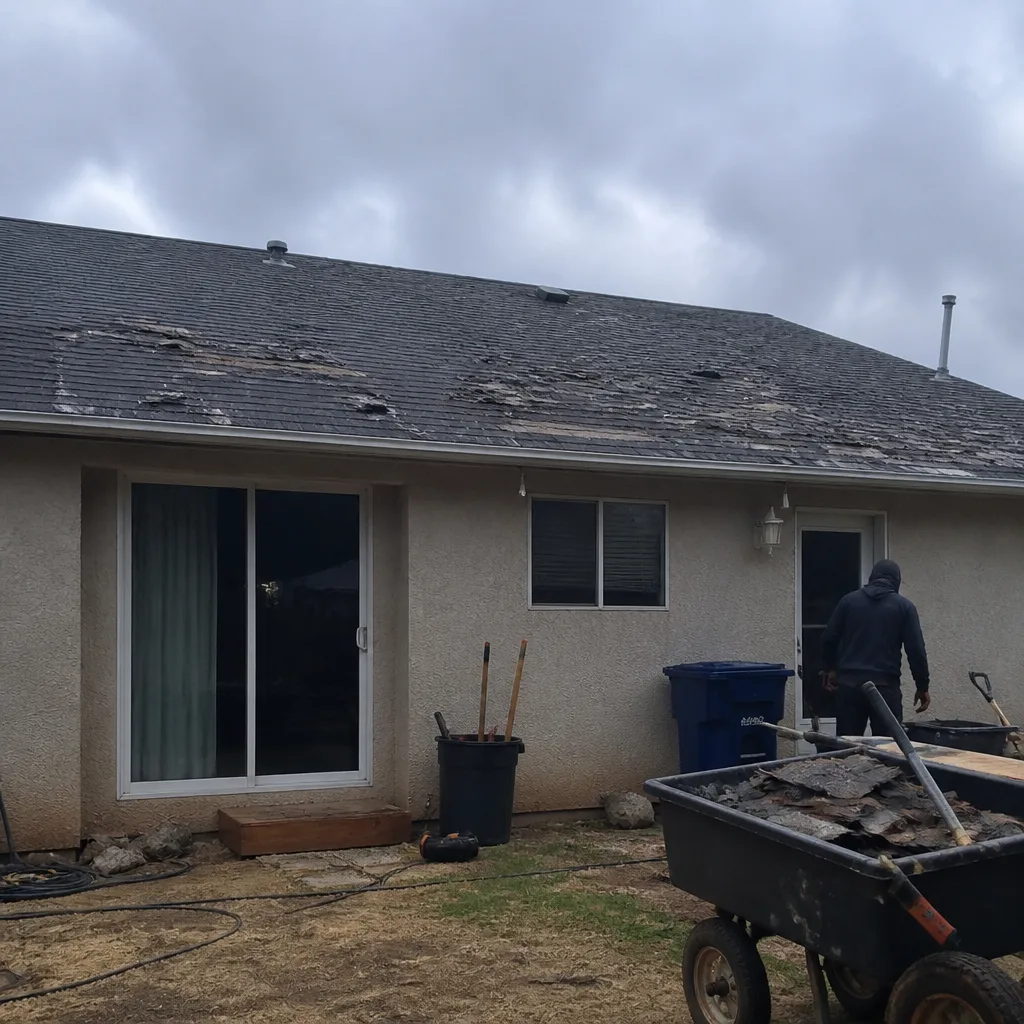 Before
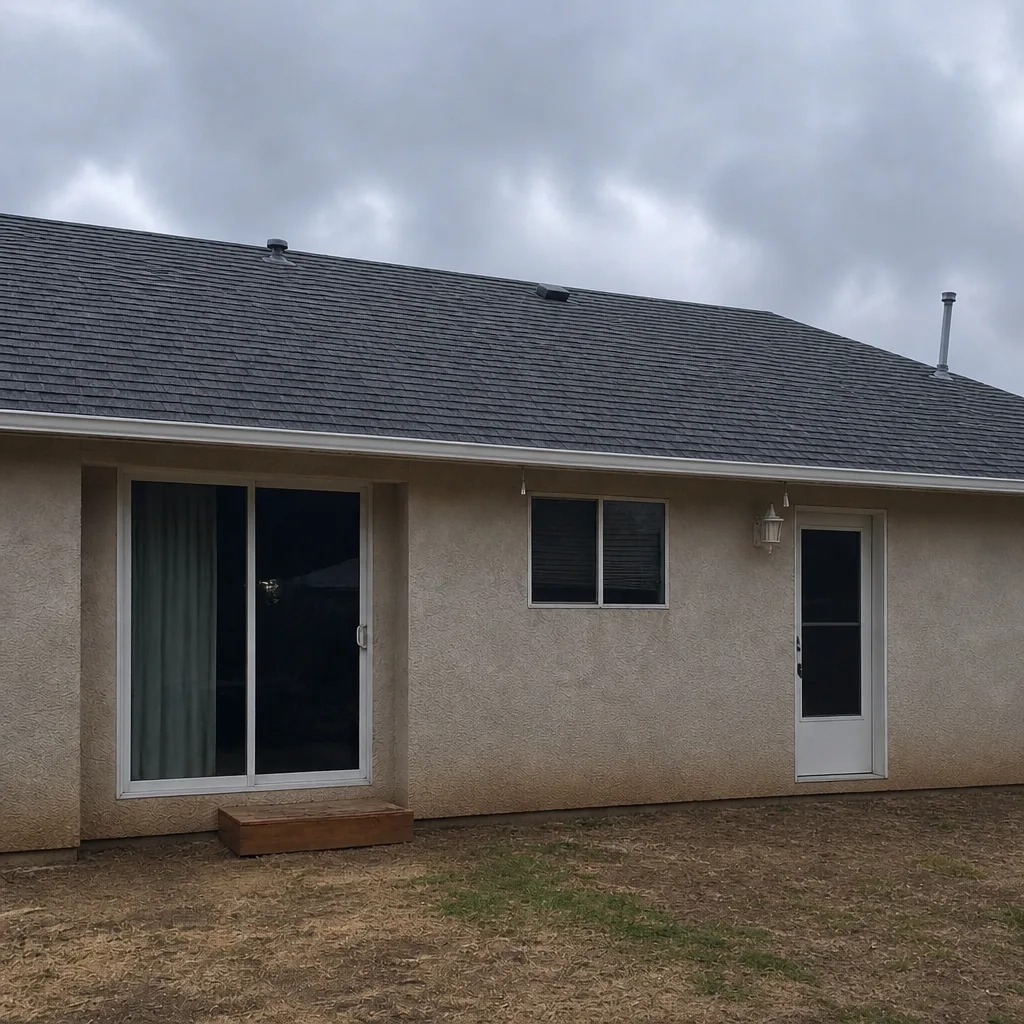 After
When to Call a Professional
Call a professional if you see interior water staining, a lifted or cracked ridge cap, separated flashing at a wall or chimney, a failed pipe boot, missing shingles on an exposed slope, or granule loss across a wide area. The same is true if you’re unsure of the roof’s age or condition, if you’re buying or selling a home in Mesquite, or if you just want an honest read on whether a repair is enough. Roofing involves heights, heat, and the risk of a hidden structural problem, so a trained technician is the right call for anything beyond a ground-level visual check. Roofer Mesquite offers free estimates in Mesquite – call (855) 916-4744. Inspection, repair, or full replacement – one company, one call.
Frequently Asked Questions
Roof repair pricing in Mesquite depends on the type of damage, the material, and the scope of the job, so we give a written line-item estimate for each job that sets the final price. A small flash or boot repair costs far less than a repair that involves decking. For an exact number on your roof, call (855) 916-4744 – estimates are free.
Thermal movement, not rain, is the leading cause of roof damage in Mesquite. The daily expansion and contraction of the roof assembly under 110°F+ summer highs and cooler desert nights causes flashing to separate, sealant to crack, and ridge caps to loosen. That damage then lets in monsoon-season rain.
A properly matched and installed repair is a permanent fix for the localized problem it addresses. A repair fails when the wrong material is used, when the underlying decking wasn’t checked, or when the surrounding roof is also near the end of its life. We check the surrounding areas during the repair so we don’t hand you a patch that fails from a different problem.
Whether a permit is required depends on the scope of the repair, and for a Mesquite address the rule comes from the City of Mesquite building department, not Clark County. The safe approach is to confirm with the city before work begins, or to ask your contractor to confirm whether the job requires one. We handle permits and inspections when they apply.
Repairing a known roof issue before you list is generally the easier path, because Nevada’s disclosure rules and a buyer’s inspection will surface both the damage and whether repairs were done to code. Documenting every repair with invoices, photos, and permit records answers those questions up front. Always confirm current disclosure requirements with your real estate professional.
Yes. Our technicians are experienced with multiple shingle systems and construction profiles, which lets us accurately diagnose problems on virtually any residential roof, regardless of who installed it. If you don’t know the roof’s age or material, we can assess it and match the repair accordingly.
The Bottom Line
Roof repair in Mesquite is a different set of priorities than in cooler climates. Heat and thermal movement drive the damage sequence here, which means flashing and ridge cap condition matter more than the shingle field, and deferred repairs get more expensive faster than in milder places. Match your repair material to your existing roof, confirm the permit question with the City of Mesquite, and document every repair for resale. And remember the most important rule: repair when a repair is all you need. A standalone inspection from a company that handles inspection, repair, and full replacement is the fastest way to know which one applies to you. Call Roofer Mesquite at (855) 916-4744 for a free estimate. We answer 24/7. Fast dispatch from 7am to 7pm, Sunday through Friday.
Written by the team at Roofer Mesquite.