
Last updated November 18, 2026
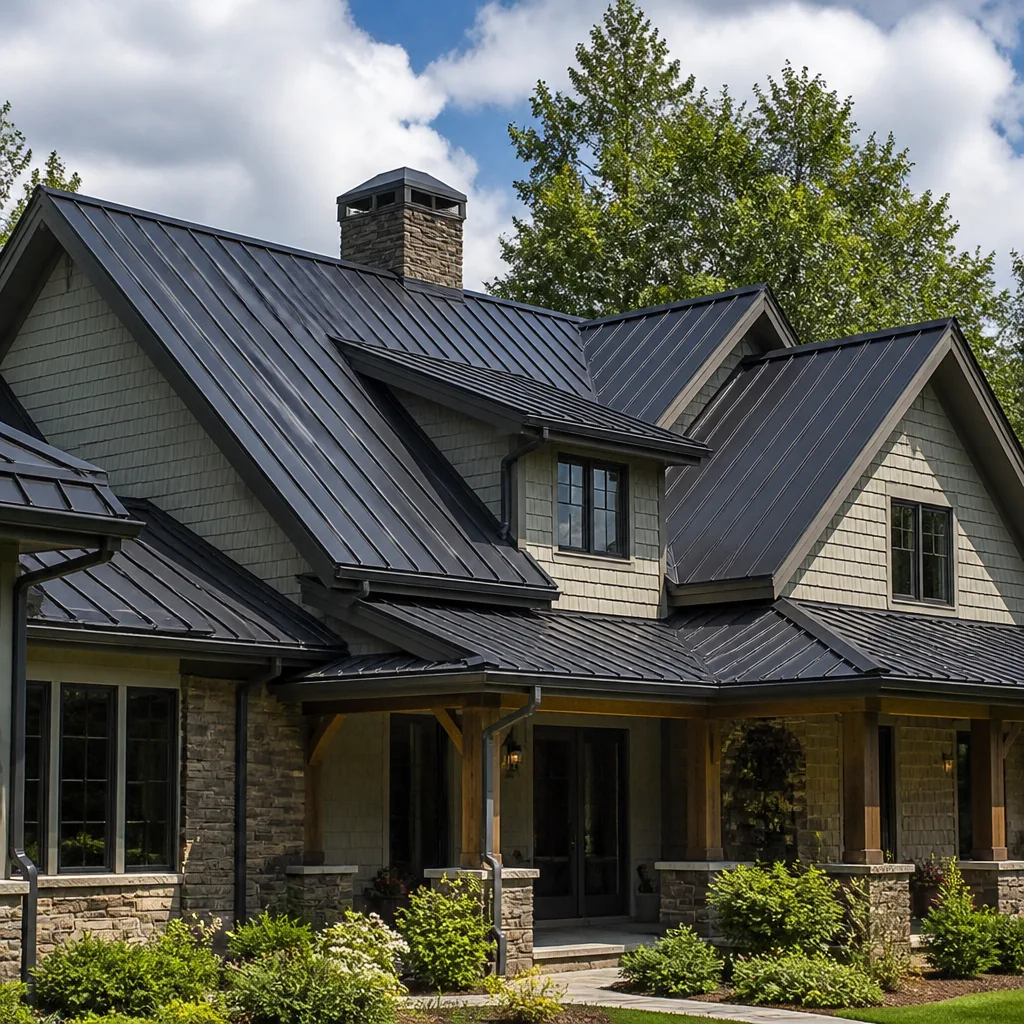 Metal roofing
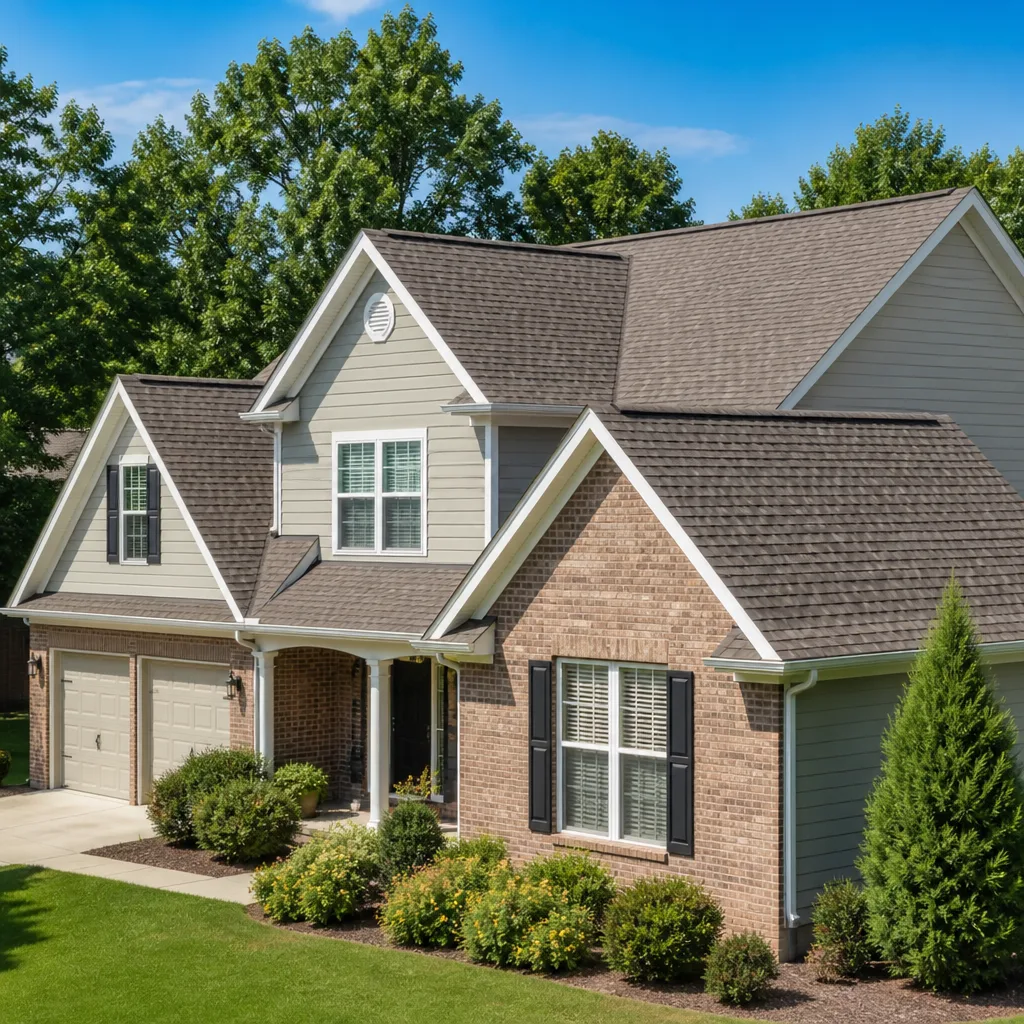
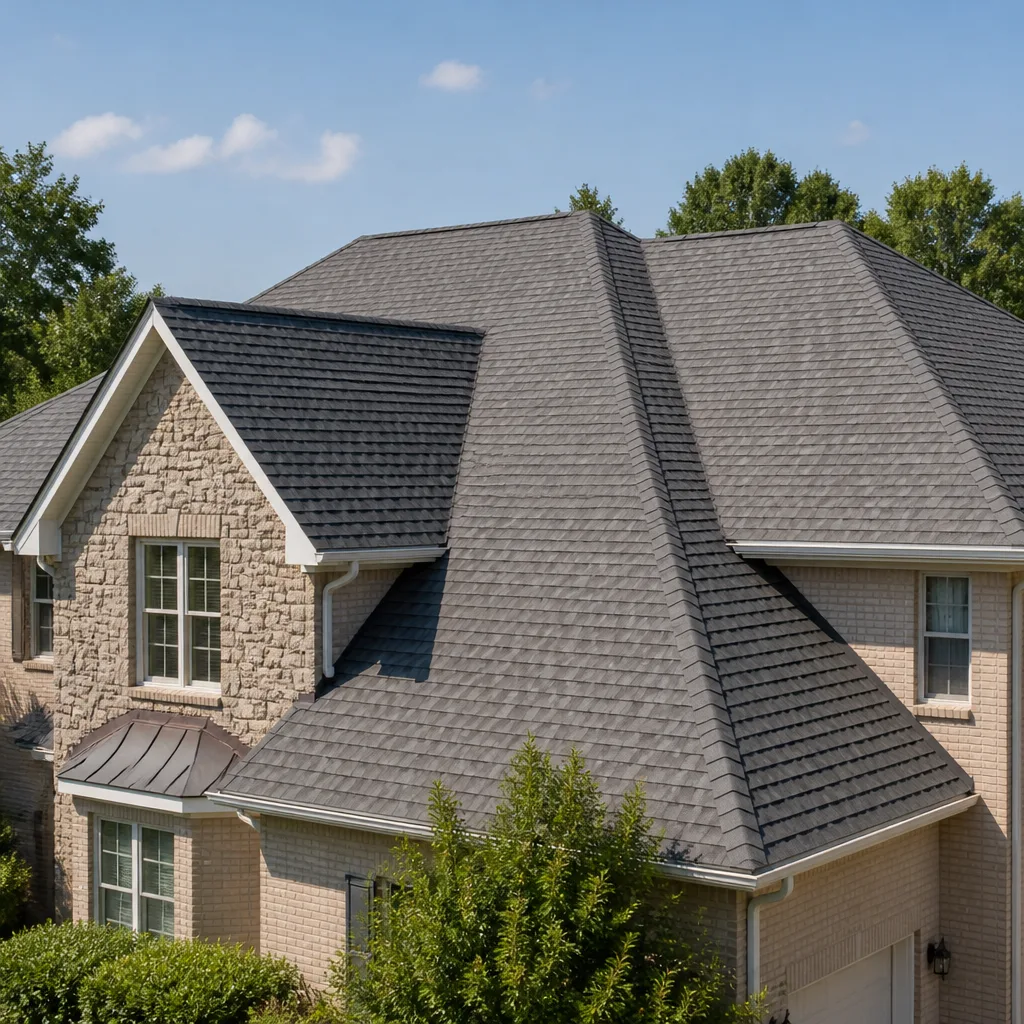 Architectural shingles
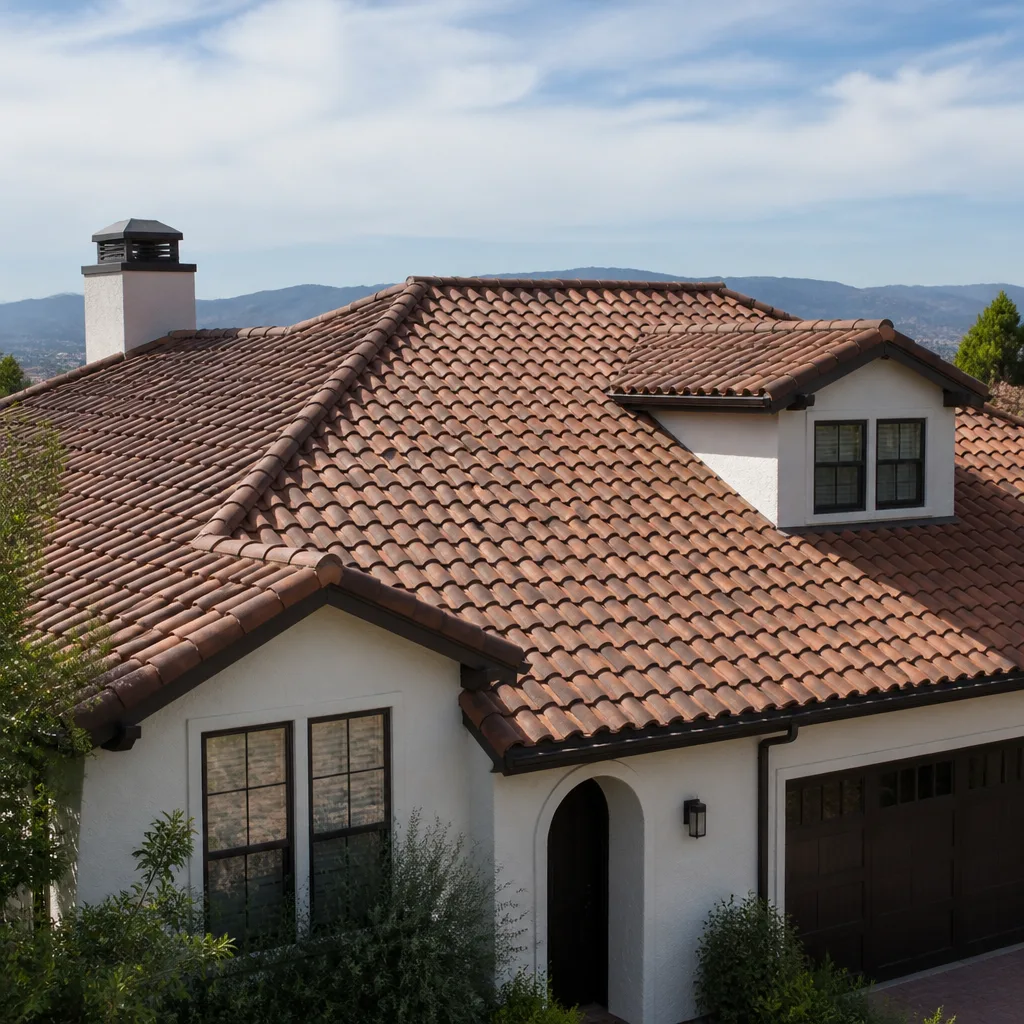 Tile roofing
 GAF
 Owens Corning
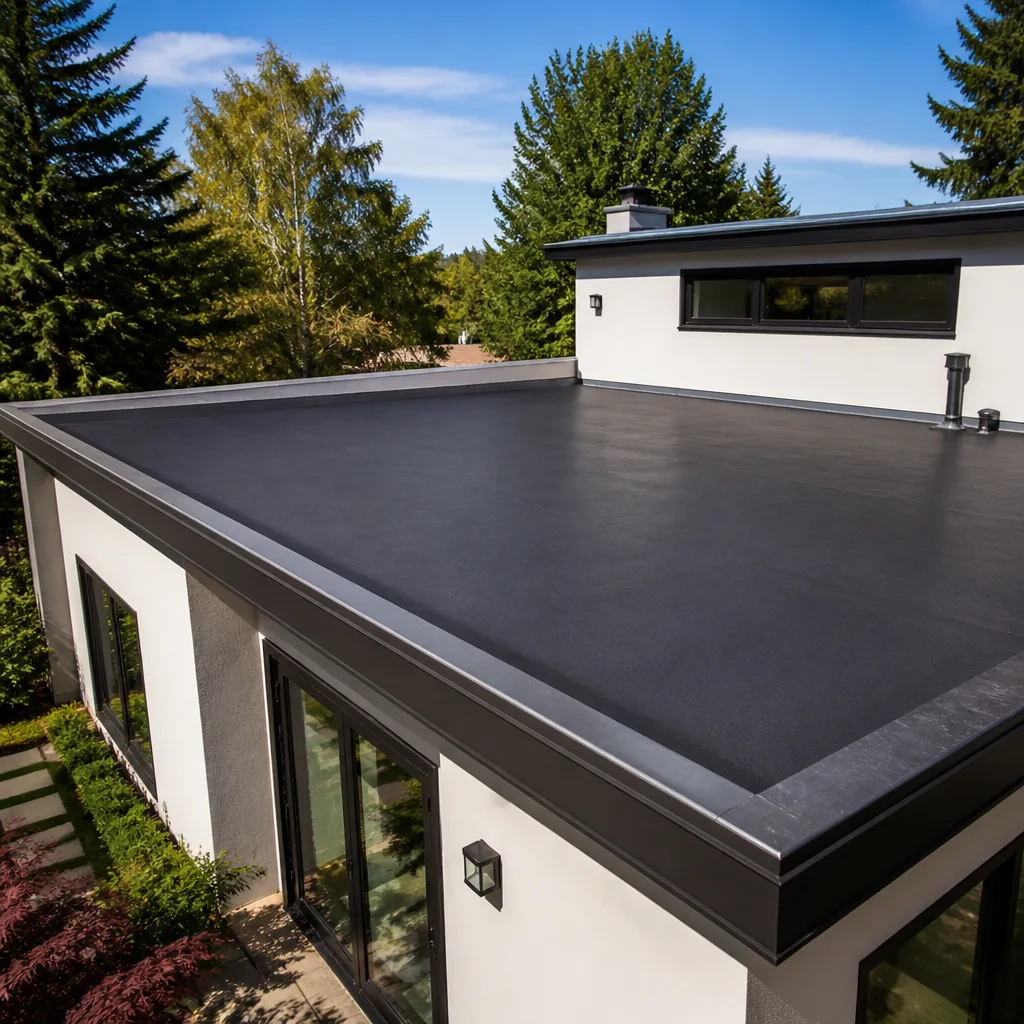 Flat & low-slope
Free roof inspection with deck photos before we talk money - GAF and Owens Corning certified installation
DIY vs Professional Roofing: The Mesquite Homeowner’s Decision Guide
Roofing is the one home repair where the gap between “looks fine” and “is fine” stays hidden the longest, and in Mesquite that gap closes faster than most homeowners expect. A flashing detail that would take years to leak somewhere mild can open up in a single summer of 110-degree afternoons followed by cool desert nights, because the constant expansion and contraction works every fastener and sealant joint on the roof. That doesn’t mean the answer is always to hire out. It means the line between what’s worth doing yourself and what isn’t sits in a different place here than the generic advice suggests. This guide draws that line task by task, with real licensing rules, warranty math, and a straight cost comparison so you can decide with your eyes open. We’re writing it from Mesquite, for roofs that live in this climate.
Quick Answer
In Mesquite, NV, most roofing work should go to a licensed professional because the desert’s UV and thermal cycling punish installation shortcuts that a moderate climate would hide for years. Genuinely safe DIY territory is narrow: minor shingle swaps on a low, safe roof, gutter cleaning, and visual inspections from the ground with binoculars. Anything involving the roof surface itself, flashing, underlayment, or warranties belongs with a licensed contractor.
Styles & brands we work with
- Architectural shingles
- Metal roofing
- Tile roofing
- GAF
- Owens Corning
- Flat & low-slope
Table of Contents
- Why Mesquite’s Climate Changes the DIY Math
- What You Can Genuinely DIY in Mesquite
- Nevada Licensing Law: What’s Legal to Do Yourself
- How DIY Work Affects Your Roof Warranty
- The Real Cost Comparison Over 15 Years
- Material Choice: Seven Brands vs. Big-Box Shelves
- The Inspection Question: Where DIY Diagnosis Fails
- A Decision Framework You Can Actually Use
Why Mesquite’s Climate Changes the DIY Math
Roofing materials are tested and rated for specific conditions. When a manufacturer publishes installation specs, those specs assume the product will expand and contract within a certain range. Mesquite pushes the top of that range hard. Summer surface temperatures on a dark asphalt shingle roof routinely exceed ambient air temperature by a wide margin, then drop quickly after sunset. That daily swing is the thing that wears out a roof, more than the sun alone.
What this means for DIY work is simple: an error that a forgiving climate absorbs, Mesquite amplifies. A shingle nailed a half-inch too high, a flashing lap that wasn’t sealed to spec, an underlayment seam that isn’t properly overlapped – all of these are small deviations. In a cooler, more stable climate, they might sit dormant for years. Here, the daily movement works them loose faster. That’s the central fact of this guide: precision on a Mesquite roof isn’t cosmetic, it’s structural.
Add wind to the equation. Mesquite sits in an open desert landscape where gusts can find a roof edge with nothing to slow them. Wind uplift on a poorly fastened shingle field is a real risk, and the fastening pattern a manufacturer specifies exists precisely to resist it. Skip that pattern and you’ve given the wind a starting place to peel from.
The takeaway isn’t that your roof is fragile. It’s that the margin for error is narrower here, and the payoff for getting it right is a roof that lasts its full service life rather than a shortened one. Our technicians have up to 8 years of experience working in this exact environment, and the pattern they see on DIY repairs is consistent: the work looks fine for one or two seasons, then the details that were skipped start showing up as leaks near valleys, chimneys, and penetrations.
What You Can Genuinely DIY in Mesquite
There’s a real list here, and it’s worth taking seriously. Some roof-adjacent work carries no meaningful risk and saves you money. Here’s where the line sits:
Safe to do yourself
- Gutter maintenance. Clearing debris from gutters and downspouts is the single highest-value DIY task on this list. In the desert, it’s less about leaves and more about sand, grit, and windblown material that clogs downspouts and lets water back up under the roof edge.
- Ground-level inspections. Walk the perimeter and look up with binoculars. You’re checking for curling shingles, visible gaps at flashings, staining on the underside of eaves, and granule loss in the gutters. Photograph what you see and date it – you’ll want the record.
- Minor shingle replacement on a low, safely accessible roof. A single cracked or missing shingle tab on a one-story roof, replaced from a stable ladder position, is within reach for a careful homeowner. Follow the existing nailing pattern exactly and use matching material. If the shingle doesn’t match or the surrounding field looks worn, a patch isn’t the answer.
- Cleaning debris off the roof surface. Removing branches, tumbleweed accumulation, and anything else that traps moisture under the shingle edges is low-risk on a safe roof.
- Attic-side observation. From inside, look for daylight through the roof deck, water staining on rafters, or sagging sheathing. No ladder required, and it’s genuinely useful information to bring to a professional.
Not worth the risk
- Any flashing work around chimneys, skylights, or wall intersections. The seal depends on layering order that’s easy to get backwards, and a backward-flashed joint leaks.
- Underlayment repair or replacement. This is the layer that does the actual waterproofing, and it has to be continuous, correctly lapped, and fastened to spec.
- Anything on a steep or two-story roof. Fall risk on height alone rules this out for anyone without proper equipment, and the cost of a fall dwarfs any savings.
- Full or partial re-roofing. Manufacturer installation specs cover nailing patterns, overlap, starter strip, and ridge detail. Miss any of them and the system underperforms.
- Structural repair to sheathing or rafters. If the deck is soft or sagging, the cause matters as much as the repair.
Nevada Licensing Law: What’s Legal to Do Yourself
Nevada has a clear rule for homeowners: you can perform work on your own primary residence without a contractor’s license, with limits. The moment you take payment to work on someone else’s home, or if the work is on a property you don’t live in, you’re in licensed-contractor territory. Where homeowners most often run into trouble isn’t the law itself – it’s the permit requirement, which lives separately and is enforced by the local building department.
Most jurisdictions require a permit for roof replacement and for structural work, and many require one for significant repairs as well. Permit rules vary by jurisdiction and change, so the reliable move is to call the city’s building department and ask directly about your address and scope of work. Don’t rely on a neighbor’s recollection of what they did. Permit requirements attach to the specific job.
The practical consequences of skipping licensing or permitting are worth knowing:
- Inspection failure at resale. Unpermitted work that a buyer’s inspector flags can delay or kill a sale, and the remedy usually costs more than the permit would have.
- Insurance complications. If a loss happens and the insurer finds the work wasn’t permitted or was done improperly, coverage can be contested. That’s a significant exposure on a home’s most expensive system.
- Warranty void. Manufacturer warranties often require installation by a licensed contractor to spec. DIY removal of the warranty is the quietest cost in this whole comparison.
What this means in practice: minor maintenance and observation are yours to do. Anything that involves opening the roof surface, altering its waterproofing, or undertaking structural work should be done by a licensed contractor who pulls permits as part of the job. If you’re unsure whether your project crosses the line, that question is itself a good reason to call. Roofer Mesquite handles permits and inspections as part of roof work, so you’re not left holding that thread.
How DIY Work Affects Your Roof Warranty
Here’s the part most DIY advocates skip. The material warranty on your shingles is a real financial asset, and it has conditions attached. Manufacturers require installation to published specifications, and many require installation by a licensed contractor to keep certain coverage tiers in force. A DIY installation that looks correct but deviates from spec – even slightly – can leave you with material that carries no coverage at all.
The cost is not abstract. A roof replacement on a typical Mesquite home represents a meaningful investment. If the material fails early – say, granule loss or shingle cracking after five or six years instead of fifteen or more – the warranty is what stands between you and paying for a second full roof. Removing that protection to save installation labor rarely pencils out.
What voids coverage most often
- Installation that doesn’t match the manufacturer’s published fastening pattern or overlap requirements.
- Lack of proper ventilation, which many warranties treat as a requirement of the system.
- Work done without permit where a permit is required.
- Repairs using mismatched or non-approved materials.
- Disturbing flashings or underlayment in ways that compromise the system.
There’s a valid middle path here. When you work with a contractor who holds credentials with multiple manufacturers, you can access warranty programs that go beyond the basic material warranty – the kind of coverage a big-box purchase doesn’t include. That’s one reason we keep relationships across seven roofing brands, including CertainTeed and Owens Corning, which both offer contractor-tier warranty programs. The written estimate should spell out exactly which coverage applies to your job, and if it doesn’t, ask.
The Real Cost Comparison Over 15 Years
A 15-year horizon is the right frame for a roofing decision, because that’s roughly the service life of an asphalt shingle roof in this climate under good installation. Viewed at that distance, the numbers tell a different story than the point-of-sale comparison suggests.
What DIY saves on paper
- Labor on installation, which for a full roof is a substantial portion of a replacement estimate.
- No charge for a project manager, and no markup on materials if you buy direct.
- Pride of work and full control over scheduling.
What DIY actually costs
- Lost warranty. A replacement roof without coverage means any material failure lands entirely on you. This is the largest line item and the one most often forgotten.
- Error-driven repairs. Flashing and fastening errors tend to appear in year two or three, and fixing them means paying a professional to undo and redo work – which frequently costs more than having it done right originally.
- Shortened service life. Small installation deviations that a moderate climate tolerates become leaks in Mesquite’s thermal cycling. Every additional year of service life is money you don’t spend later.
- Permit and resale risk. Unpermitted work surfaces at sale, and a buyer’s inspector will find it.
- Material cost. Retail pricing on roofing material is typically higher per unit than contractor pricing through manufacturer programs, so the material savings are smaller than assumed.
There’s also a timing cost that doesn’t show up in a spreadsheet. A roof done once, properly, gets replaced when its material reaches end of life. A roof done with errors gets replaced when the errors become leaks, which is earlier and on the wrong schedule. The math over 15 years favors professional installation for anything beyond maintenance – and the written estimate should show you exactly what you’re paying for, line by line, with the final price set by that estimate.
Material Choice: Seven Brands vs. Big-Box Shelves
This is a genuinely underrated factor in the DIY comparison, and it has nothing to do with installation skill. When you buy roofing material yourself, your selection is limited to what’s on the shelf or orderable at retail. Those lines tend to be narrow: one or two product tiers in a few colors. The performance range available to you is compressed at the exact moment you’re choosing a system you’ll live with for 15-plus years.
A contractor with relationships across multiple manufacturers can offer the full spectrum. We install across seven reputable brands – GAF, CertainTeed, Owens Corning, IKO, Atlas, Tamko, and Boral – which means the fit is chosen for your roof rather than the other way around. That matters more in Mesquite than in a milder climate, because the right choice here hinges on how a material handles sustained high heat and daily cycling. An entry-level product and a premium product behave very differently after ten summers.
Working across multiple shingle systems also means diagnosis is more accurate. If your roof was installed by someone else using a brand we don’t normally install, we can still read it, because we’ve worked with enough systems to spot what’s failing and why. That’s a quieter benefit of material breadth: the repair assessment is grounded in what the actual product requires, not in one brand’s playbook.
This is where a standalone roof repair conversation is worth having before you decide. If a repair is all your roof needs, that’s what you should hear – and having seven material options in mind doesn’t change the answer. We’ll tell you if a repair is all you need, and we mean it. Visit our Mesquite page for how this plays out across local neighborhoods and roof profiles.
The Inspection Question: Where DIY Diagnosis Fails
Most DIY roofing decisions fail not at installation but one step earlier, at diagnosis. The homeowner looks up, sees a dark spot on the ceiling, and concludes the shingles above it are the problem. In a desert climate, the actual cause is often somewhere else entirely: a flashing detail a few feet away, a valley that isn’t shedding properly, or a penetration that was sealed once and has long since given up.
An inspection done as a genuine assessment, not as a sales step toward replacement, catches this distinction. The difference shows up in what you spend. A repair on the right element at the right time is a modest job. A replacement performed because the wrong element was blamed is a large one. Standing inspection as its own service – with no purchase required – is not a funnel into a sales pitch. It’s how we determine what the roof actually needs.
What a proper inspection looks at, in order:
- Evidence from inside. Attic-side staining, daylight through the deck, and any sagging or soft spots in the sheathing.
- Flashing and penetrations. Chimney, vents, skylights, and wall intersections, because these are the source of most leaks.
- The shingle field. Granule loss, curling, cracking, and any evidence of poor ventilation.
- Drainage. Gutters, valleys, and roof pitch relative to how water actually moves off the roof.
- Fastening and edges. Starter strips, ridge detail, and any spots that wind might exploit.
A ground-level look with binoculars covers some of this. The rest requires someone on the roof with the training to read it. If you want the honest version of that read, our roof inspection is available without any obligation to buy anything from us.
A Decision Framework You Can Actually Use
Rather than running the whole comparison in your head each time something comes up, here’s a sequence we recommend. It accounts for the climate factor and the licensing line at each step.
- Is water actively entering the home? If yes, this isn’t a DIY decision. Contain it, then call. Roof leaks left through a monsoon cycle cause interior damage that dwarfs the repair cost.
- Is the work above ground level, or on a steep or two-story roof? If yes, stop. Fall risk alone rules out DIY for any homeowner without proper safety equipment.
- Does it involve flashing, underlayment, or the roof deck? If yes, it’s professional work. These are the layers where the waterproofing actually lives, and permit and warranty implications follow.
- Is it cleaning, observation, or a single shingle swap on a safe, low roof? If yes, that’s the genuine DIY zone. Do it carefully, match materials, and photograph what you see.
- Are you unsure which of the above applies? Call and ask. A short conversation about what you’re seeing often settles it, and the roof replacement question can wait until you know it’s needed.
Working through this list before you buy materials or climb a ladder saves most homeowners from the most expensive mistake in this category: starting a job that should have been someone else’s.
Common Mistakes to Avoid
- Assuming the ceiling stain points to the shingle directly above it. Water travels along decking before it shows up inside, so the visible stain is usually downstream of the actual entry point. Chasing the stain leads to the wrong repair.
- Sealing a flashing with caulk and calling it done. Caulk in a Mesquite summer cures, cracks, and gives up within a couple of seasons. Flashing has a proper layered-and-fastened solution, and sealant isn’t it.
- Buying the least expensive shingle because the warranty sounds the same. Material warranties vary significantly in tier, and installation requirements attach to each. A cheap product installed outside spec may carry no practical coverage at all.
- Skipping the permit to save time. Unpermitted roof work surfaces during a home sale inspection, and the fix at that point costs more than the permit and inspection would have together.
- Installing shingles over a worn underlayment. It’s the layer that makes the roof waterproof. A new shingle field over compromised underlayment inherits the old roof’s age, and here the heat finds that weakness fast.
- Overlooking ventilation. In a desert climate, inadequate attic ventilation accelerates shingle aging and can push a warranty claim out of coverage. It’s rarely a DIY call, because it involves the deck and soffit.
- Judging the roof only from the ground. Curling shingles and lifted flashings look different up close, and the ground view misses the details that matter most. Use it to spot concerns, not to declare the roof healthy.
See the difference
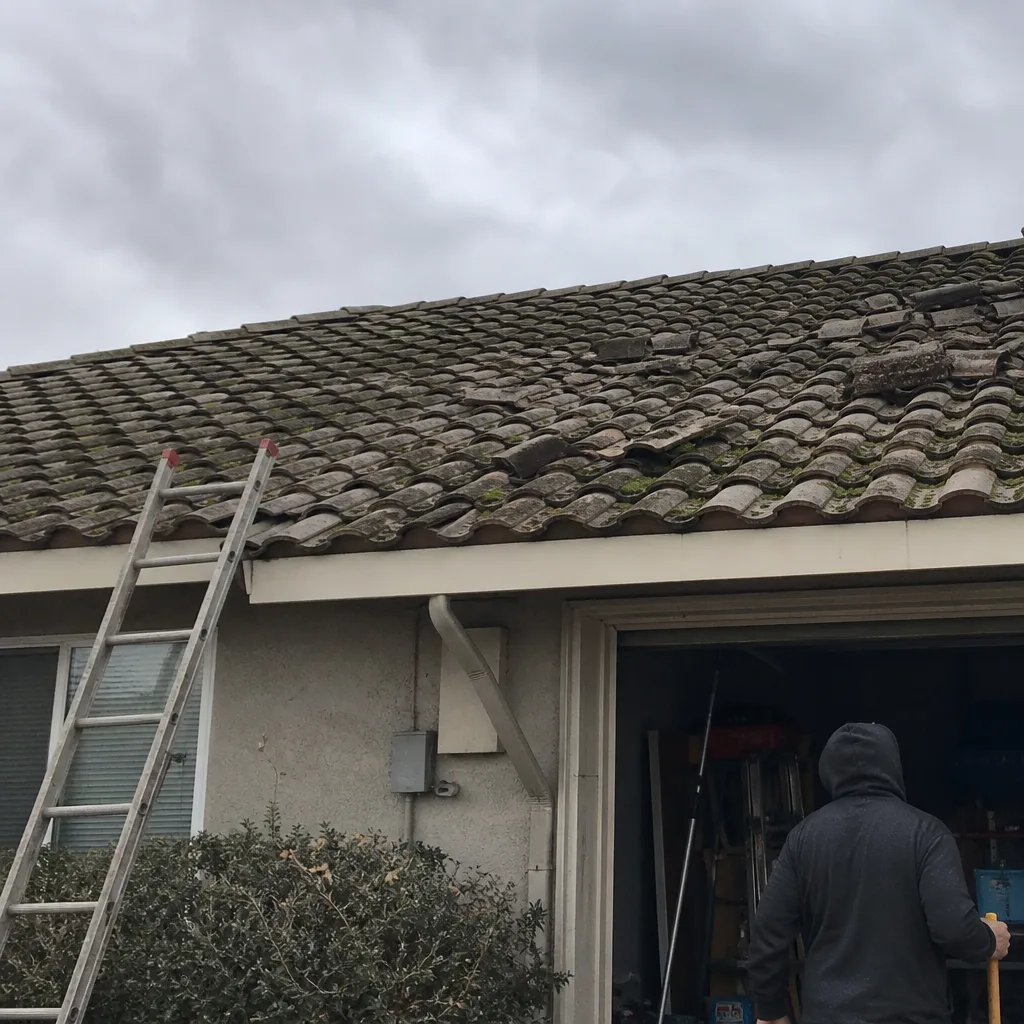 Before
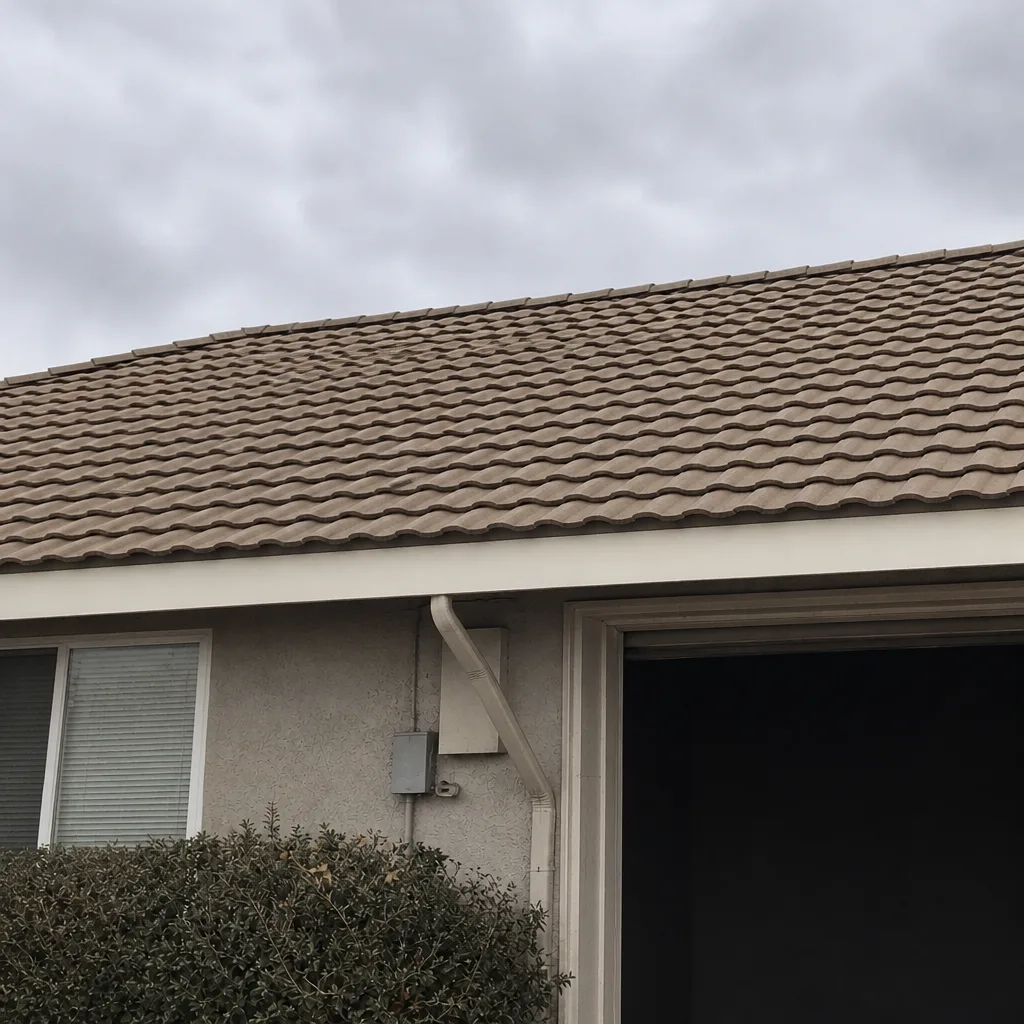 After
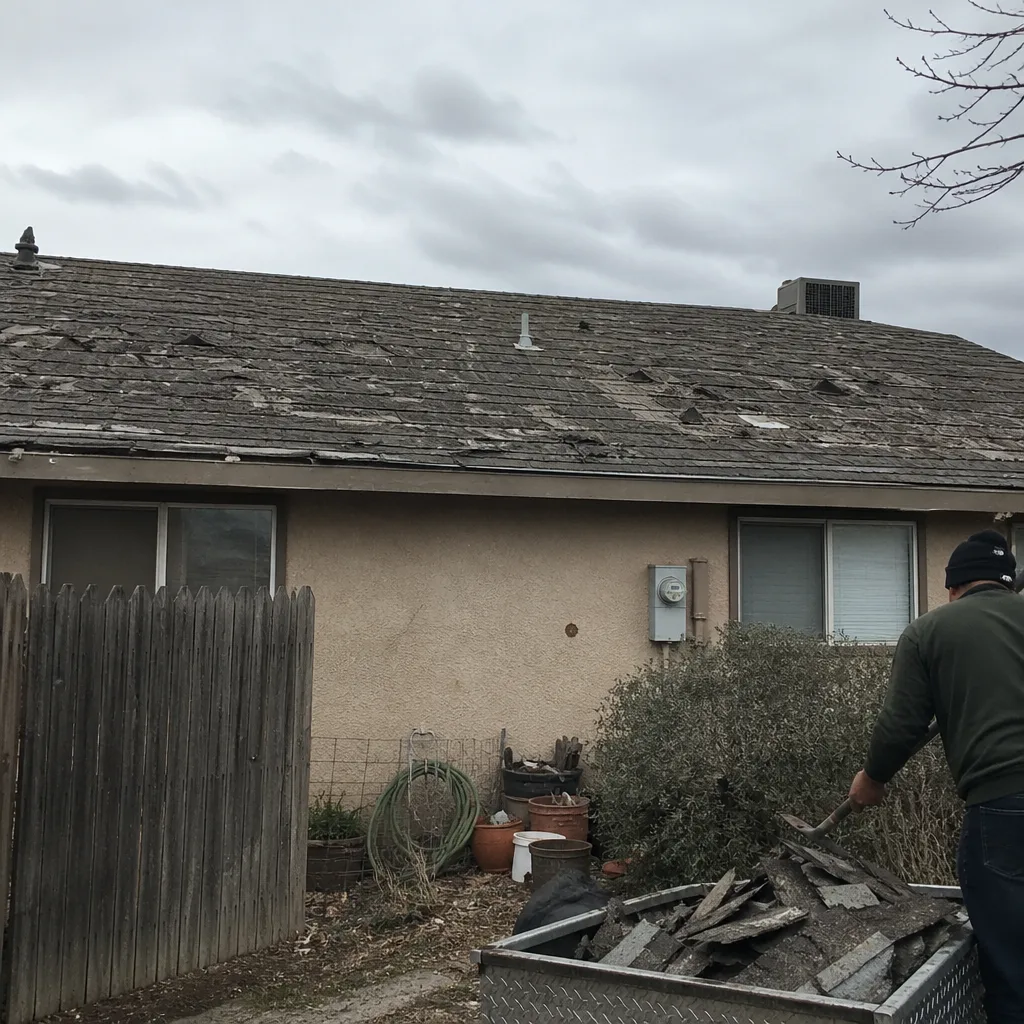 Before
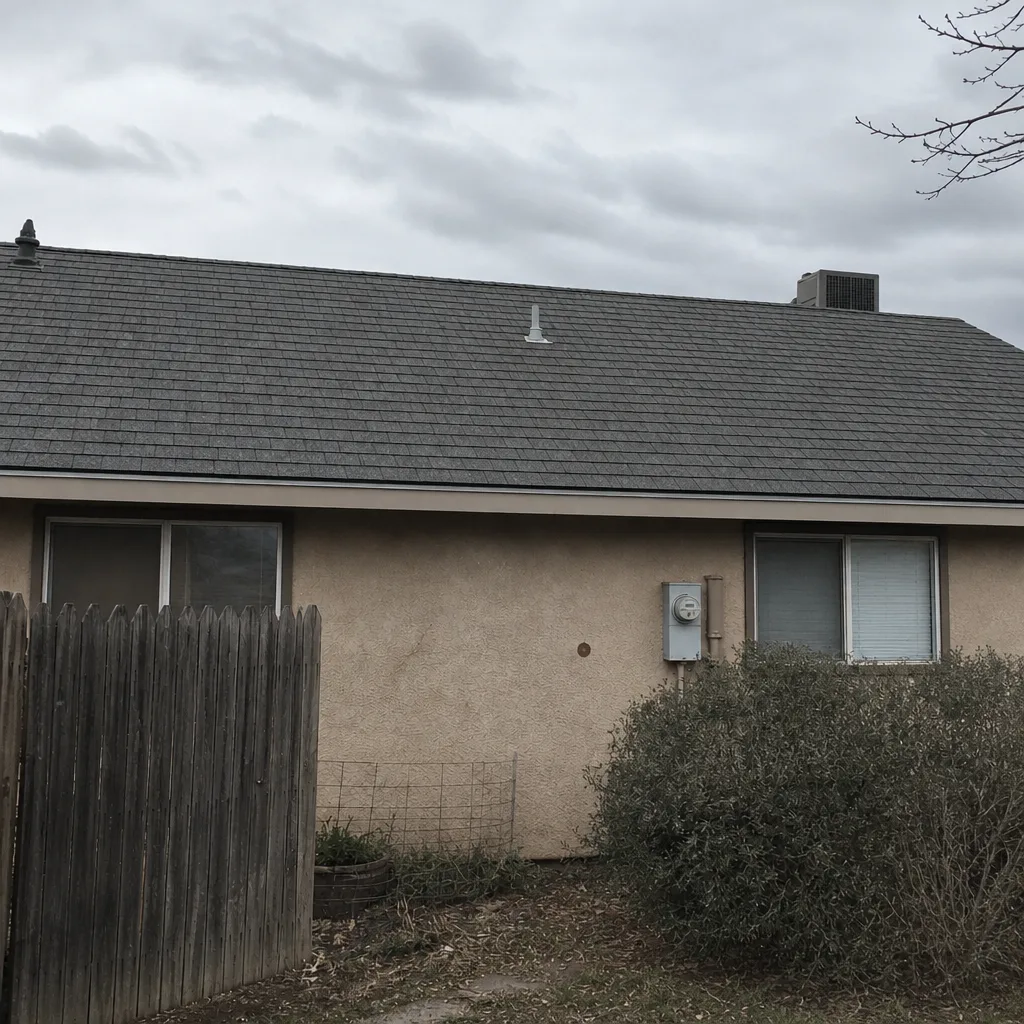 After
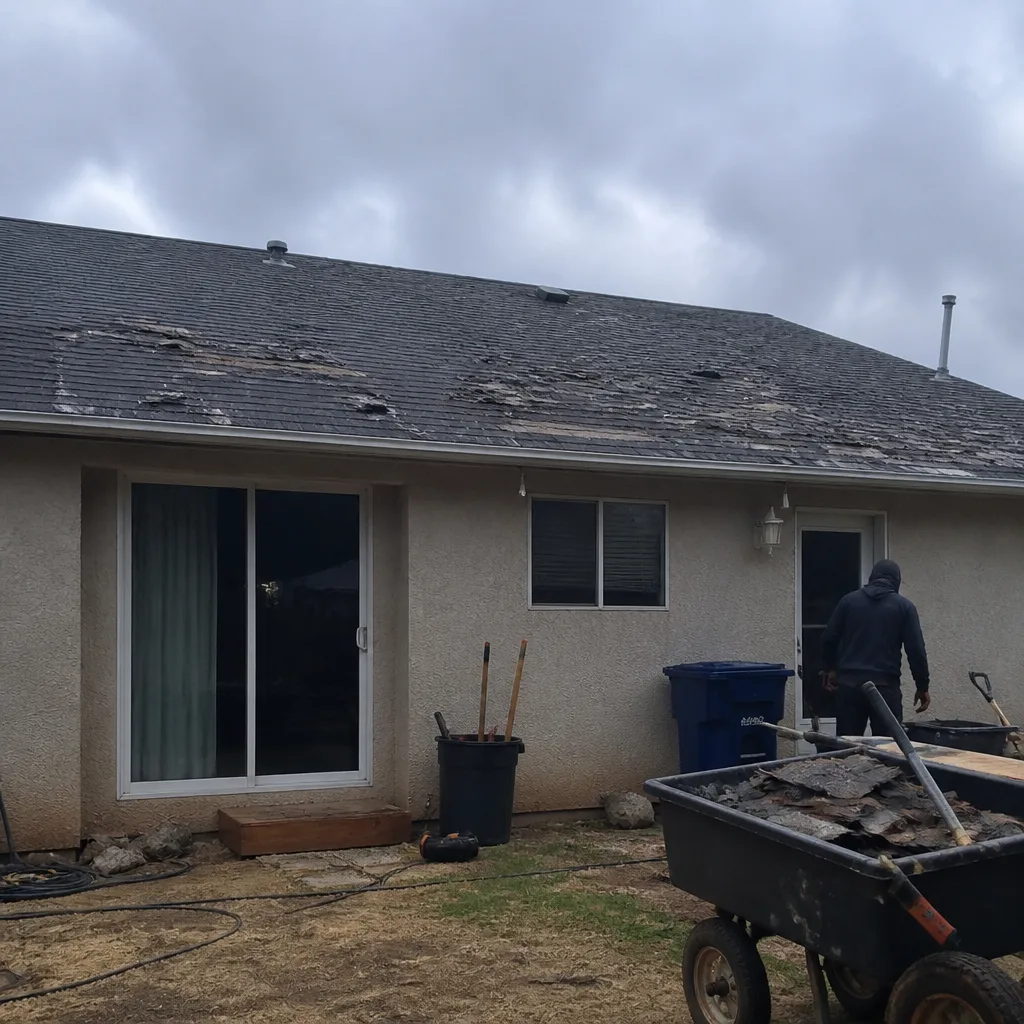 Before
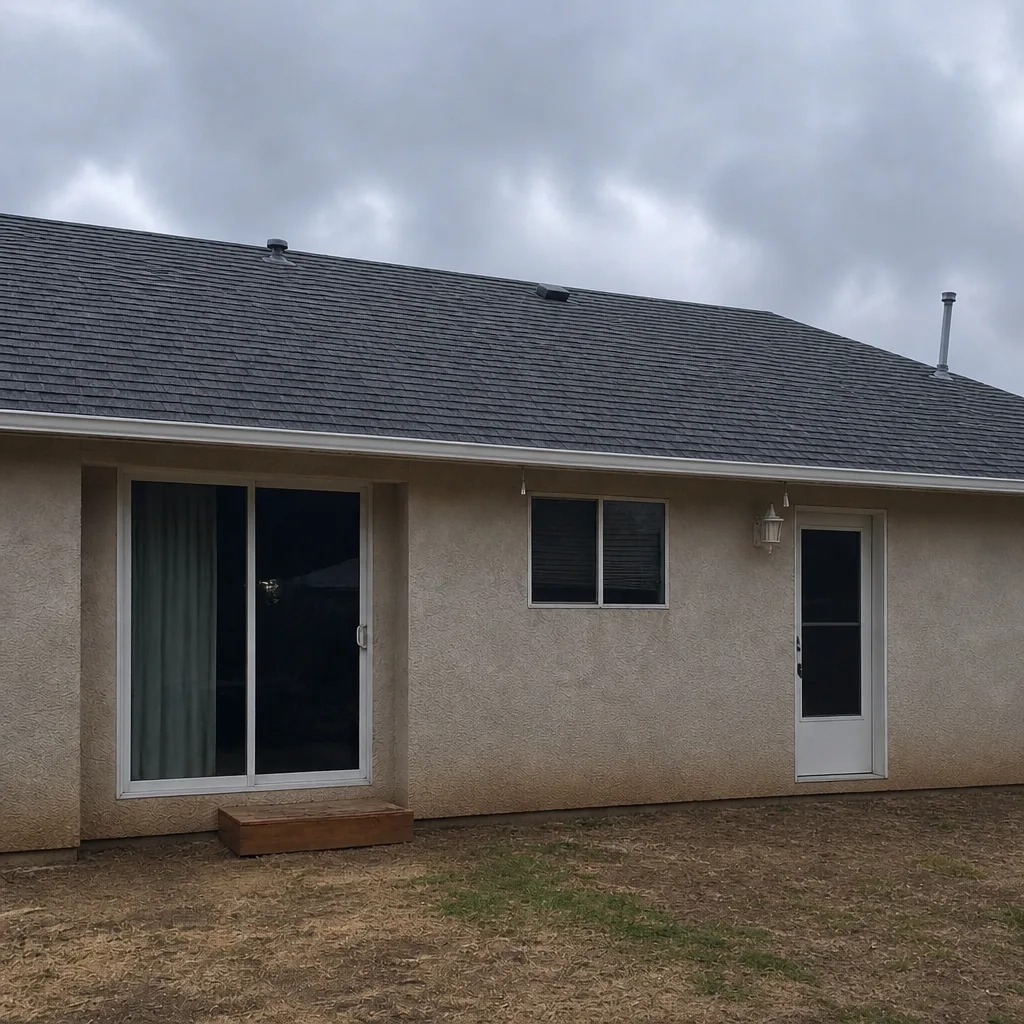 After
When to Call a Professional
The scenarios that clearly call for a licensed roofer are consistent, and recognizing them early is the point. Any water intrusion into the home, any work on flashing or underlayment, any structural issue with the deck or rafters, and any roof that needs more than a single shingle replaced. Same for anything on a two-story or steep-pitch roof, and for any job where you can’t confirm the permit requirement with confidence. If the roof has been through a storm and you’re not sure what you’re looking at, that’s a professional assessment, not a DIY project.
Roofer Mesquite offers free estimates in Mesquite – call (855) 916-4744 for an honest read on whether your roof needs repair or replacement, and how trades work in Mesquite’s desert climate. We answer 24/7, with fast dispatch from 7am to 7pm, Sunday through Friday. From inspection through installation, you get one point of contact and a written line-item quote with the final price set by that estimate.
Frequently Asked Questions
Yes, a homeowner can work on their own primary residence in Nevada without a contractor’s license, but the permit requirement is separate and is usually triggered by roof replacement. Call the city building department for your address and scope of work before you buy material. For an exact quote on doing the job properly, call (855) 916-4744 – estimates are free.
Roof repair pricing in Mesquite depends on scope, pitch, and material, which is why a written line-item estimate matters more than a general range. Small shingle and flashing repairs price very differently from repairs that involve underlayment or decking. Call (855) 916-4744 for a free estimate – the written quote sets the final price.
Often yes, because most material warranties require installation to published specifications and many require a licensed contractor for coverage tiers above the basic material warranty. Manuals for products you buy at retail hold the exact conditions. Call (855) 916-4744 and we’ll walk you through what coverage a professional installation includes.
Yes, because the daily thermal cycling here works every fastener and sealant joint harder than in moderate climates, so small installation errors surface faster. That’s the reason the line between DIY and professional sits further toward professional in Mesquite. Call (855) 916-4744 for a free assessment of your roof’s condition.
Our inspection is a standalone service, and the estimate is free – the price for any recommended work is set per job by the written estimate. We don’t require a purchase to give an honest read on your roof. Call (855) 916-4744 to schedule.
The right time to find out is before you start, which is what an inspection is for. If work uncovers something larger, a licensed contractor should stop, document it, and put the additional scope in writing before proceeding – never continue on the assumption that it’ll work out. Call (855) 916-4744 to have that scope assessed properly, with the price set per job by the written estimate.
The Bottom Line
In a climate that punishes imprecision, the honest DIY list is short: gutters, ground-level observation, attic checks, and a single shingle swap on a safe, accessible roof. Everything else – flashing, underlayment, structural work, full installation – should go to a licensed contractor, because permit requirements, warranty conditions, and error costs all converge in that territory. The 15-year view nearly always favors professional work, especially once material breadth across seven brands and contractor-tier warranty access are counted. Roofer Mesquite covers inspection, repair, and replacement as one full-lifecycle service, and we’ll tell you if a repair is all you need. Call (855) 916-4744. We answer 24/7, with fast dispatch from 7am to 7pm, Sunday through Friday.
Written by the team at Roofer Mesquite.