
Last updated November 18, 2026
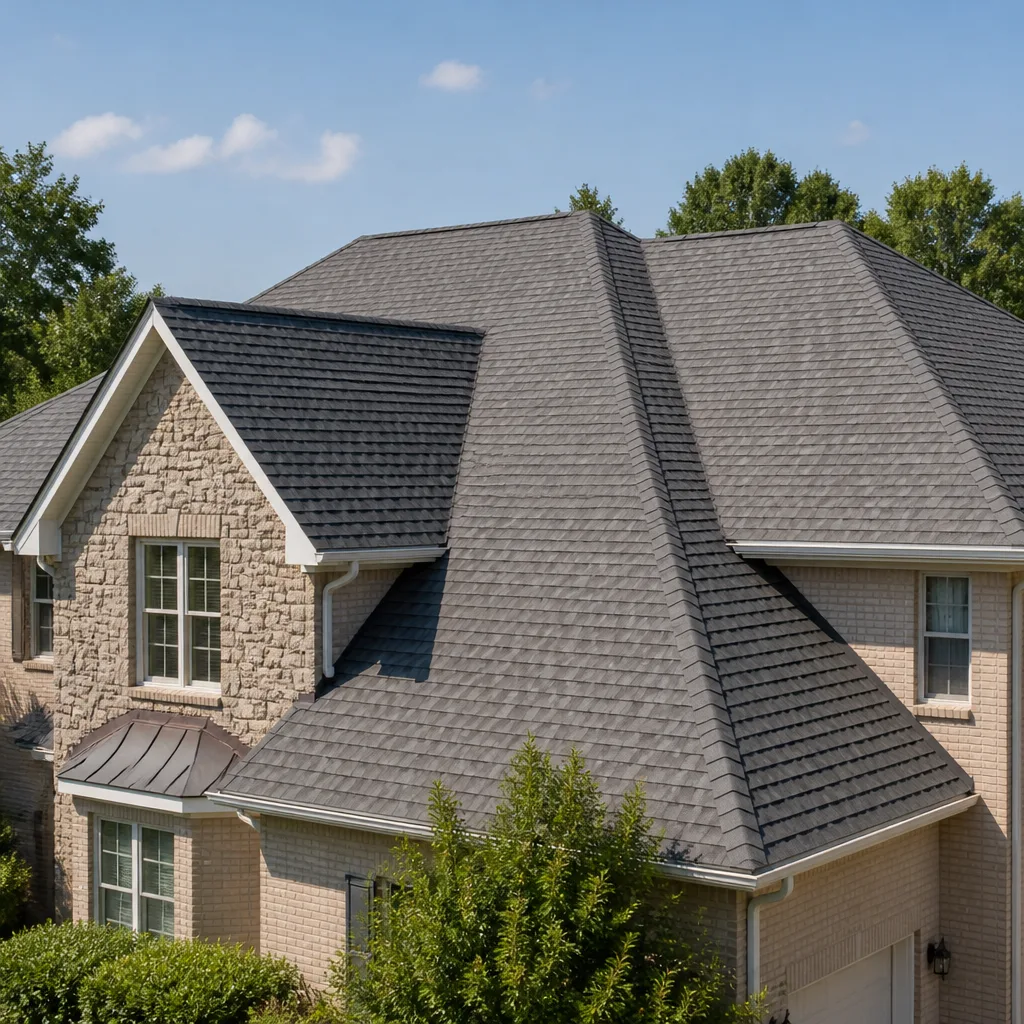 Architectural shingles
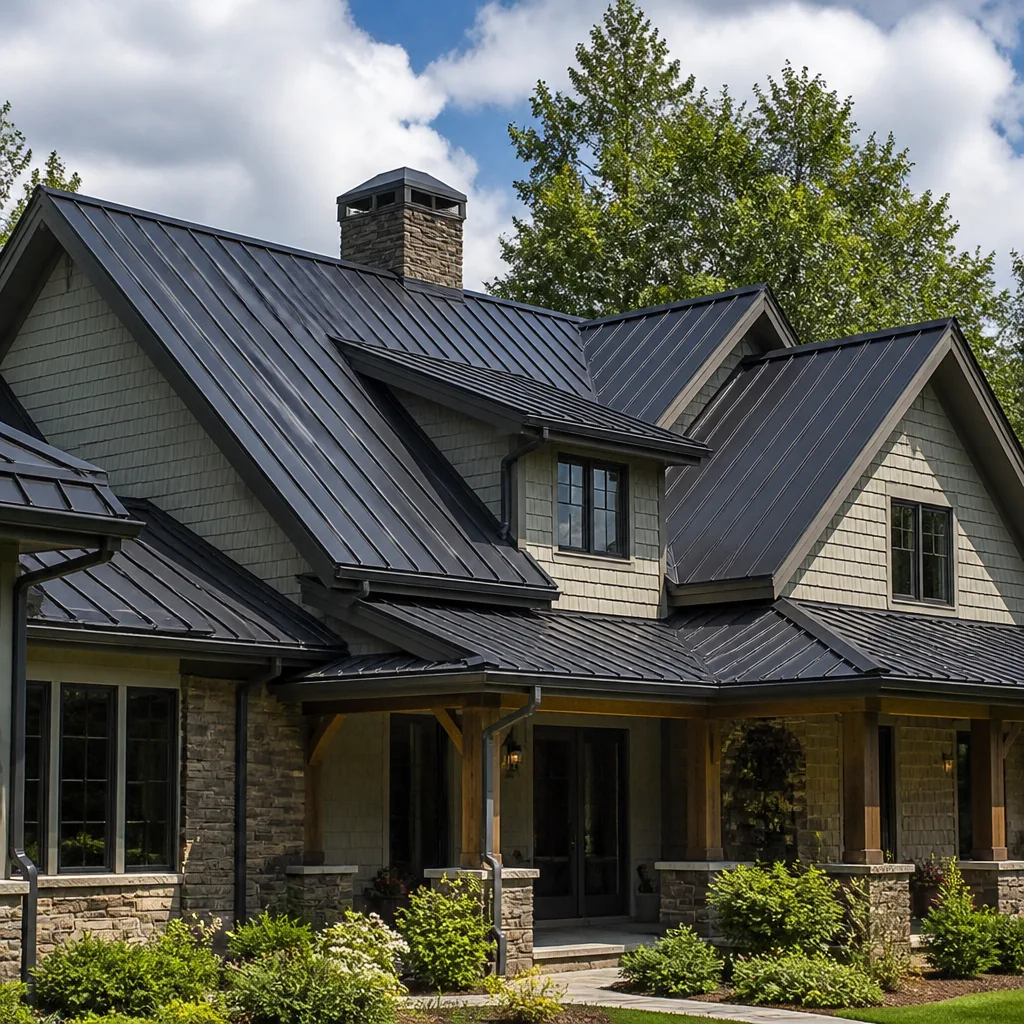 Metal roofing
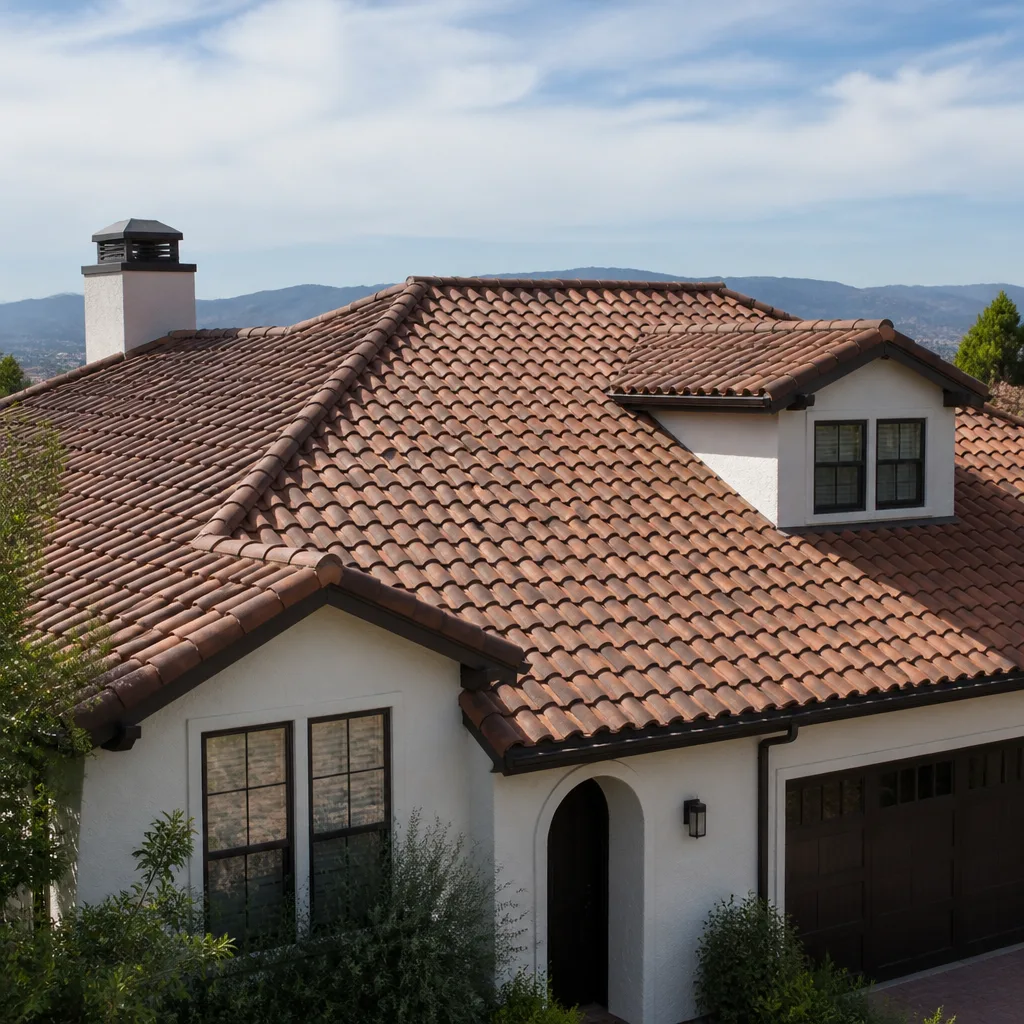 Tile roofing
 GAF
 Owens Corning
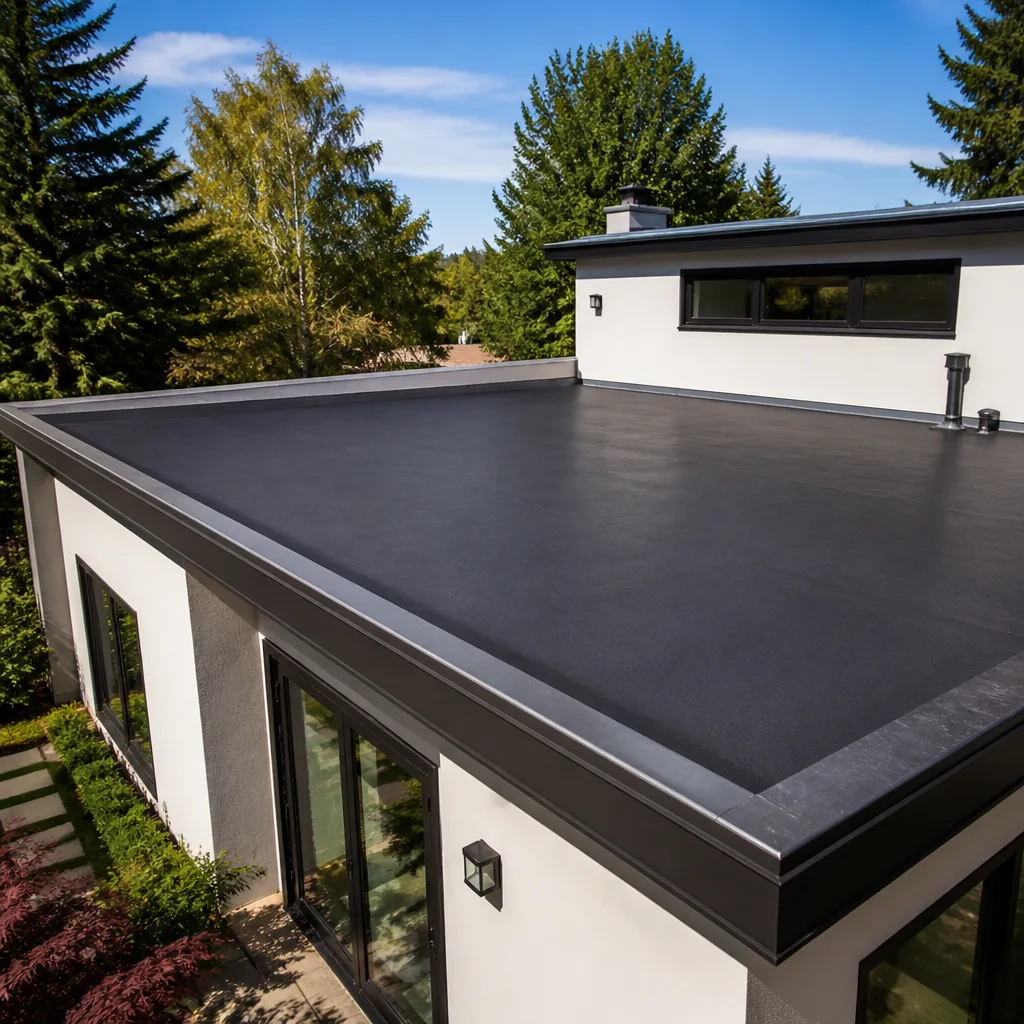 Flat & low-slope
Free roof inspection with deck photos before we talk money - GAF and Owens Corning certified installation
Roof Repair Troubleshooting in Mesquite: Common Problems and How to Fix Them
If your attic is wet but you can’t find a missing shingle, the leak probably isn’t from impact damage. In desert climates like ours, the first place to check is the pipe boot flashing, which dries out and cracks under UV before anything else on the roof fails. That single fact reorders almost every troubleshooting call we run in Mesquite. This guide teaches you to trace a symptom back to its true source, so you patch the right spot once instead of the wrong spot twice. We’ll walk through interior staining, granule loss, lifted ridge caps, blistering, monsoon intrusion, and the flat sections over garages.
Quick Answer
Most roof leaks in Mesquite don’t start where the damage is visible. They start at the weak points first: pipe boot flashing cracked by UV, dried sealant at valleys and penetrations, and lifted fasteners that only leak under wind-driven rain. The most reliable first diagnostic step is an attic inspection, not a ladder inspection. Trace the water back to its entry point from inside, then confirm it on the roof.
Styles & brands we work with
- Architectural shingles
- Metal roofing
- Tile roofing
- GAF
- Owens Corning
- Flat & low-slope
Table of Contents
- The Symptom-to-Source Diagnosis Tree
- Why an Attic Inspection Beats a Ladder Inspection
- Why Monsoon Rain Finds Spots That Look Intact
- Granule Loss in Gutters: What It Actually Means
- Lifted Ridge Caps and Blistering: Two Different Causes
- Troubleshooting Flat and Low-Slope Sections
- Common Misdiagnoses and How to Catch Them
- Repair or Replace: How to Tell the Difference
The Symptom-to-Source Diagnosis Tree
Every roof problem announces itself through a symptom, and the symptom is almost never the source. Here’s how we trace the four most common symptoms in Mesquite back to their real mechanical cause.
- Interior staining on a ceiling or wall. Trace it upslope. Water travels along sheathing and rafters before it drops, so the stain is usually offset from the entry point. Look above and toward the ridge from the stain, then check pipe boots, valleys, and sidewall flashing in that zone.
- Granules collecting in gutters or at downspout outlets. That’s shingle wear, not a leak. It points to an aging or sun-baked field of shingles shedding its protective surface, and it tells you the shingle is losing its ability to shed water and resist UV.
- Ridge caps that look lifted or wavy. This is usually a fastening or adhesion failure, not wind damage. The cap sealant dries and releases, and the cap edges lift. It reads as a cosmetic problem until wind-driven rain gets underneath.
- Blistering or bubbling on the shingle surface. Blisters are trapped moisture or trapped air escaping from below, and they often signal attic ventilation problems more than a shingle defect. Fix the ventilation and the blistering stops recurring.
When we run roof repair diagnostics in Mesquite, the goal is always this same backward trace: symptom first, then upslope to the mechanical cause, then confirm on the roof. Skipping the trace is how a homeowner ends up patching a stained ceiling three times without touching the actual leak. Our technicians have up to 8 years of experience reading these patterns on roofs installed by any contractor, which matters because the sealant failed the same way regardless of who put it down.
Why an Attic Inspection Beats a Ladder Inspection
The most reliable first diagnostic step on a Mesquite roof is an attic inspection. From the ground or a ladder you can only see what the sun shows you. From inside the attic you can see where water has actually been.
Here’s what we look for from inside, in order:
- Water staining on the underside of sheathing. A dark ring or tide line on the decking maps directly to the entry point above. This is the single most useful clue on any roof.
- Rafter lines and drip trails. Water follows wood grain and rafters downhill. A trail tells you the general roof zone to inspect.
- Daylight at penetrations. Any visible light through the roof deck means a gap at a vent, pipe boot, or flashing.
- Damp insulation and rusted fasteners. Rusted nail tips or damp batt insulation confirm an active leak, even if the decking looks dry today.
- Ventilation condition. Poor attic ventilation drives heat and moisture buildup, which blisters shingles and shortens their life. It’s often the hidden cause behind a “shingle problem.”
An attic inspection is also the honest starting point for any real roofer Mesquite conversation, because it separates an actual failure from a suspected one. That’s why we offer Roof Inspection as a standalone service, no purchase required. You get a straight assessment of your roof’s condition, and we’ll tell you if a repair is all you need. If you want the full picture of how we approach a roof, see our Mesquite service overview. From that first inspection, we know exactly where to look on the roof before anyone climbs up.
Why Monsoon Rain Finds Spots That Look Intact
Mesquite gets infrequent but intense summer storms, often monsoon-style, and that pattern exposes weaknesses a slow drizzle never would. A light rain can fall for hours and stay on the surface. A hard, wind-driven downpour finds every gap.
There are three reasons a storm finds a spot that looks perfect from the ground:
- Wind drives water sideways and upward. Rain coming in at an angle pushes water behind flashing, under lifted ridge caps, and up under the bottom edge of shingles. A roof that sheds straight rain fine can still fail under wind-driven rain.
- Intermittent leaks dry before you look. Desert heat dries the surface fast, so by the time a homeowner checks the roof, the evidence is gone. The stain on the ceiling from this storm may be the only sign it happened.
- UV-damaged sealant fails before the shingle does. In our climate the sun cooks the sealant at pipe boots, valleys, and sidewall flashing years before the shingle field shows wear. The water gets in at the sealant, not the shingle.
This is why we tell homeowners to look for the source, not the shingle. A stain that shows up after a storm is a clue about a specific penetration, and a targeted roof repair at that flashing often resolves it entirely. Impact damage from wind-blown debris happens, but it’s less common here than the slow UV failure of a sealant that’s been baking in the sun. Hail is uncommon in Mesquite, so when you see damage, it’s usually wear and UV, not impact.
Granule Loss in Gutters: What It Actually Means
Finding grit in your gutters is one of the most misread signals on a desert roof. A little granule loss is normal and expected, especially right after a new install. A lot of it tells a story.
Here’s how to read it:
- A handful of granules after a new roof. Normal. The shingle is shedding the loose granules from manufacturing, and it settles down.
- Steady accumulation in gutters year after year. The shingle surface is aging and losing its protective coating. The mineral granules are what block UV, so as they go, the shingle’s life goes with them.
- Bald or shiny patches on the shingle field. Significant wear. Those spots are more vulnerable to sun and to water, and they can mark where a shingle is more likely to fail next.
- Granules plus curling edges. Advanced aging. Repair becomes a question about timing, not whether.
Granule loss isn’t a leak you can patch; it’s information about the roof’s remaining life. That’s the honest read we give Mesquite homeowners who call about gutters full of grit. Sometimes the right answer is a targeted repair on the worn spots. Sometimes it’s planning a roof replacement before a storm forces the decision. Our full-lifecycle approach means we can diagnose either case from the same inspection. When replacement is on the table, we work with seven brands, including GAF and CertainTeed, so you can match the material to your budget and your roof rather than take a single take-it-or-leave-it quote. The right shingle system for a Mesquite climate is worth choosing deliberately.
Lifted Ridge Caps and Blistering: Two Different Causes
Homeowners often lump lifted ridge caps and blistered shingles into one “wind damage” category. They’re different failures with different fixes, and treating them the same wastes money.
Lifted Ridge Caps
Ridge caps are the shingles folded over the peak of the roof. They lift when the sealant that holds them down dries out and releases, which happens faster in intense sun. The fix isn’t the shingle itself; it’s re-adhering and re-fastening the cap. Left alone, lifted caps let wind-driven rain in at the peak, which is the hardest place on a roof to chase a leak.
Blistering
Blisters are small bubbles under the shingle surface. They come from trapped moisture or trapped heat escaping from below, and they’re often a ventilation problem in disguise. Re-shingling a blistered field without addressing ventilation means the blisters come back. In our experience, blistering that recurs on a Mesquite roof almost always points to attic ventilation, so we check that before we touch the shingles.
The troubleshooting takeaway: lifted ridge caps are a fastener and sealant issue, and blistering is a ventilation issue. Diagnose which one you’re looking at before you call for a quote, because the fix and the cost are different. If you’re not sure, that’s exactly the kind of question a standalone inspection answers. We’d rather tell you it’s a small fix than sell you a roof you don’t need.
Troubleshooting Flat and Low-Slope Sections
Many Mesquite-area homes have flat or low-slope roof sections over garages and additions, and these fail differently from the pitched field. On a low-slope section, water sits instead of running off, so the whole logic of troubleshooting changes.
What to check on a flat or low-slope section:
- Ponding water. Standing water finds low spots and seam failures. If water sits more than a day after a storm, the slope or drainage is the problem.
- Seam failures. On any membrane or rolled roofing, the seams are the first place to leak. Look for separation, lifting, or cracks along them.
- Penetrations and drains. Vents, scuppers, and drains on a flat roof are where water gathers. A cracked seal around a drain is a common entry point.
- UV cracking. Sun exposure on these sections is relentless. The membrane dries and cracks over time, and the cracks start small.
Flat sections get missed in a lot of roof inspections because they’re over the garage and nobody looks there. When we troubleshoot a Mesquite roof with a low-slope section, we treat it as its own system with its own failure points. We’ve seen roofs where the “leak” in the house traced back to a garage roof seam that had nothing to do with the main roof. If you have a flat section and a mystery leak, have it checked before you assume the pitched field is the culprit.
Common Misdiagnoses and How to Catch Them
The most expensive roof problem isn’t water damage. It’s a misdiagnosis that sends money to the wrong fix. Here are the ones we see most, and how to catch them before they cost you.
- “You need a full replacement” when it’s a flashing repair and a new pipe boot. One failed pipe boot can wet a ceiling and look like systemic failure. Catch it by insisting on an attic inspection that traces the water to a specific penetration. If a contractor won’t walk you through the entry point, get a second assessment.
- Patching the stain instead of the source. Ceiling-stain repair that skips the roof fix is a paint job, not a repair. Water will return. Catch it by confirming the source before anyone patches drywall.
- Re-shingling over blistering without checking ventilation. The blistering comes back and the homeowner blames the shingles. Catch it by asking what was done about attic ventilation.
- Blaming wind for lifted ridge caps that are actually sealant failure. The fix for each is different. Catch it by having the caps examined for sealant and fasteners, not just appearance.
- Ignoring flat garage sections entirely. A whole roof can be evaluated while the actual leak sits over the garage. Catch it by asking specifically whether the low-slope sections were inspected.
- Letting a single brand limit the diagnosis. Familiarity with multiple shingle systems matters when your roof was installed by another contractor. Catch it by choosing someone who diagnoses the roof as it is, not the brand they prefer to sell.
This is where material range and honest diagnostics meet. Roofer Mesquite installs and repairs roofs using seven brands, including GAF, CertainTeed, Owens Corning, IKO, Atlas, Tamko, and Boral. That range exists so you get the right fix, not the one that’s easiest to sell.
Repair or Replace: How to Tell the Difference
The repair-or-replace question is the one homeowners ask with the most anxiety, and the most honest way to answer it is to look at a few specific things instead of a general impression.
These are the signs that point toward repair:
- A single isolated leak traced to one penetration, like a cracked pipe boot or a failed valley sealant.
- Localized damage: a few worn or lifted shingles while the rest of the field is sound.
- Ridge cap re-adhesion and flashing repair where the decking and underlayment are intact.
These are the signs that point toward replacement:
- Widespread granule loss and bald patches across the field.
- Multiple leaks in different zones, which suggests systemic wear.
- Curling, cracking, and blistering that keeps coming back despite repairs.
- Age and overall condition that make each new repair a stopgap.
The judgment is genuinely a judgment, which is why we offer inspection as a standalone service. You get an honest assessment, no purchase required, and we tell you if a repair is all you need. If replacement is the right call, we work with seven brands so you can choose the material to match your budget, the right shingle system for the home, and the warranty protection behind it.
Common Mistakes to Avoid
- Patching the ceiling before the roof. A drywall patch over an active leak hides the evidence and lets the water keep traveling. Fix the source first, then the interior.
- Skipping the attic inspection. Ladder inspections miss the interior evidence that points to the real entry point. The attic shows you where the water actually goes.
- Assuming the visible damage is the failure. In a desert climate, UV damage at flashing and boots usually starts the leak. The shingle field is often fine.
- Coatings or sealant as a cure-all. Surface coatings can slow UV wear but don’t fix failed boots, lifted caps, or bad ventilation. They delay the real repair, and the leak returns.
- Overlooking flat garage sections. Low-slope sections over garages and additions leak differently and get missed. Include them in every check.
- Ignoring attic ventilation. Poor ventilation drives heat and moisture that blister shingles and shorten roof life. It’s a roof problem, not a comfort problem.
- Accepting a single-quote replacement without a diagnostic. If a contractor jumps to replacement without tracing the leak to an entry point, get a second assessment before you commit. Remodels and replacements aren’t same-day decisions, so take the time to verify the diagnosis.
See the difference
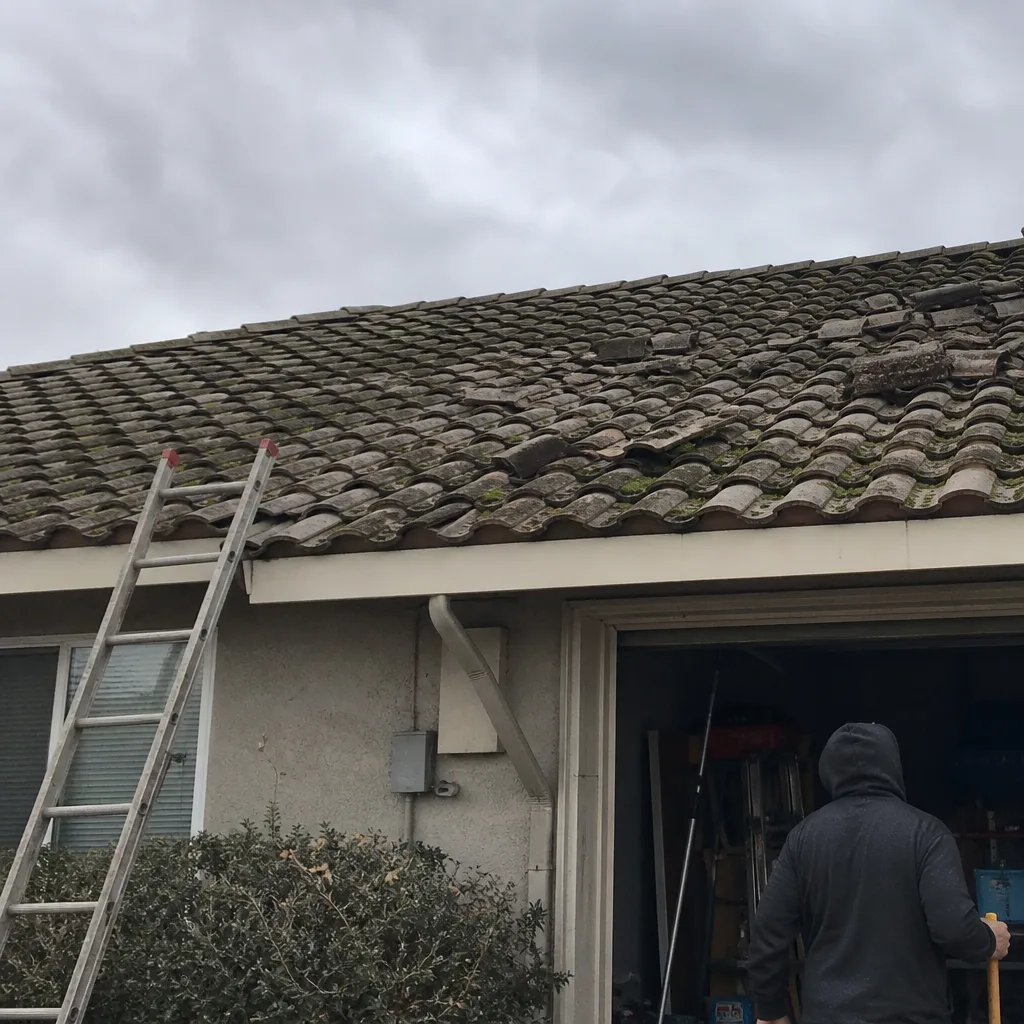 Before
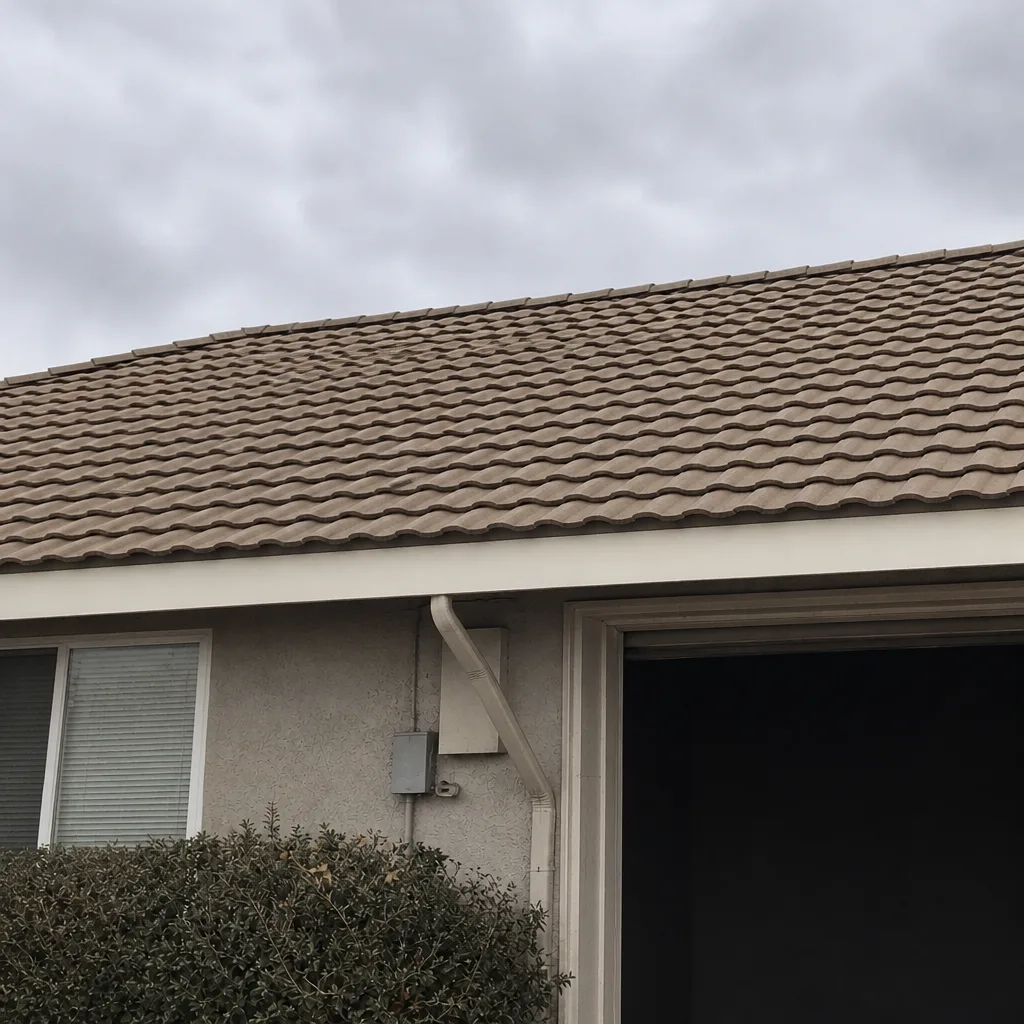 After
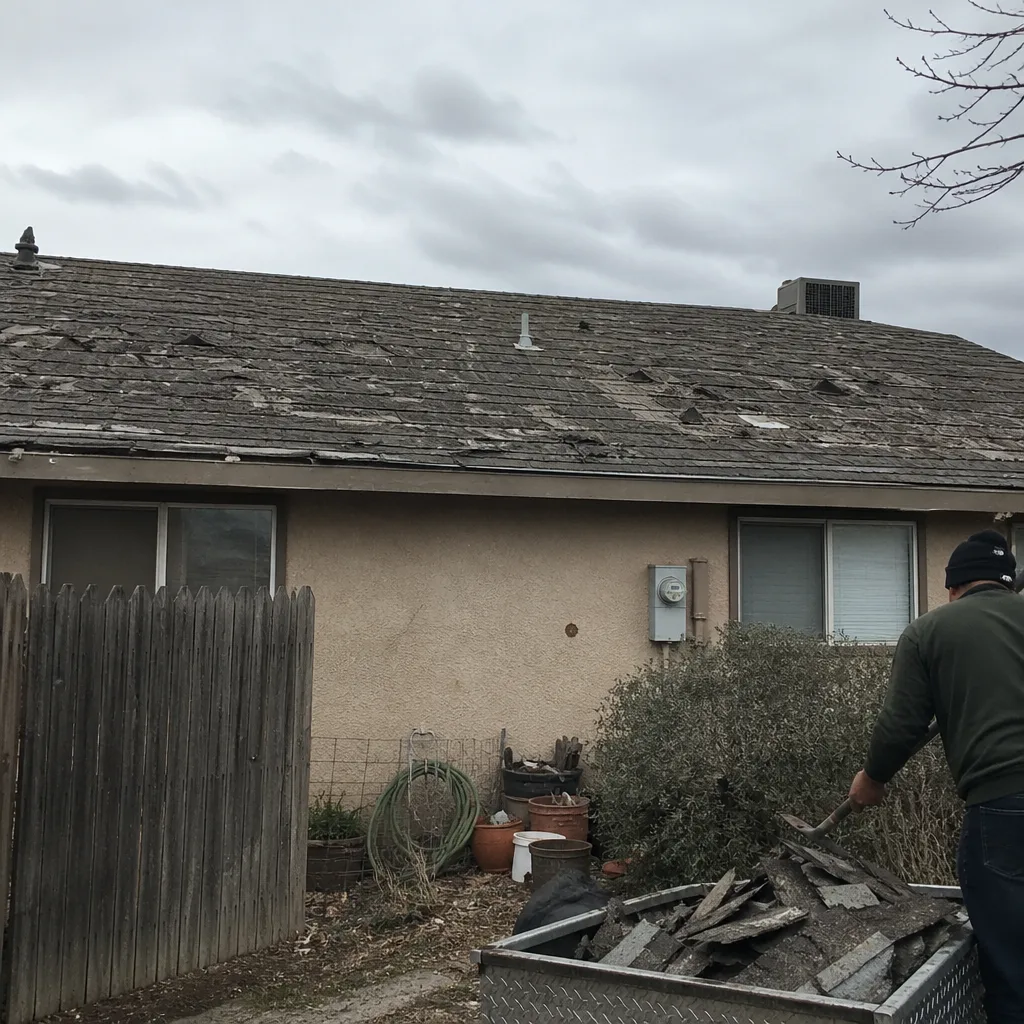 Before
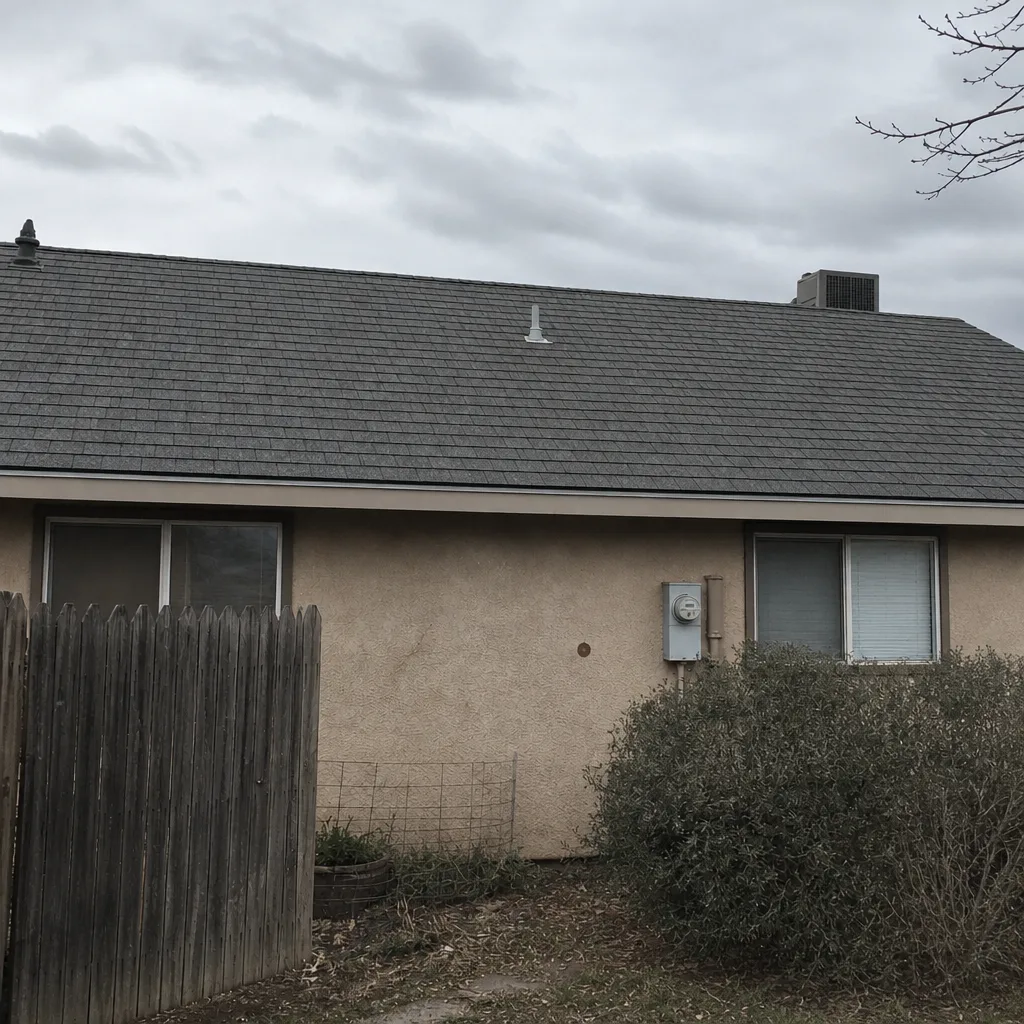 After
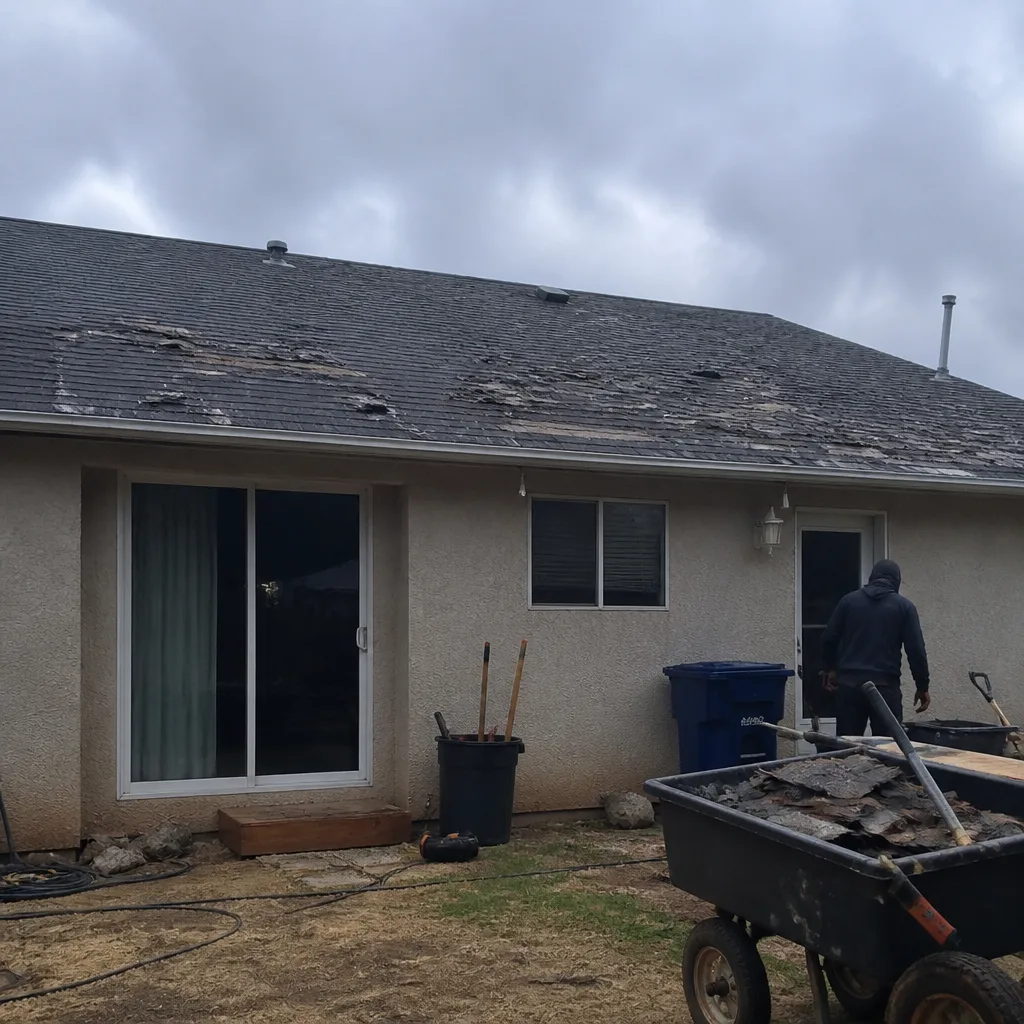 Before
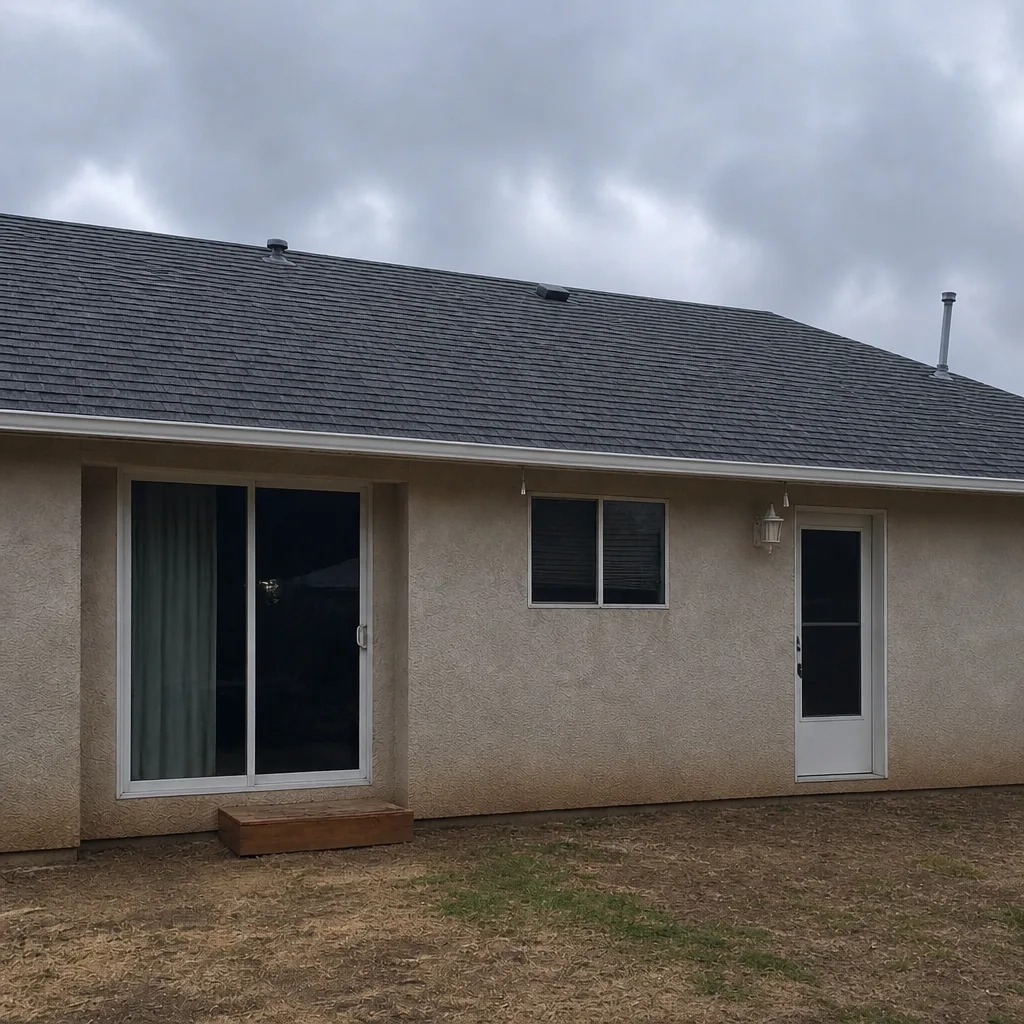 After
When to Call a Professional
Some roof problems are worth a professional look the moment you notice them. Call when you have active water intrusion, a ceiling stain that keeps growing, daylight in the attic at a penetration, a flat section that holds water, or a leak you can’t trace after a storm. Call when lifted ridge caps or blistered shingles are spreading, when granule loss is heavy and steady, or when you’ve patched the same spot repeatedly. Height and steep-pitch work is dangerous and belongs with a trained professional, and any electrical or gas work near a roof penetration is not a homeowner job. Roofer Mesquite offers free estimates in Mesquite, and our inspection is a real diagnostic service, not a sales funnel. Call (855) 916-4744. We answer 24/7. Fast dispatch from 7am to 7pm, Sunday through Friday.
Frequently Asked Questions
Pipe boot flashing is usually the first thing to fail on a Mesquite roof, because the sun dries and cracks its rubber boot years before the shingles wear out. Check the boots first, then the valleys and sidewall flashing. Call (855) 916-4744 for an exact diagnosis, estimates are free.
Because wind-driven monsoon rain gets behind flashing and under lifted caps in a way a light rain doesn’t. The roof looks intact from the ground because the surface has dried. Trace the stain upslope from inside the attic to find the true entry point.
Small, ground-level observations like reading gutters and staining are fine for a homeowner, but any work on the roof surface belongs with a trained professional. Height, steep pitch, and the risk of missing the real source make a DIY patch a false economy. Call (855) 916-4744 and we’ll tell you what it takes.
Isolated leaks traced to a single flashing or boot point usually mean a repair, while widespread granule loss, multiple leaks, and recurring damage point toward replacement. The reliable way to tell is an attic-plus-roof inspection, which we offer as a standalone service, no purchase required.
Yes. Poor attic ventilation traps heat and moisture that blister and age shingles faster in a hot climate like ours. If blistering keeps coming back after repairs, the ventilation is usually the hidden cause. Call (855) 916-4744 for an exact quote, estimates are free.
Don’t patch the drywall yet. The stain is evidence, and water travels along sheathing before it drops, so the source is usually upslope. Get an attic inspection first to trace the leak to a penetration, then fix that. Call (855) 916-4744 to book a free estimate.
The Bottom Line
Roof troubleshooting in Mesquite comes down to one habit: trace the symptom to its source before you patch anything. Pipe boot flashing, UV-cracked sealant, lifted ridge caps, and ventilation problems start most of the leaks here, and the attic shows you where the water really goes. Monsoon storms find the weaknesses a light rain won’t. Repair is often the right answer, and replacement is sometimes, but the honest diagnosis comes first. We work across seven brands and offer inspection as a real diagnostic service because we’d rather tell you a repair is all you need than sell you a roof you don’t. Choose your material, get a straight answer, one company from first inspection to final nail.
Call (855) 916-4744 for a free estimate. We answer 24/7. Fast dispatch from 7am to 7pm, Sunday through Friday.
Written by the team at Roofer Mesquite.