
Last updated November 18, 2026
 Architectural shingles
 Metal roofing
 Tile roofing
 GAF
 Owens Corning
 Flat & low-slope
Free roof inspection with deck photos before we talk money - GAF and Owens Corning certified installation
Roof Repair Maintenance Checklist for Mesquite Homeowners
The maintenance task most Mesquite homeowners skip isn’t gutter cleaning. It’s checking the flashing caulk. The first week of triple-digit heat in May expands every metal edge, vent flange, and valley seam on a roof before it contracts again, and old caulk that looked fine in March can pull away from the joint it was sealing. By the time water shows up on a ceiling, that gap has been open for months. This guide is a month-by-month checklist built around the way roofs actually fail in Mesquite, not around a generic four-season calendar written for wet climates. We’ll cover what you can safely check from the ground, what needs a ladder and a trained eye, and how to tell thermal cycling damage from ordinary wear.
Quick Answer
A roof maintenance checklist for Mesquite should be sequenced around UV and heat, not rainfall. Check flashing caulk after the first hot week of May, watch valleys for debris after any summer monsoon, and inspect granule loss patterns twice a year to catch thermal cycling damage early. Everything above ground level should be handled by a trained roofer, because walking a hot shingle roof in Mesquite is more dangerous than it looks.
Styles & brands we work with
- Architectural shingles
- Metal roofing
- Tile roofing
- GAF
- Owens Corning
- Flat & low-slope
Table of Contents
- Why a Mesquite Roof Ages Differently
- Your Month-by-Month Roof Task Calendar
- The Flashing and Caulk Protocol
- Reading Granule Loss: Thermal Cycling vs. Normal Aging
- Valley and Low-Slope Drainage Checks
- What You Can Check From the Ground vs. What Needs a Roofer
- When to Book a Standalone Roof Inspection
- Common Mistakes to Avoid
- When to Call a Professional
Why a Mesquite Roof Ages Differently
Most roof maintenance advice you’ll find online is written for a climate with four distinct seasons and steady rainfall. Mesquite doesn’t work that way. A roof in Mesquite spends most of the year baking under direct desert sun, then gets hit with short, intense monsoon rain events in July and August, then cools sharply on winter nights. That cycle of expansion and contraction is what breaks roofs down here, and it happens year-round rather than in a single freeze-thaw season.
Two consequences matter for maintenance. First, sealants and caulk fail faster under UV exposure than under rain, because the sun degrades the flexible compounds directly rather than water working its way in. Second, the big thermal swings mean a roof’s framing and fasteners are constantly moving slightly, which loosens what heat hasn’t already dried out. A homeowner in a cooler, wetter climate might go years without touching flashings. In Mesquite, those joints need eyes on them far more often.
There’s a third factor: dust and debris. Desert wind carries fine sediment that settles in valleys, behind chimneys, and against low-slope transitions. When monsoon rain finally arrives, that debris turns into a dam, and water pools where it shouldn’t. Combining heat-driven sealant failure with debris-driven drainage failure is why a Mesquite roof needs a maintenance rhythm tailored to the local weather rather than a generic one. Our technicians have up to 8 years of experience working with these patterns across the region, and we’ve learned that the checklist matters more than the repairs.
Your Month-by-Month Roof Task Calendar
Here’s the calendar we’d hand a Mesquite homeowner. It’s built to put the right task ahead of the season that stresses it, so you’re checking before the problem, not after.
January and February
Cold nights and mild days. Walk the perimeter and look for shingle tabs that lifted over winter wind. Check gutters and downspouts for the debris that blew in during the previous year. This is also the easiest time to schedule a full inspection, before the heat arrives and before any monsoon concerns.
March and April
Watch the caulk at pipe boots and vent flanges as temperatures climb. Re-check attic ventilation: if you can see daylight or feel excessive heat in the attic on a warm afternoon, the intake and exhaust balance is off, and that accelerates shingle aging from underneath.
May
This is the critical month. After the first stretch of triple-digit heat, do a dedicated flashing check. Expansion has already stressed every sealed joint. Look for caulk that has pulled away from the metal, cracked, or gone chalky. This single task prevents more leaks in Mesquite than any other.
June and July
Pre-monsoon prep. Clear valleys of dust and debris before the rain arrives. Confirm that downspouts discharge away from the foundation. Look at low-slope sections and flat transitions for ponding evidence from prior storms.
August and September
Post-monsoon inspection. After any significant rain event, check the attic and ceilings inside for new stains, and look at valleys, skylights, and wall transitions from the ground. Monsoon rain in Mesquite is short but intense, and it exposes weaknesses that dry weather hides.
October through December
End-of-year sweep. Clear gutters again after fall wind, look for lifted or missing shingles, and book a professional inspection if it’s been more than a year since the last one. This is the calm window to catch problems before the next heat cycle.
The Flashing and Caulk Protocol
Flashing is the metal that seals a roof where it meets something else: chimneys, walls, vent pipes, skylights, and valleys. The metal itself rarely fails. The caulk and sealant around it does, and UV exposure is the reason. If you want a single maintenance habit that will extend the life of a Mesquite roof, it’s a disciplined flashing check twice a year, once after the first hot week of May and once after the last monsoon.
Here’s the protocol we recommend, starting with what a homeowner can safely do from the ground or from a window:
- Ground-level visual scan. With binoculars, look at the chimney flashing, vent pipes, and any skylight frame. You’re looking for caulk that has visibly pulled away, cracked, or turned powdery white. Chalky caulk is already failing even if it hasn’t opened yet.
- Interior check after rain. Look at attic sheathing and ceilings below each roof penetration for brown rings or damp spots. A stain that appears within a day of a rain event points straight at the flashing above it.
- Attic-side inspection. If you can safely enter the attic, look at the underside of the roof deck around penetrations. Daylight or moisture staining tells you a seam needs professional attention.
- Professional re-caulk. When caulk has failed, a trained roofer should remove the old sealant, clean and prep the joint, and apply a UV-rated sealant designed for the local heat. Smearing new caulk over old is a waste of time in this climate.
The temptation to get up there and touch up caulk yourself is real, and we understand it. But a shingle roof at midday in Mesquite is dangerously hot, the pitch is often steeper than it looks from the ground, and a single slip is a serious fall. If you want a reliable, honest assessment of your flashing condition, book a professional roof inspection rather than climbing the ladder yourself. Our technicians will tell you if a repair is all you need, and we mean it.
Reading Granule Loss: Thermal Cycling vs. Normal Aging
Every asphalt shingle sheds some granules over its life. That’s normal. But granule loss that follows a pattern is telling you something specific about how your roof is aging, and in Mesquite the pattern usually points to thermal cycling.
Normal aging looks like this: granules wear off gradually, mostly in high-traffic or high-sun areas, the color fades slowly, and the loss accelerates in the last third of the shingle’s life. Thermal cycling damage looks different. You’ll see:
- Concentrated loss near valleys and ridges, where expansion and contraction force the shingle to flex repeatedly.
- Bare patches in stripes or bands rather than a gradual fade, often on the south and west-facing slopes where heat is most intense.
- Granules collecting in gutters and at downspout outlets in noticeable volume after a hot stretch, not just after storms.
- Shingle edges that look cupped or curled, with the corners lifting slightly from the roof deck. This is the expansion-and-contraction cycle at work.
When you see the second pattern, the shingles are losing their protective layer faster than their age would suggest, and the roof may need targeted replacement of the affected slopes rather than full replacement. When you see the first pattern, the roof is simply aging normally, and you have time.
This is a place where a roofer’s eye matters. We work with GAF, CertainTeed, and Owens Corning shingle systems and have family familiarity with each, so we can read the pattern on a given roof and tell you what the granules are saying. If it’s normal aging, we’ll say so. If it’s thermal cycling damage that a repair can slow, we’ll recommend the targeted repair. If the roof is genuinely near the end of its life, we’ll tell you that too, and we’ll walk you through the material options that make sense for your budget rather than pushing the most expensive system on the list.
Valley and Low-Slope Drainage Checks
Desert rainfall isn’t gentle. A monsoon event can drop a large volume of water in a short window, and roofs in Mesquite are built to shed that water quickly, not to handle a slow, steady soaking. That makes drainage the quiet priority on this checklist.
Here’s what to check, in order:
- Valley debris. V-shaped valleys collect dust, leaves, and shingle granules. If the valley is packed with debris when the rain arrives, water backs up under the shingles. Clear it by hand or with a soft broom from a safe position, or have a roofer do it if the valley sits above a story.
- Low-slope transitions. Anywhere a low-slope section meets a steeper slope, water has to move from one drainage plane to the other. Look for standing water marks, staining, or soft spots after a storm.
- Scuppers and drains on flat sections. If any portion of your roof is flat, verify that the scupper or drain is clear. A blocked flat-roof drain is how water ends up inside a wall.
- Downspout discharge. Water leaving the roof needs somewhere to go other than against the foundation. In Mesquite’s soil, a downspout that dumps next to the slab creates its own set of problems over a season.
If a valley or low-slope section has repeatedly ponded or backed up, that’s not a cleaning problem. That’s a drainage design or flashing problem, and it needs a professional look. Roof repair focused on drainage and transition flashing is often far less costly than letting the water find its way inside.
What You Can Check From the Ground vs. What Needs a Roofer
We respect homeowners who want to stay on top of their roof. But there’s a real line between what’s safe and what isn’t, and that line is height. Here’s how we’d divide it.
Safe to check from the ground
- Visual shingle condition with binoculars: lifted tabs, missing shingles, curling edges.
- Chimney flashing and vent caulk condition (again, binoculars).
- Gutter and downspout debris accumulation.
- Valley debris visible from the ground or a first-floor window.
- Interior ceiling and wall stains, especially after rain.
- Attic sheathing and ventilation checks for those who can safely access the attic.
Needs a trained roofer
- Anything requiring walking the roof.
- Replacing or re-sealing flashing.
- Replacing shingles, tabs, or sections.
- Assessing low-slope or flat-roof transitions.
- Diagnosing the source of an active leak.
- Reading granule loss patterns to determine whether repair or replacement is warranted.
The attic is worth its own note. In summer heat, attic temperatures here can get high enough that a brief inspection is uncomfortable and, on a bad day, risky. If you’re going up there, do it in the morning, drink water, and don’t stay long. A quick look for daylight, staining, or excessive heat is enough to tell you whether to call us.
When to Book a Standalone Roof Inspection
A roof inspection isn’t only the first step toward a replacement. In our view, that’s the wrong way to think about it. An inspection is a diagnostic service, and for a lot of Mesquite homeowners, it should happen whether or not they plan to do anything afterward.
Book a standalone inspection when any of these apply:
- It’s been more than a year since the last time anyone looked closely at the roof.
- You’re buying or selling a home in Mesquite.
- You’ve noticed new ceiling or attic stains after a monsoon or a storm.
- You’ve seen granule loss that looks like the thermal-cycling pattern above.
- Your roof has granule loss that looks unusual for its age and you want an honest read.
- You’re considering a repair and want to understand whether a repair is actually the right answer.
We offer inspection as its own service because we believe an honest assessment should be available without a purchase attached. If a repair is all your roof needs, we’ll tell you. If it’s time to consider roof replacement, we’ll walk you through the material options. When you’re ready to talk, call (855) 916-4744 to schedule a free estimate. We answer 24/7. Fast dispatch from 7am to 7pm, Sunday through Friday.
Common Mistakes to Avoid
- Waiting for a leak before checking the roof. A Mesquite roof often fails silently for months before water reaches the ceiling. By the time you see a stain, the damage behind it is usually more extensive than the visible spot suggests.
- Skipping the May flashing check. This is the single most common miss. Homeowners clean gutters in fall and call it maintenance, but the flashing caulk that dried out in early heat is what actually causes most leaks here.
- Smearing new caulk over old. Layering fresh sealant on failed caulk traps moisture and doesn’t bond. In this climate, old sealant needs to be removed and the joint properly prepped.
- Assuming granule loss means replacement. Some granule loss is normal aging. Reading the pattern before assuming the worst saves homeowners from replacing a serviceable roof.
- Ignoring valley debris until after the monsoon. Clear valleys before the rain, not after. Post-storm cleanup is too late for the water that’s already backed up under the shingles.
- Walking the roof in hot weather. Roof surfaces in Mesquite get dangerously hot, and steep pitches don’t forgive a slip. Leave it to a trained roofer.
- Treating a flat or low-slope section like a pitched roof. Low-slope drainage has its own rules. Cleaning debris off a flat section is fine; assuming the drainage is working because it’s not currently leaking is not.
When to Call a Professional
Call a professional roofer when any of the following is true: you’ve got an active leak or moisture staining in the attic or ceiling; you see flashing that has visibly pulled away or failed; you’re unsure whether your granule loss pattern is normal or thermal cycling damage; you have a low-slope or flat section that has ponded or backed up; or it’s simply been over a year since anyone looked at the roof. Any of those puts you in the category of “worth a look” rather than “worth guessing at.” Roofer Mesquite offers free estimates in Mesquite. Call (855) 916-4744 to schedule yours. Inspection, repair, or full replacement – one company, one call.
See the difference
 Before
 After
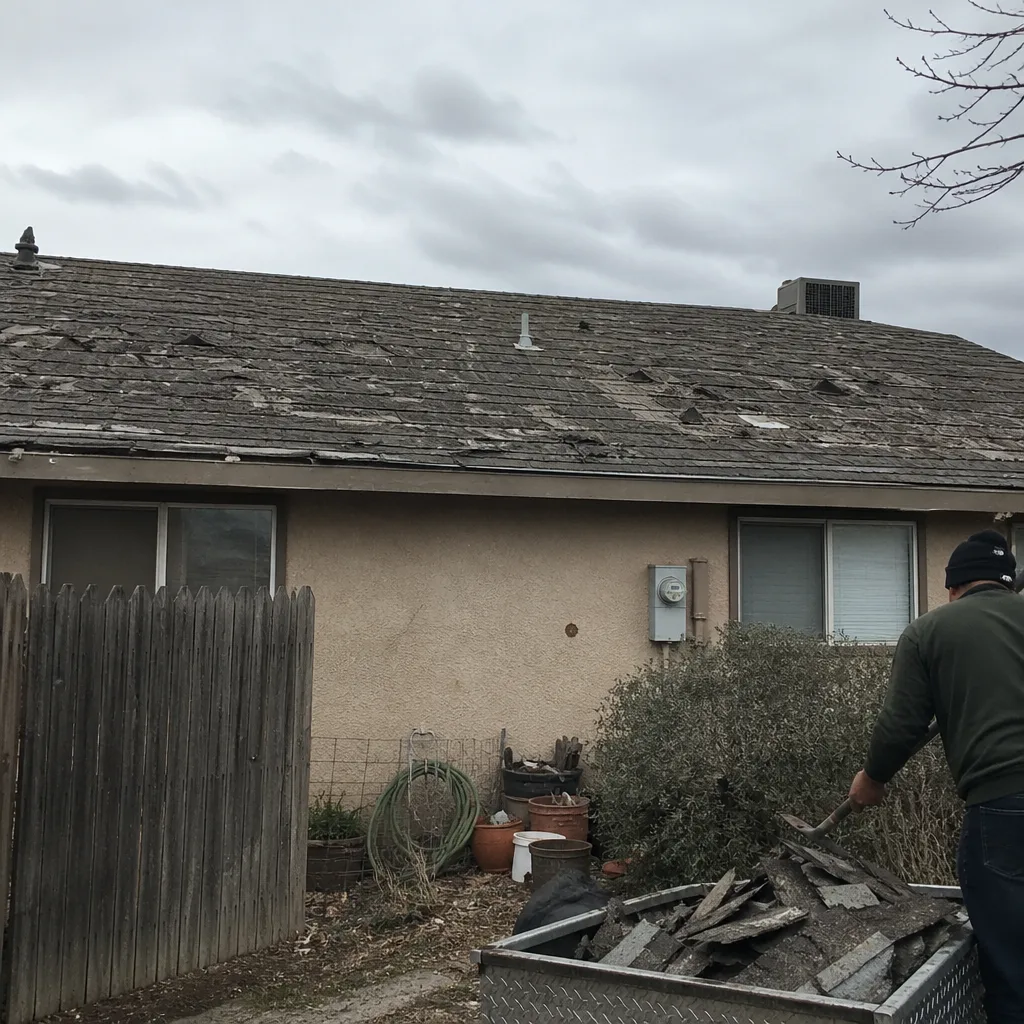 Before
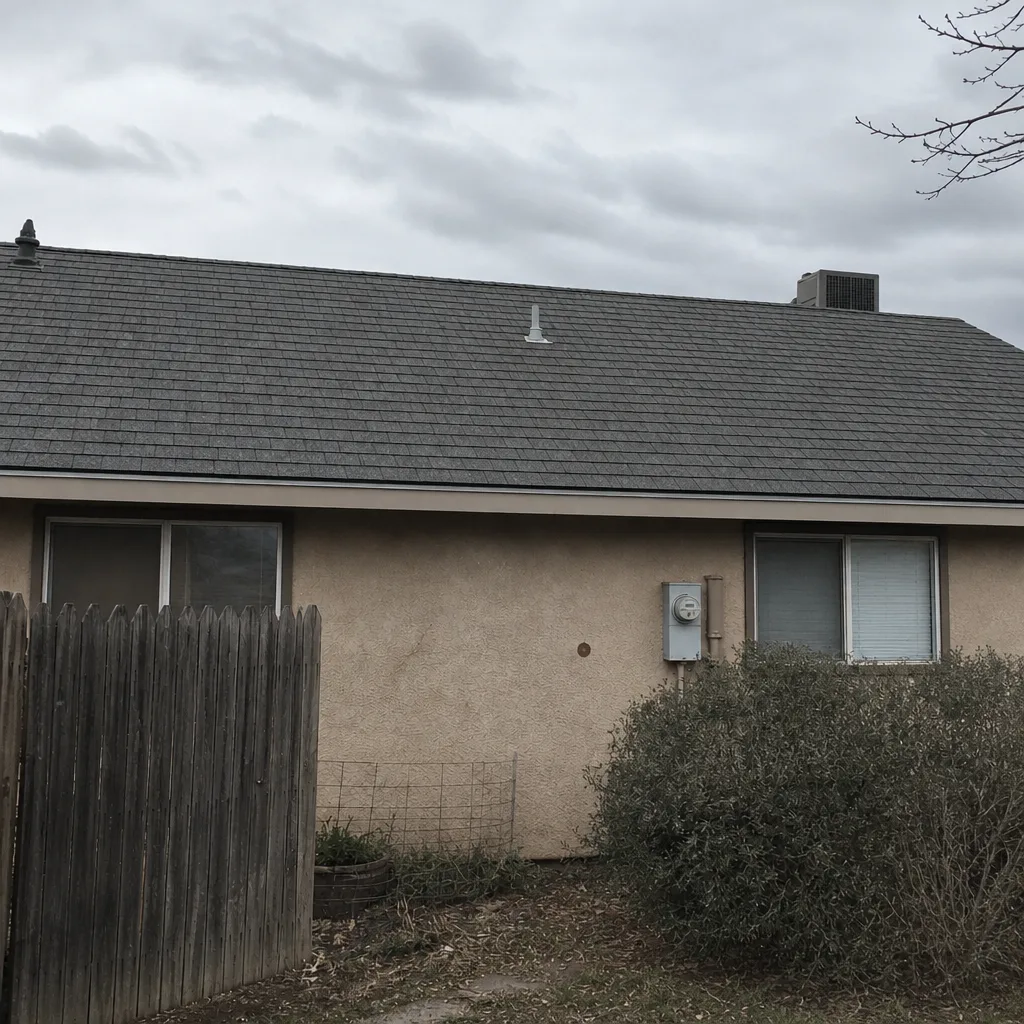 After
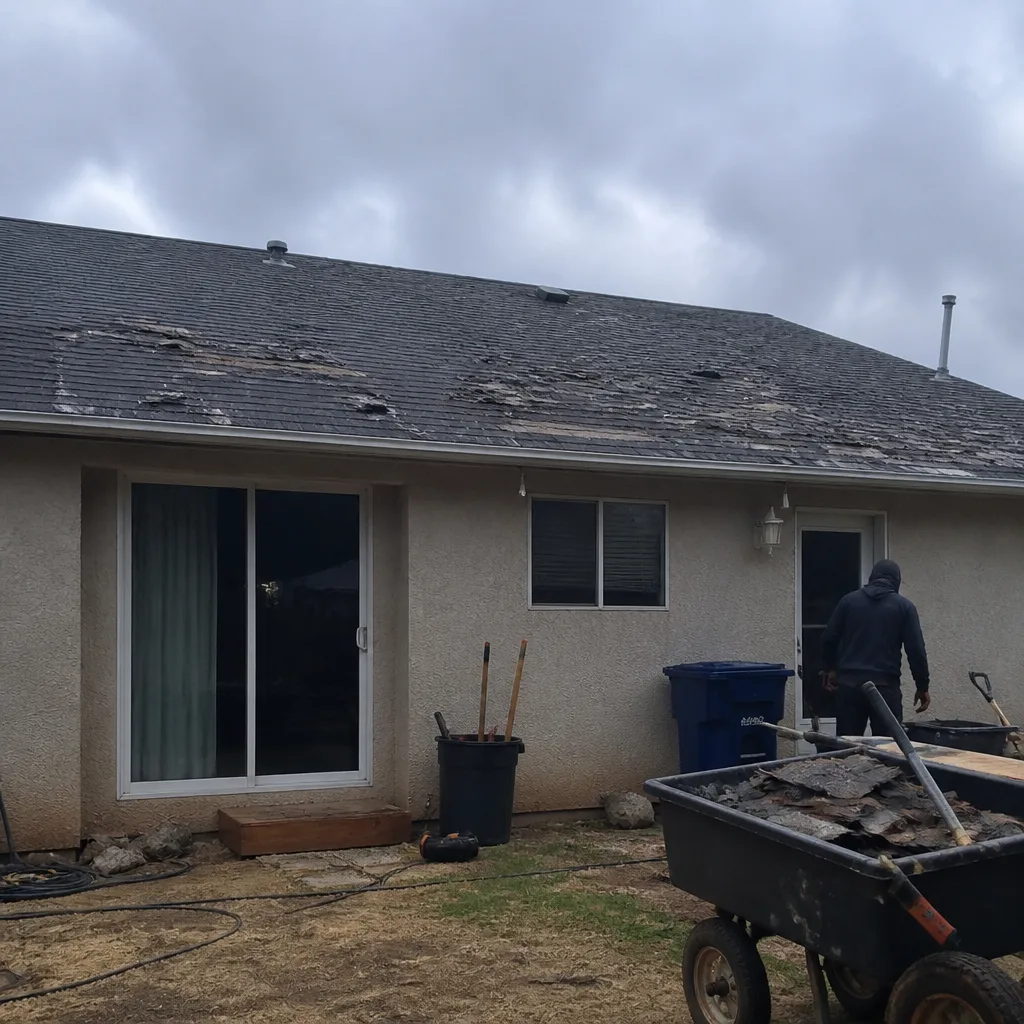 Before
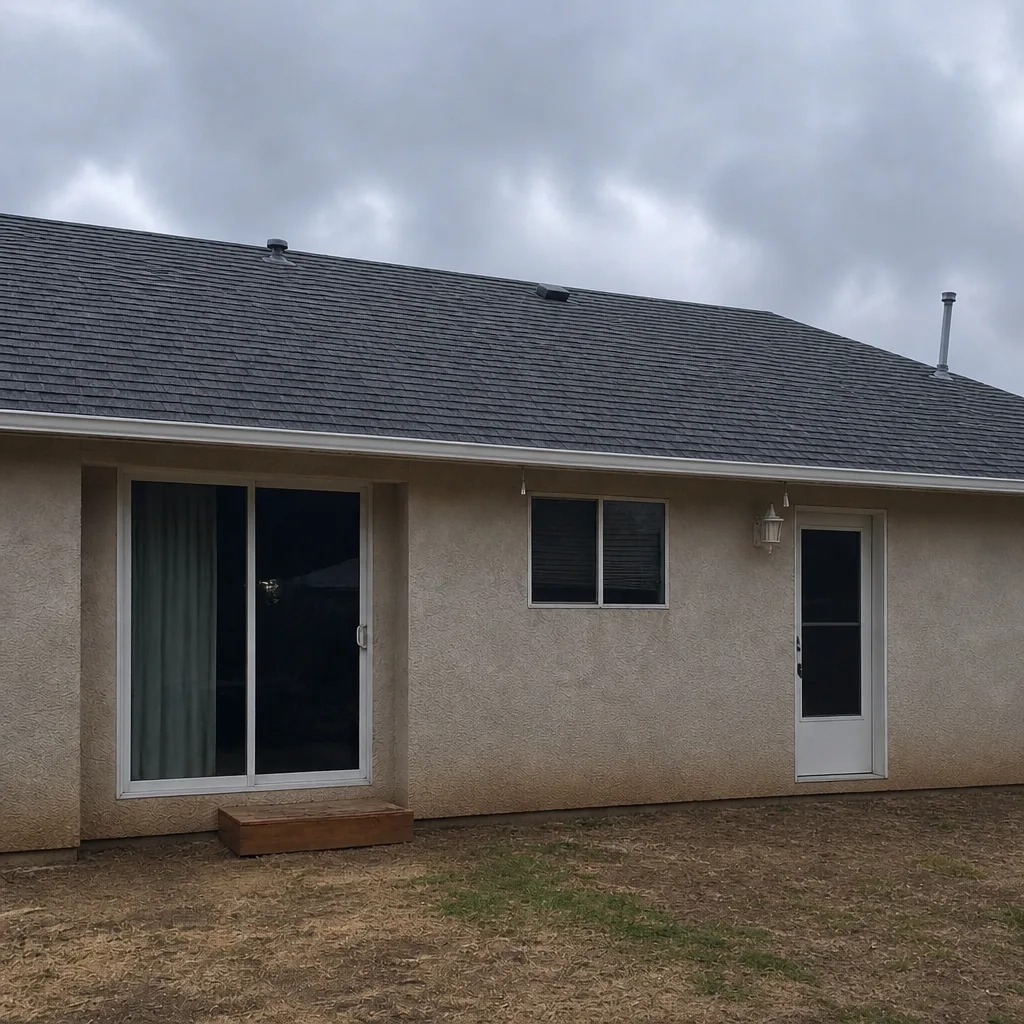 After
Frequently Asked Questions
At least once a year, and twice if you want to be thorough: once in spring after the first heat, and once after the summer monsoon season. Because the primary failure modes here are UV-driven and thermal-driven rather than rain-driven, a spring inspection catches issues before the hottest part of the year stresses them further. Book the inspection even if nothing is wrong. A clean report is worth knowing. To schedule one, call (855) 916-4744. We answer 24/7. Fast dispatch from 7am to 7pm, Sunday through Friday.
Checking flashing caulk after the first stretch of triple-digit heat in May. Heat expansion stresses every sealed joint, and UV exposure dries the caulk. If you do only one maintenance task a year, make it this one. A quick visual scan from the ground is a good start, but a trained roofer should verify and re-seal any joints that need it.
Pattern, not volume. Normal aging is gradual and spread out. Thermal cycling damage shows up in concentrated patches, often on south or west-facing slopes, near valleys and ridges, or in stripes. Cupped or curled shingle edges are another sign. If you’re not sure which you’re looking at, that’s the moment to bring someone trained to read it. Call (855) 916-4744 to book an inspection. Estimates are free.
Gutters, yes, from the ground or a safe ladder. Valleys only if they’re accessible from a window or low section without walking the roof. In most Mesquite homes, valley access requires being on the roof itself, and a hot shingle roof at midday is a genuine fall hazard. Use a soft broom or blower from a safe position or have a roofer handle it. When in doubt, call us.
Often, yes, in the sense that catching flashing and drainage issues early keeps small fixes from becoming larger repairs. A roof that drains properly and has intact flashing doesn’t have the water intrusion that drives most expensive repairs. We offer standalone inspections with no purchase required so you can get an honest read before deciding anything. Call (855) 916-4744 to schedule.
Yes. Low-slope and flat areas are where drainage problems hide, and inspecting them safely requires a trained eye and proper access. A blocked drain or backed-up transition can look fine from the ground while ponding water is already working its way into the structure. Have a roofer evaluate any flat or low-slope section that has shown staining or standing water.
We work with seven nationally recognized roofing brands spanning entry-level to premium tiers, including GAF, CertainTeed, Owens Corning, and Boral. That range lets homeowners match the material to the budget and performance needs rather than accepting a single take-it-or-leave-it option. If you’re facing a repair or replacement decision, we’ll walk you through the options that fit your roof and your plans. Call (855) 916-4744 for a free estimate.
The Bottom Line
A roof maintenance checklist for Mesquite has to be built around heat and short, intense rain, not four wet seasons. The three tasks that pay back the most are checking flashing caulk after the May heat spike, clearing valleys and low-slope drains before the monsoon, and reading granule loss to tell thermal cycling damage from normal aging. Everything above ground level belongs to a trained roofer. If your roof is overdue for a look, or if you’re not sure what you’re seeing up there, book an inspection and get a straight answer. Call (855) 916-4744 to schedule a free estimate. We answer 24/7. Fast dispatch from 7am to 7pm, Sunday through Friday.
Written by the team at Roofer Mesquite.